The other place, besides Samarkand, that I knew I wanted to visit on this first sojourn into Central Asia is this one. Take the high speed Afrosiyob train and its only a two-hour journey before you find yourself immersed into a spectacular old destination that oozes Islamic history. Bukhara Uzbekistan, a beautiful Silk Road city is both captivating and exquisite.
Brief History
Since 500 BC this city has existed and probably even earlier. Back then it was part of the vast Persian Empire. During the rule of King Eucratides I, the largest gold coin ever minted in antiquity was made and subsequently found in Bukhara, weighing a whopping 169.2 grams!
The city passed through the hands of several rulers, emperors and conquerors including Alexander the Great. Bukhara continued to grow as a centre of commerce, and a market of trading emerged. By 560AD, the city was being governed by the Turks and in the 8th century it was taken by the Arabs and slowly became a predominately Muslim society.
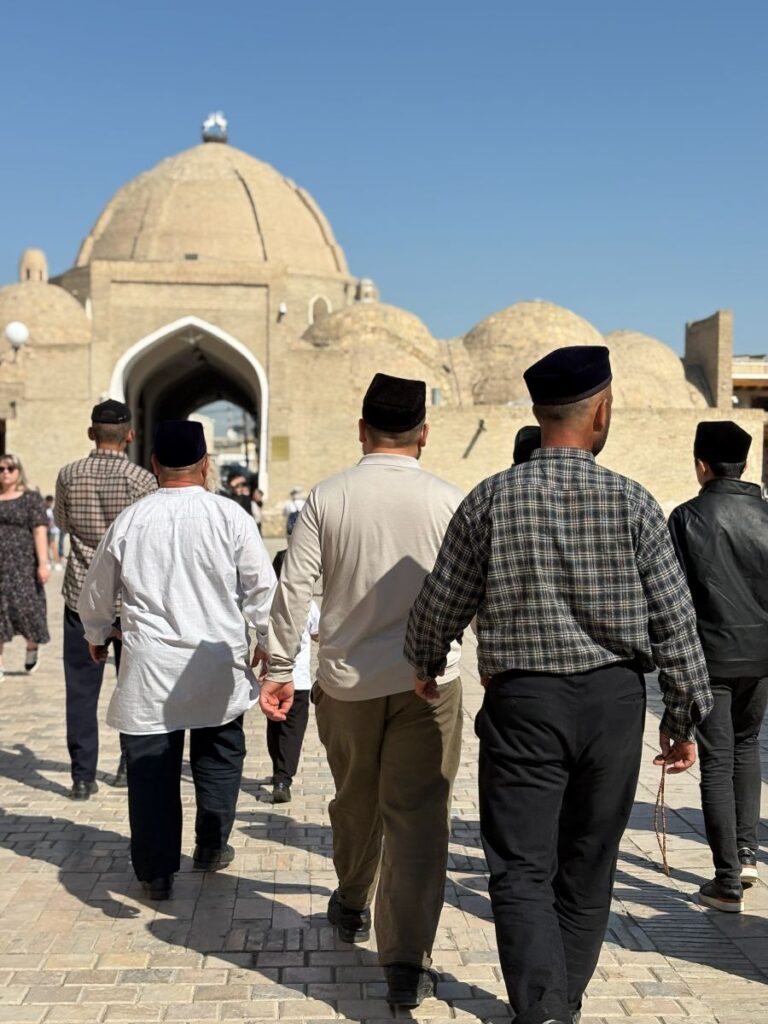
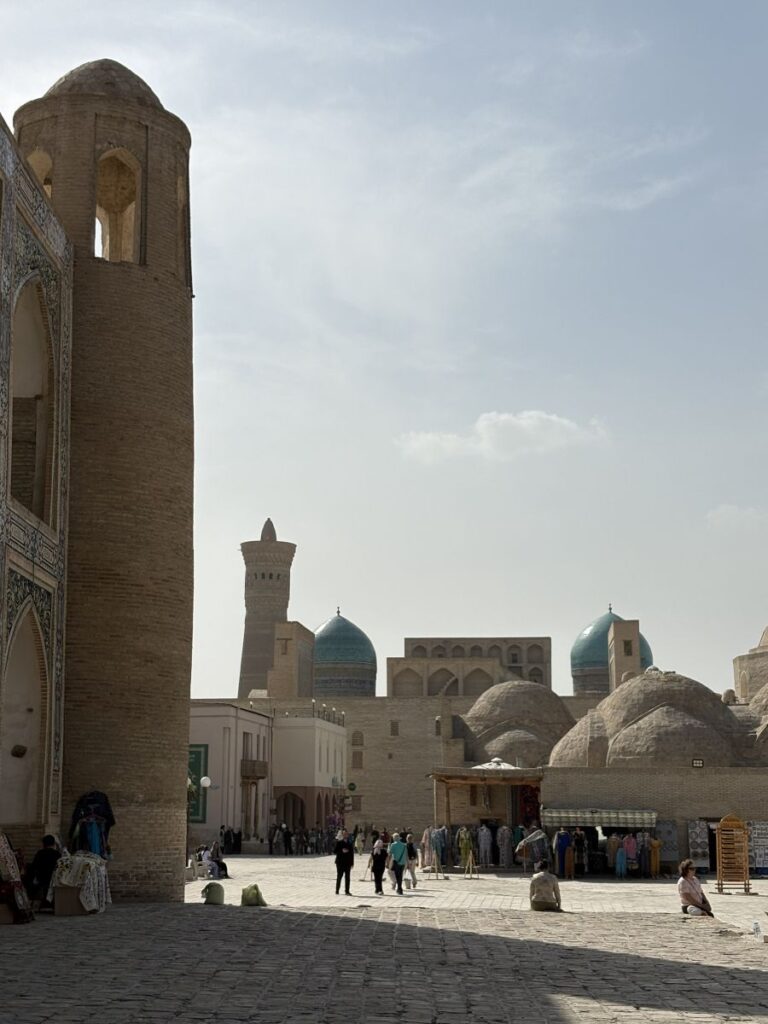
It is this period that many of the most spectacular mosques and minarets were constructed in Bukhara. A centre of Islamic architecture, education and culture emerged and this is protected by UNESCO today. Later, in 1220, Genghis Khan invaded and destroyed every structure except for one. I’ll show you that and some of the other buildings that were reconstructed from the rubble.
Layout
The historical centre of the city is where you want to be. The municipality has done a beautiful job at creating a single large expanse that encompasses just about every building in this compact area. If your hotel is near the centre, you will be able to walk everywhere. The distance from one end of the site to the other takes about 40 minutes to traverse at a leisurely pace.
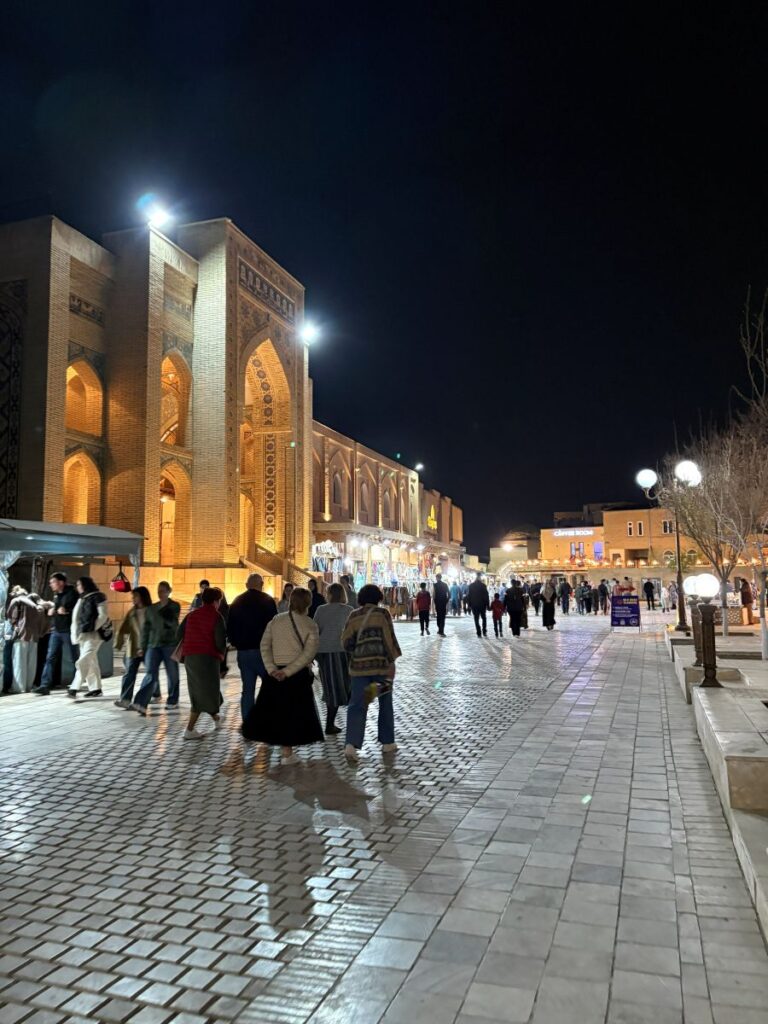
Most of the historical structures and an archaeological site are contained within this space. There are a few exceptions of course like Chor Minor and even that is only an extra seven minute walk.
Nodir Devonbegi Madrasa
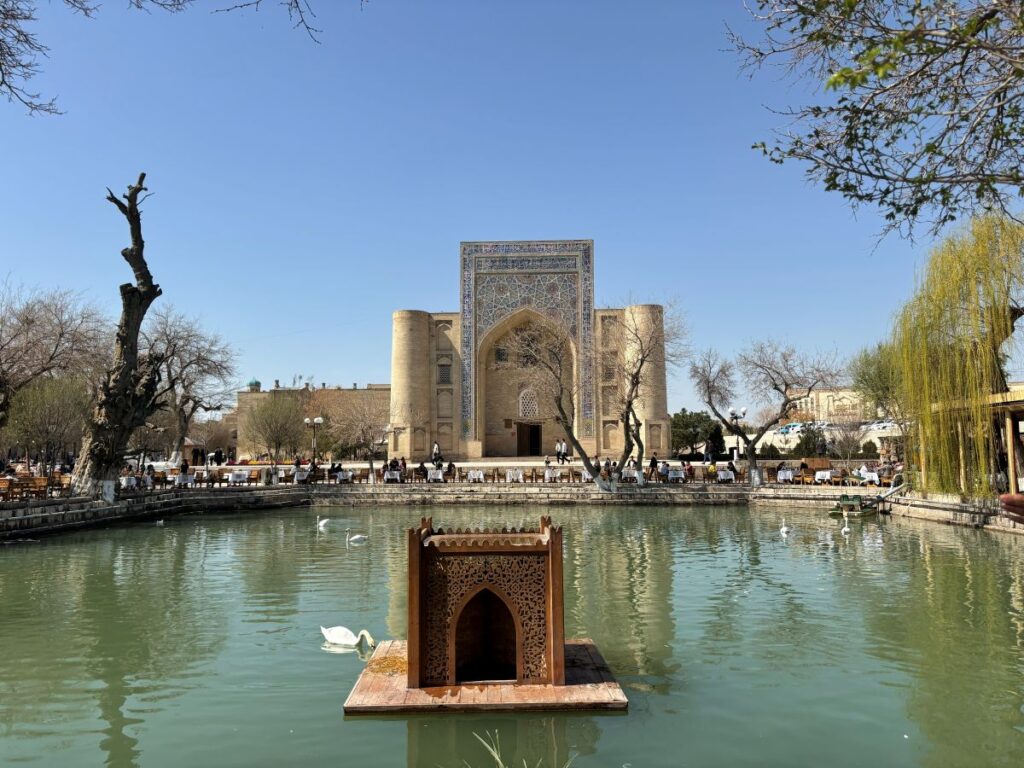
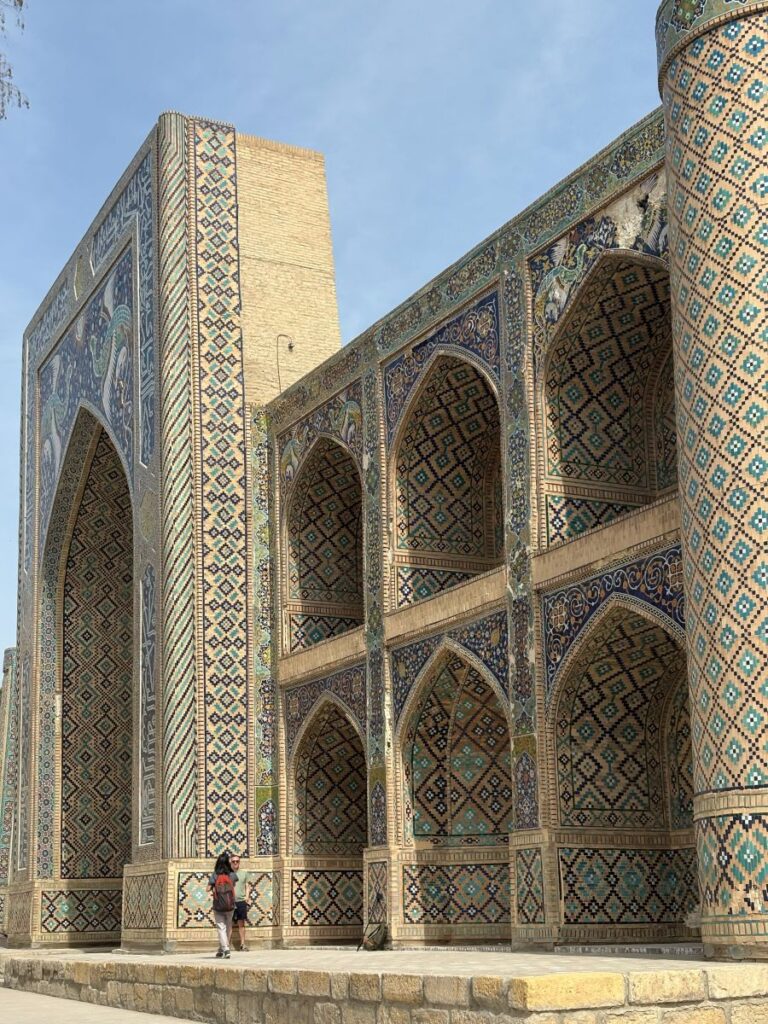
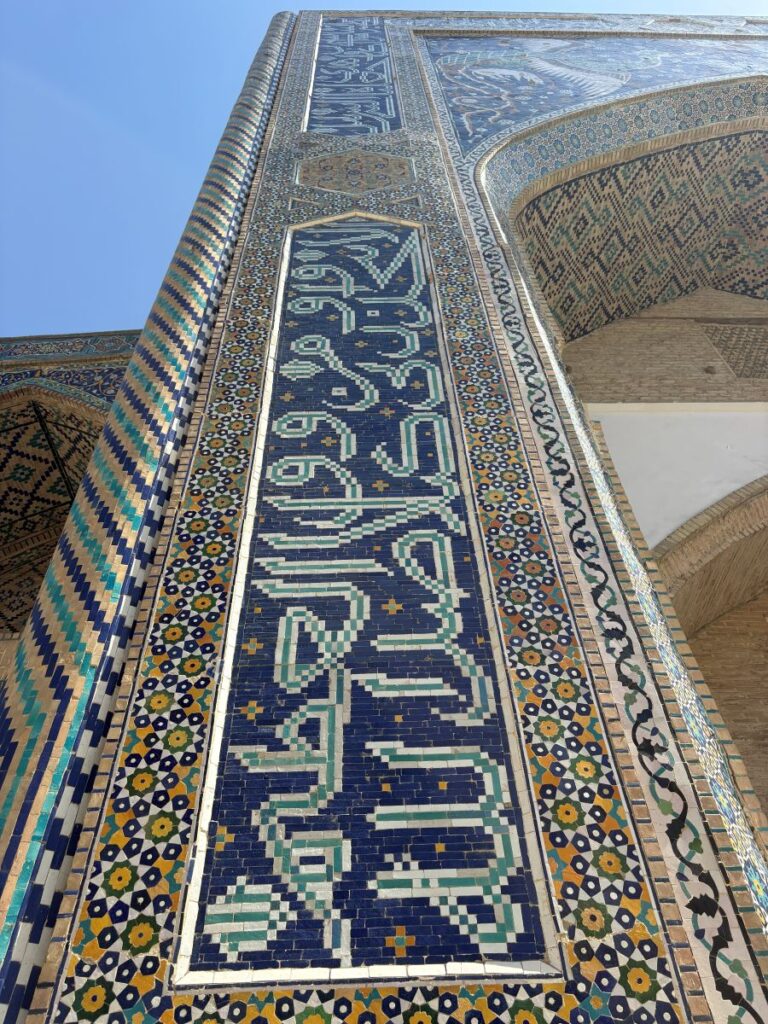
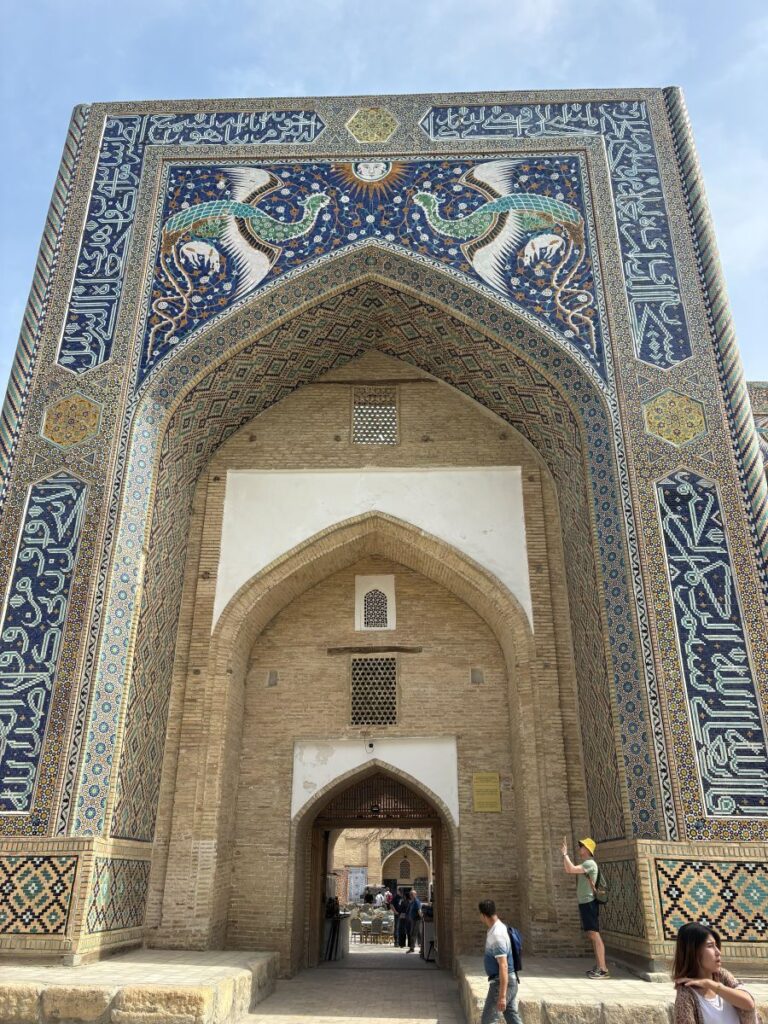
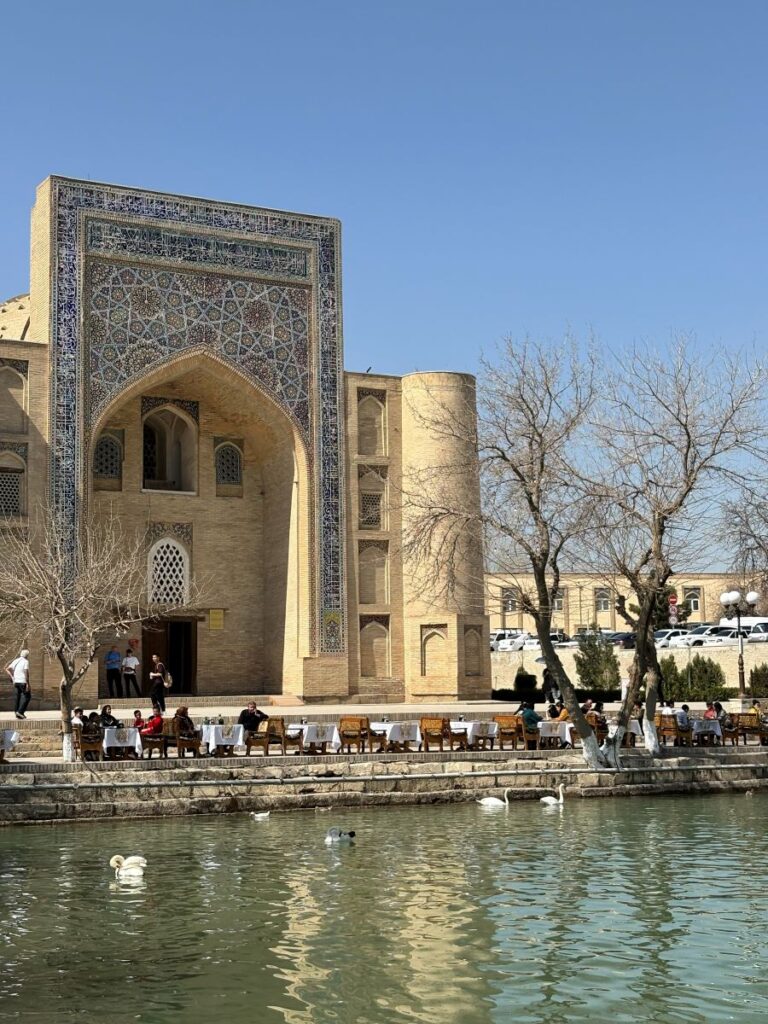
Starting at one end we will work our way towards the other. The Nodir Devonbegi Madrasa is an Islamic school built in 1622. Originally it was a caravanserai, an inn for travellers. It was converted to a madrasa and is an excellent example of the historical architecture here in Bukhara. Those mythical huma birds give the façade a unique and special appearance.
Lyabi Hauz
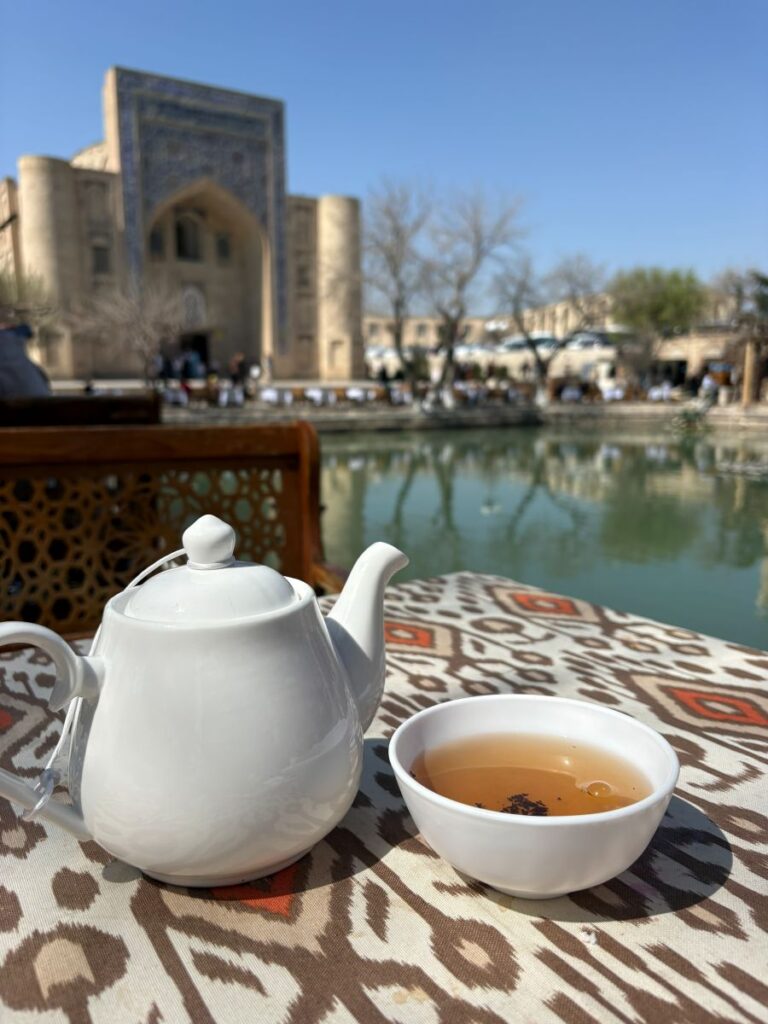
Directly in front of the massive madrasa is a Lyabi Hauz, a pool and source of water for the old city. There were multiple of these during the Islamic period, however this one is the only surviving pool. Today it is filled with swans and surrounded by restaurants serving traditional Uzbek food.
Toki Sarrofon
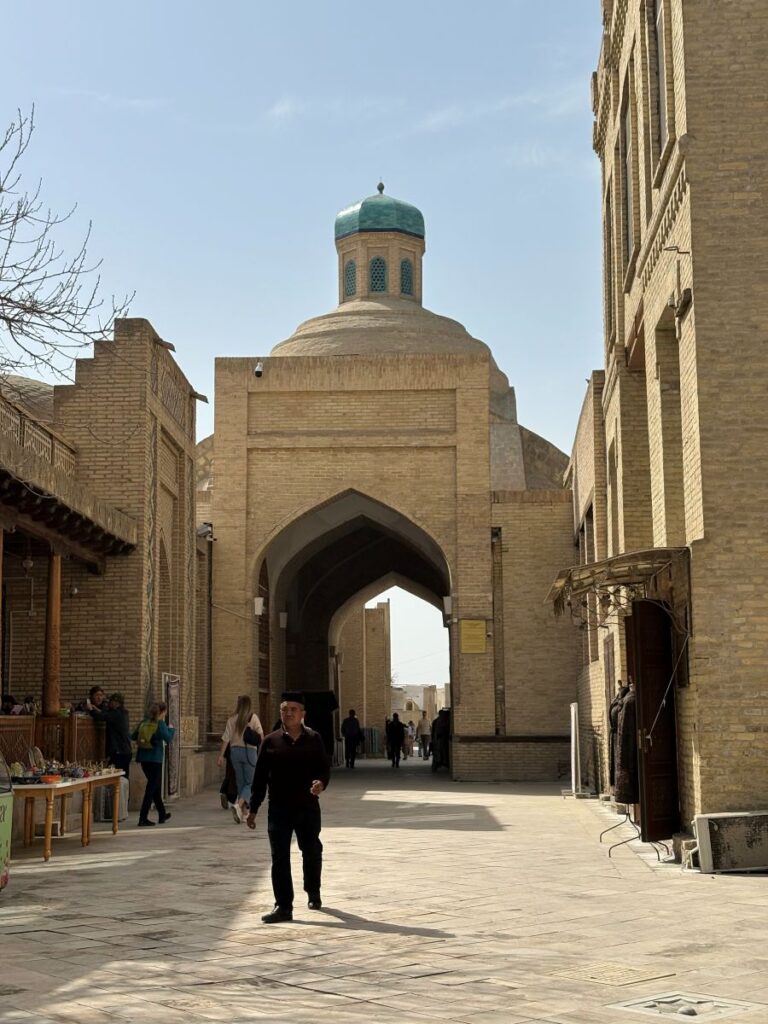
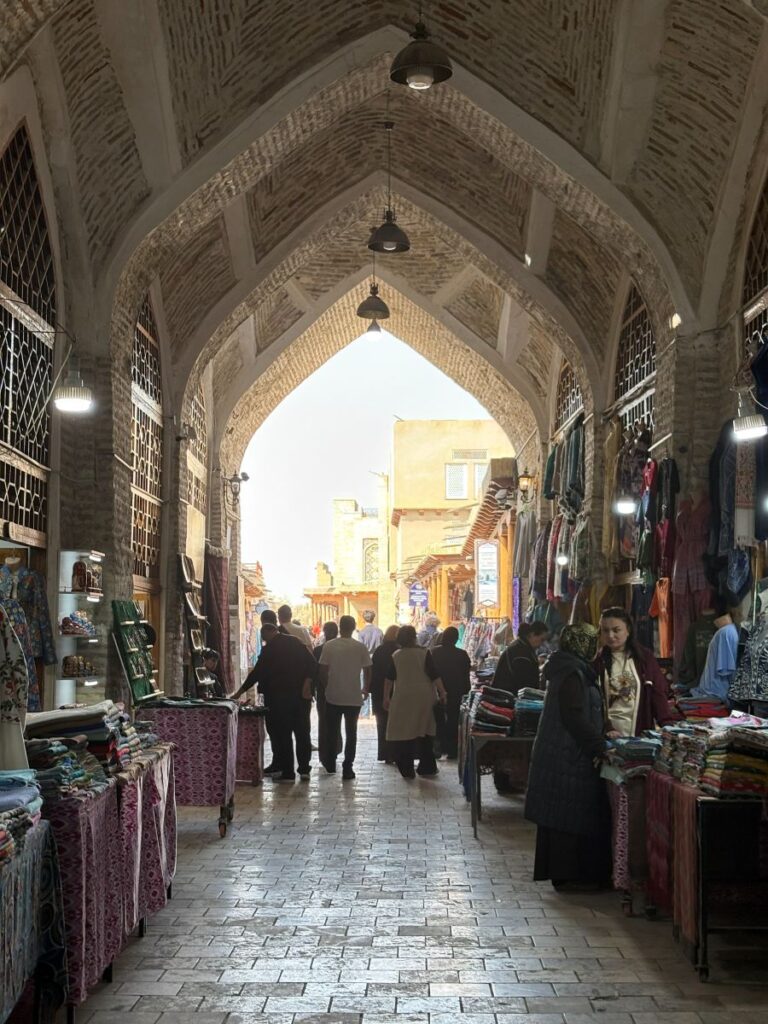
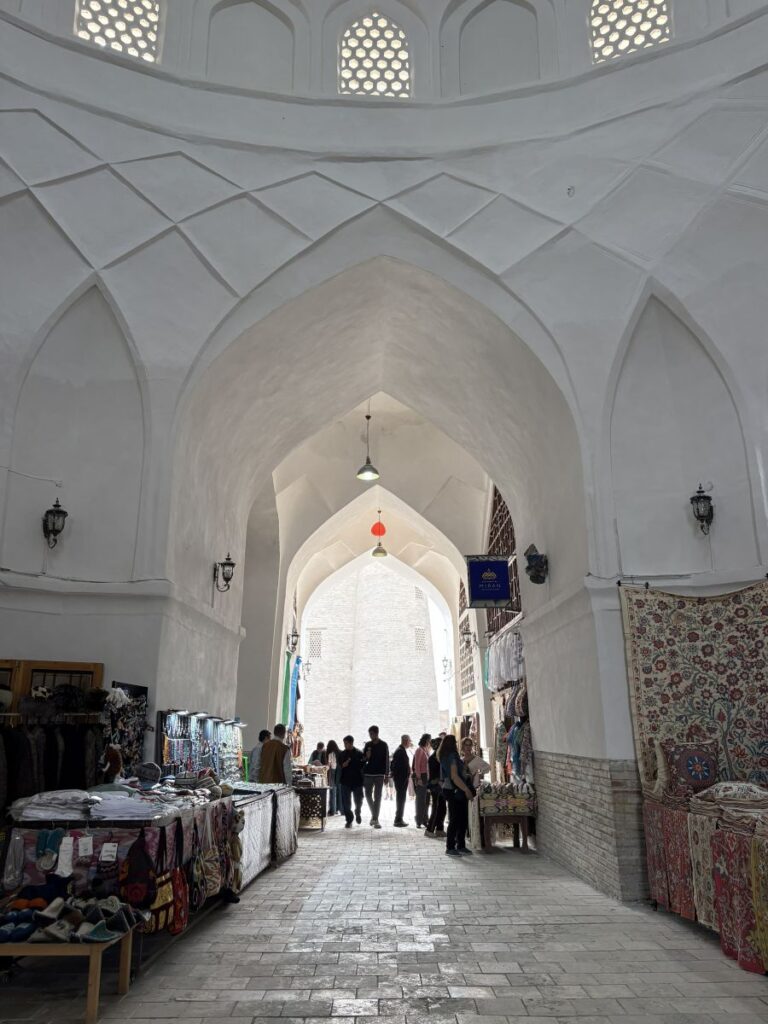
The first of the trading domes, this one was the original location of the currency traders. Today it and the others are filled with artisans and crafters showcasing their wares.
Blacksmiths
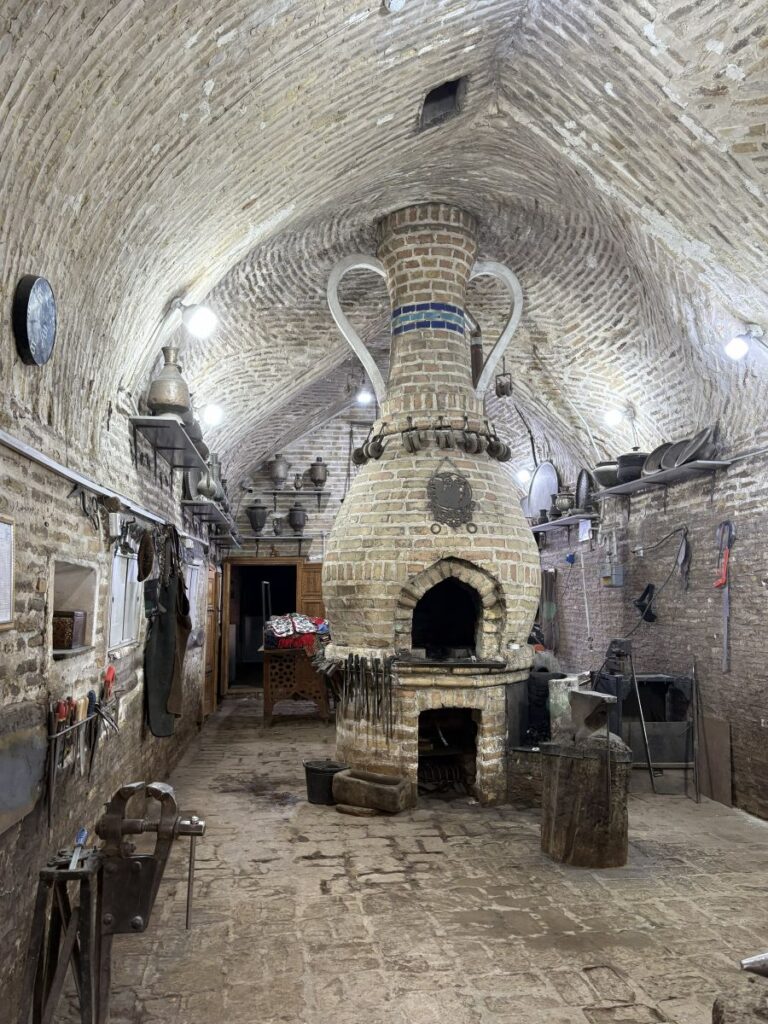
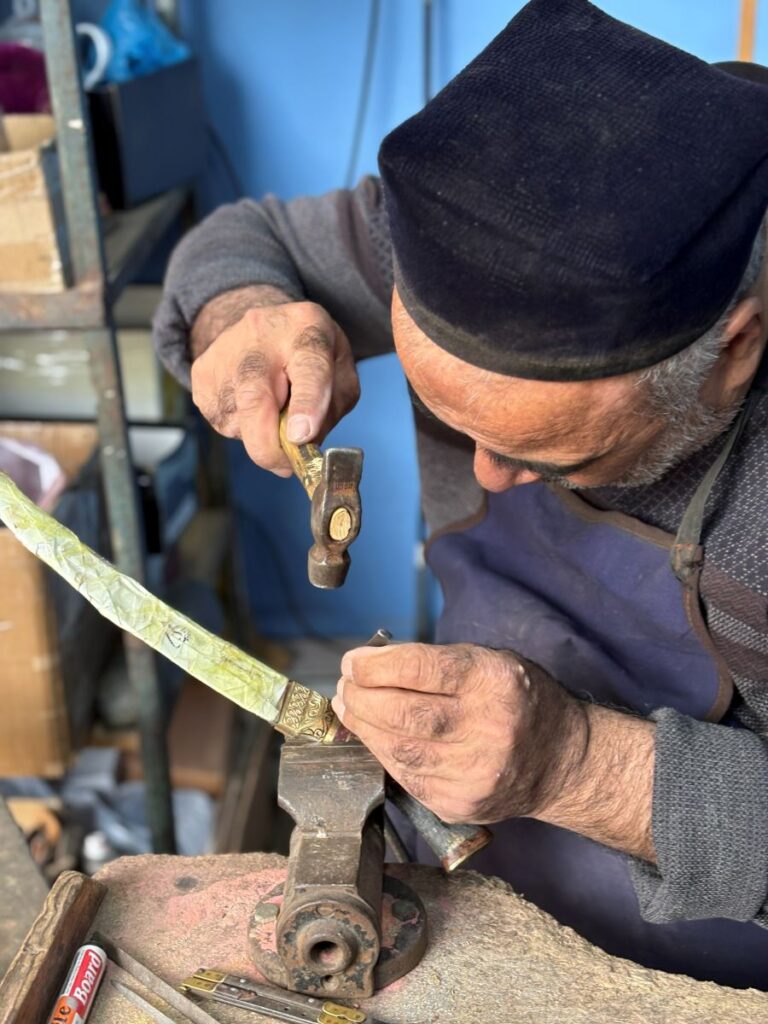
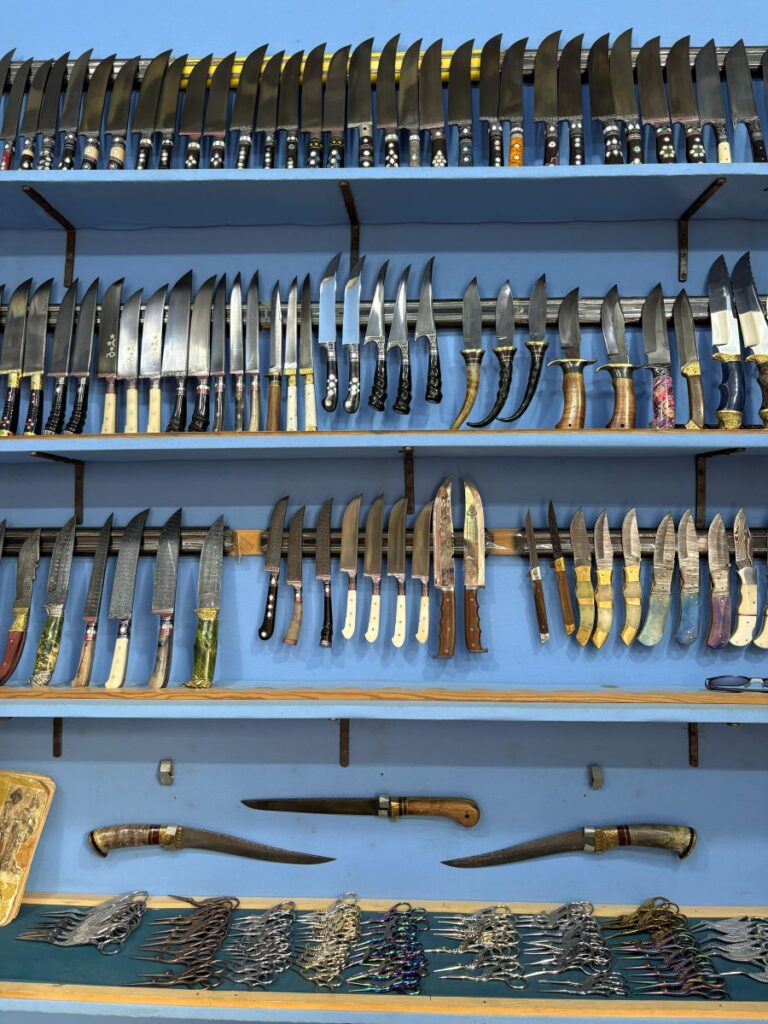
Just outside of Toki Sarrofon is one of two blacksmiths. These original rooms are still being used today, keeping the historical craft alive. Mostly knives are being produced and they are truly beautiful.
Magoki Attori Mosque
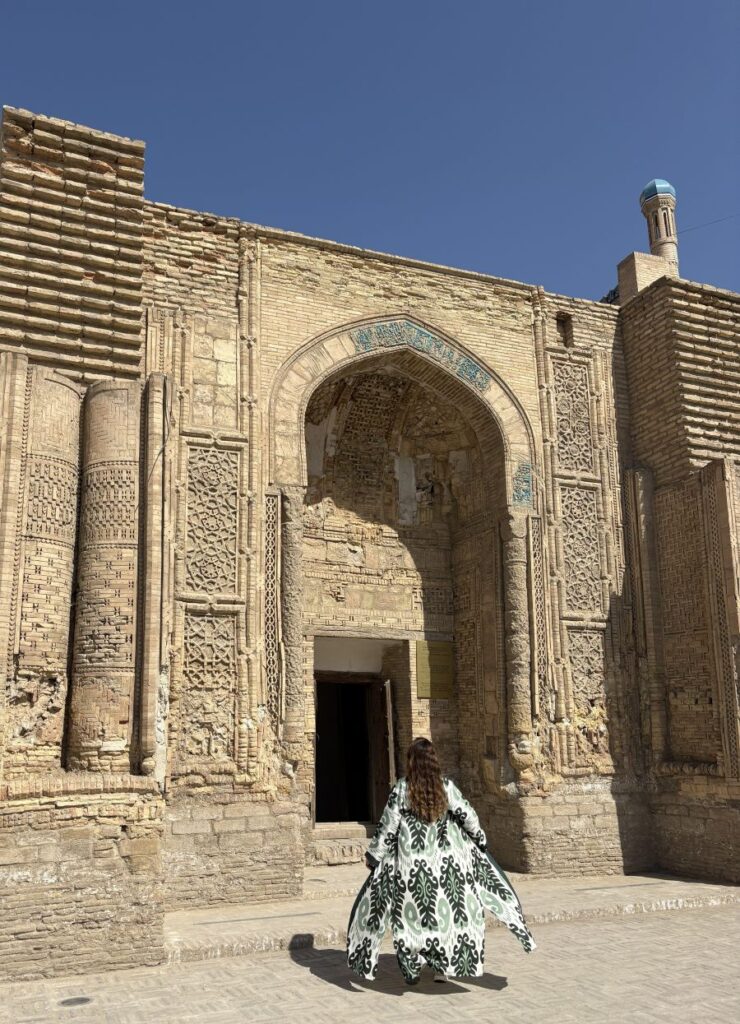
Outside and to the right of Toki Sarrofon is the Magoki Attori Mosque. An exquisite and original exterior greets visitors. The creative use of bricks to display patterns and designs is truly amazing. Inside is a carpet seller, one of many throughout the historical core of the Bukhara.
Archaeological Site
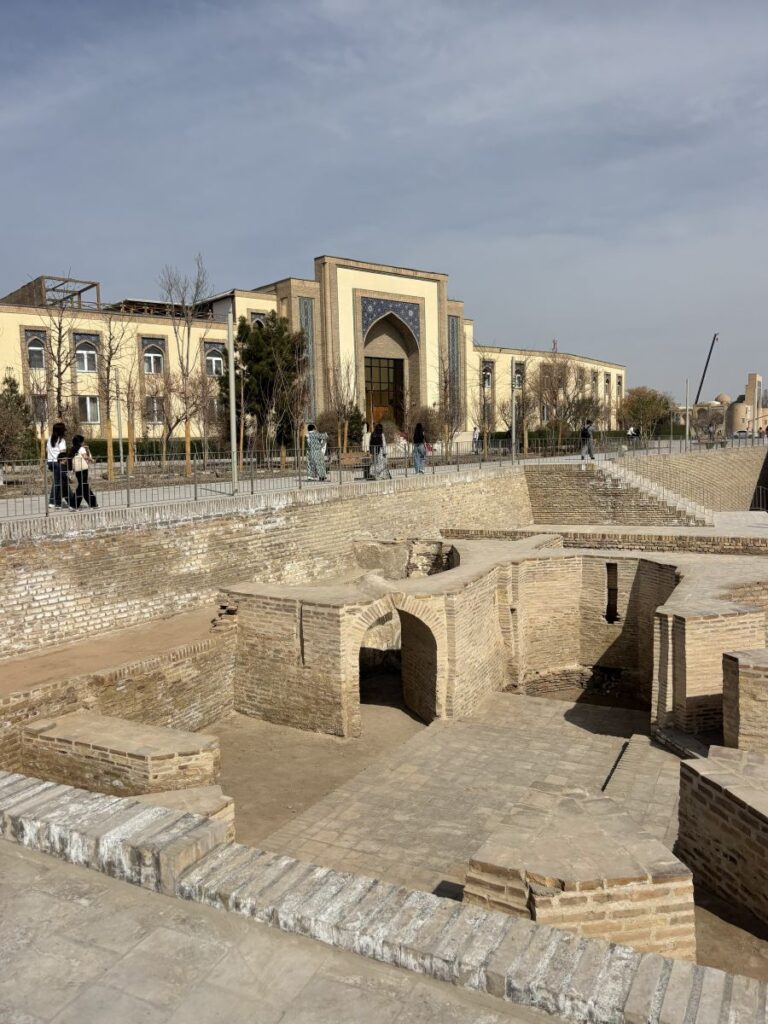
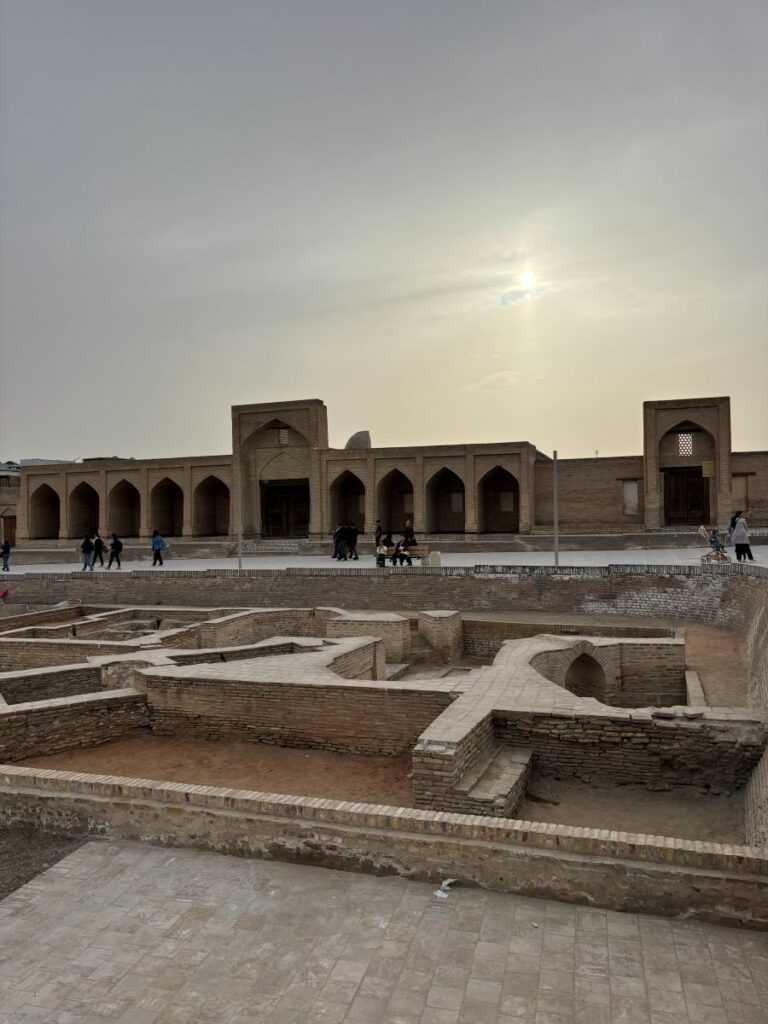
Beside the mosque is a large open expanse, an archaeological site. Active digs have ceased for now but what this does provide, is a glimpse of what lies beneath the streets of this entire city. A trove of ancient structures and treasure.
Bozori Kord Bathhouse
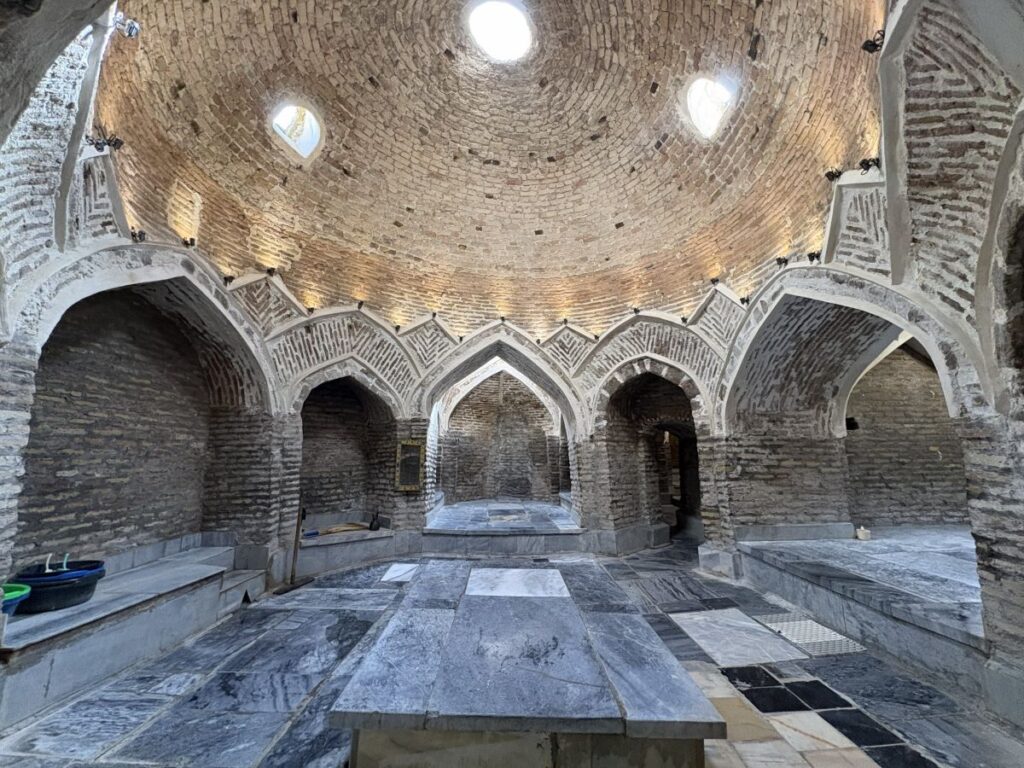
Following the flow of visitors through the street with market stalls, don’t miss the Bozori Kord Bathhouse. I poke my nose in the open doorway and a lovely gent ushers me inside. He allows me to progress into the hammam and I can not believe what I see and feel.
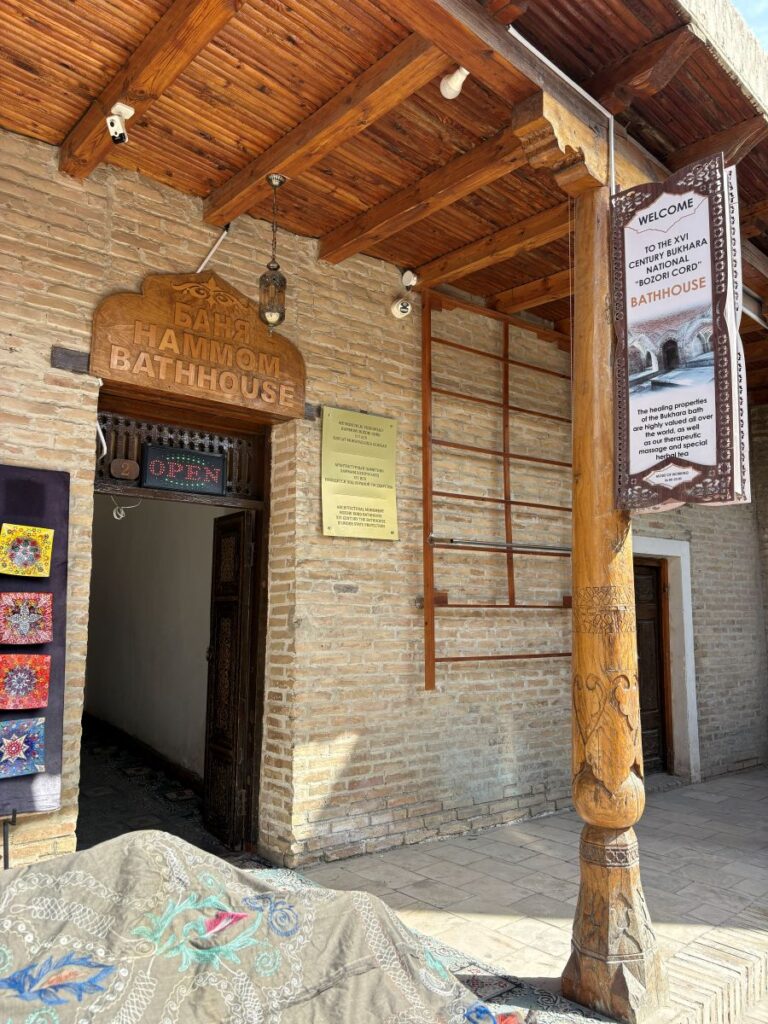
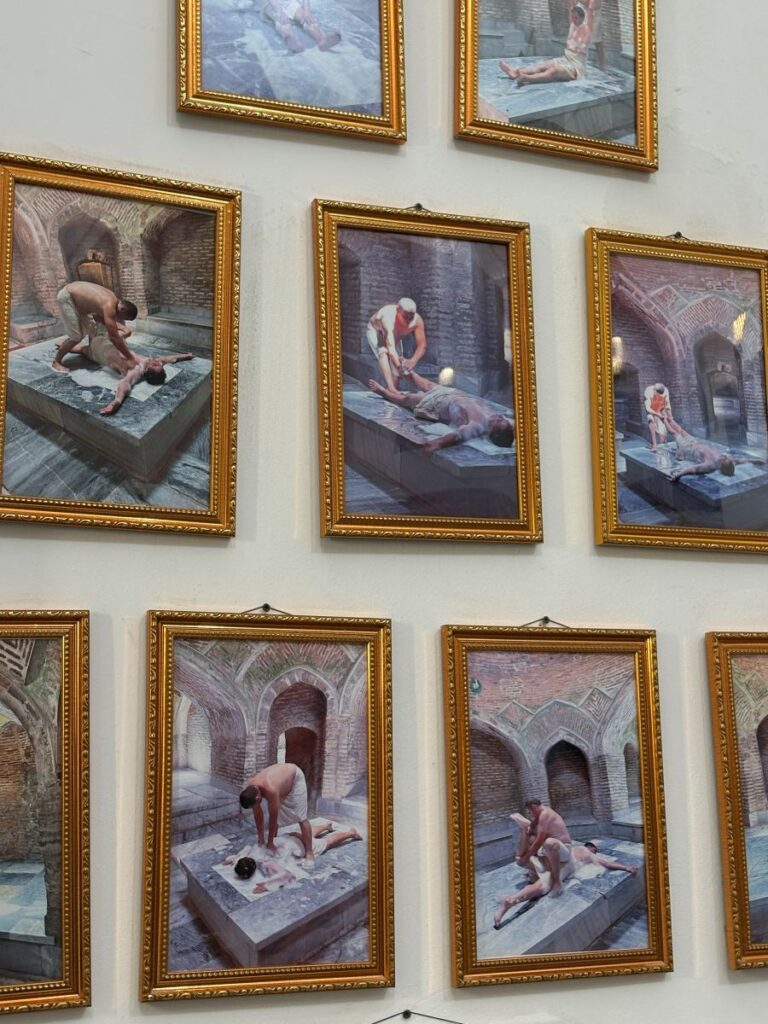
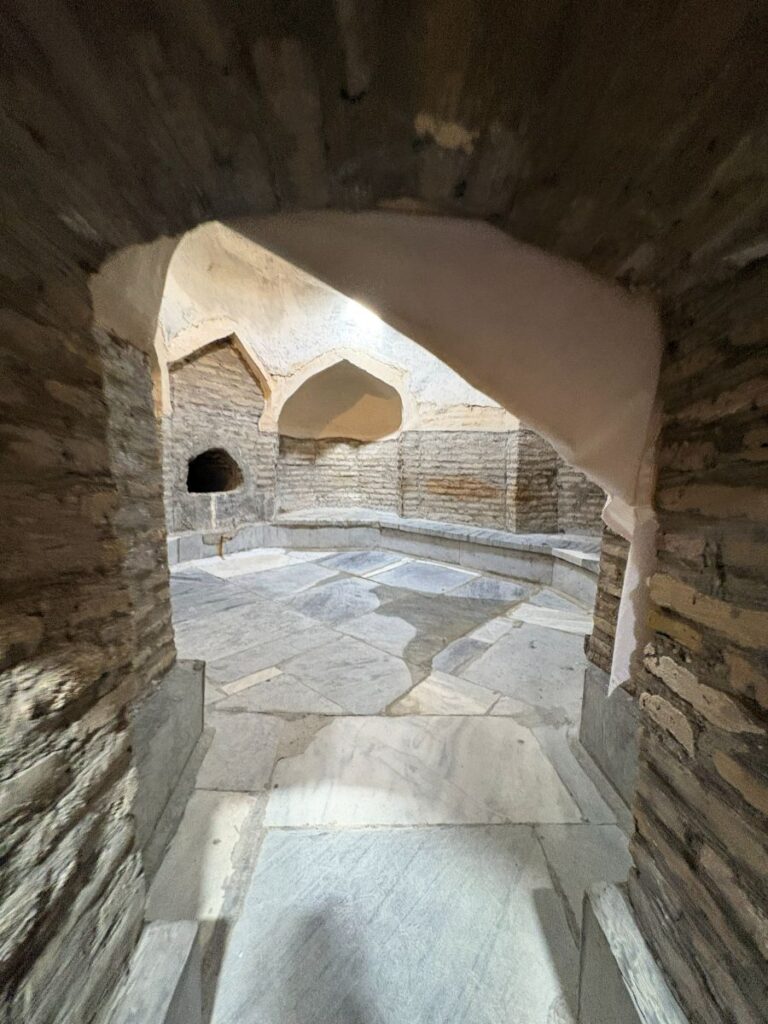
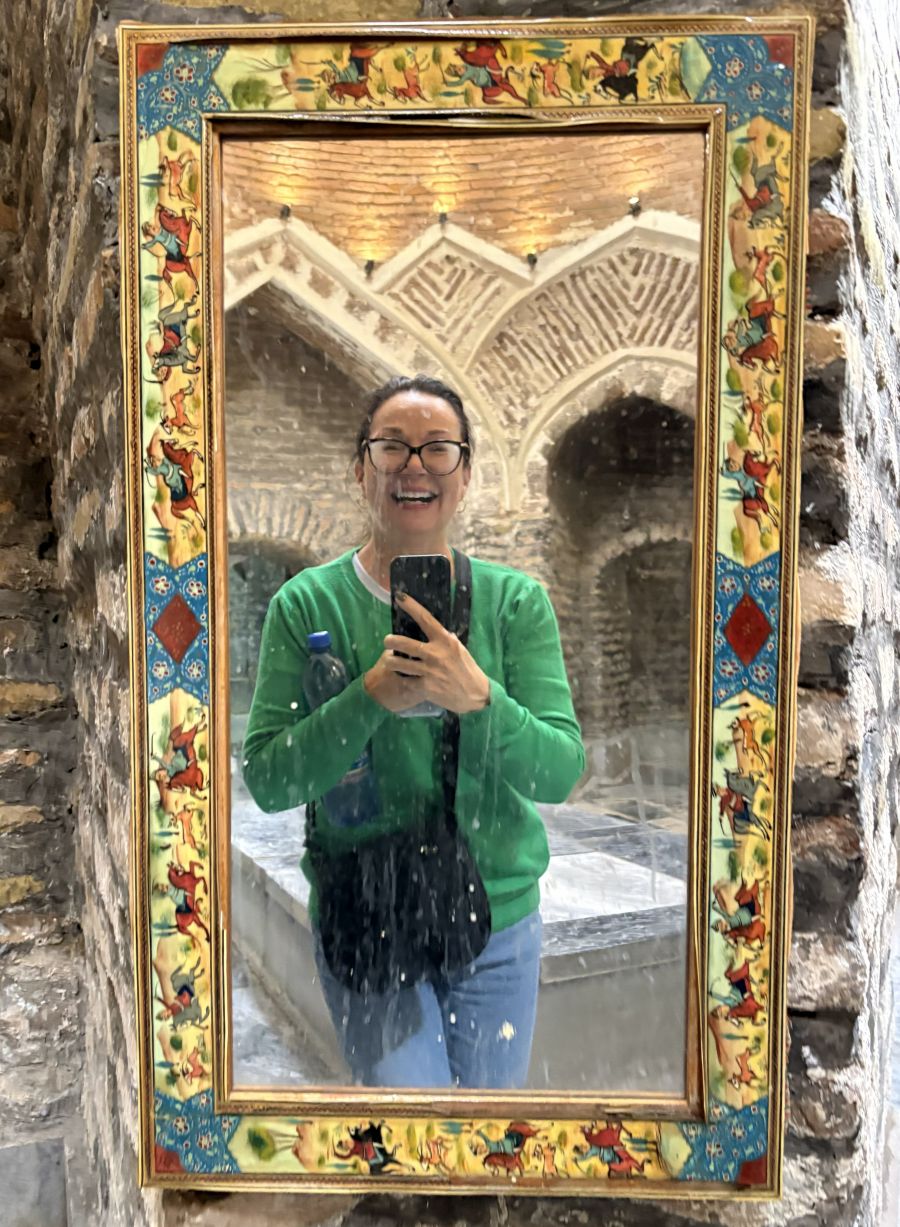
Built in the 16th century, this humongous bathhouse remains in operation today. Within one minute my glasses are completely fogged and I can’t see a thing. The heat is unbelievable. I walk around, passing through narrow archways, edging deeper and deeper into the humid abyss. After perhaps five rooms, I’m almost unable to breath, it is as hot as a volcano inside!
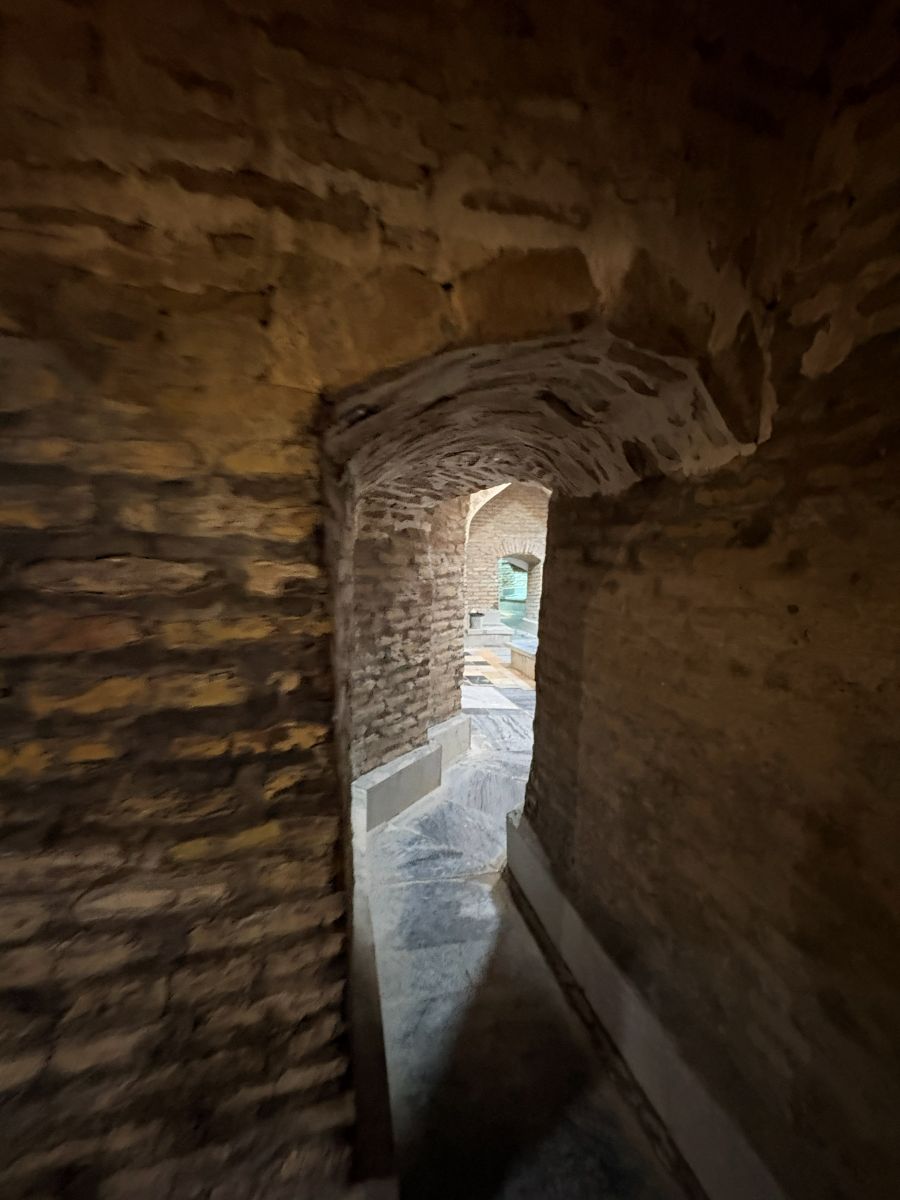
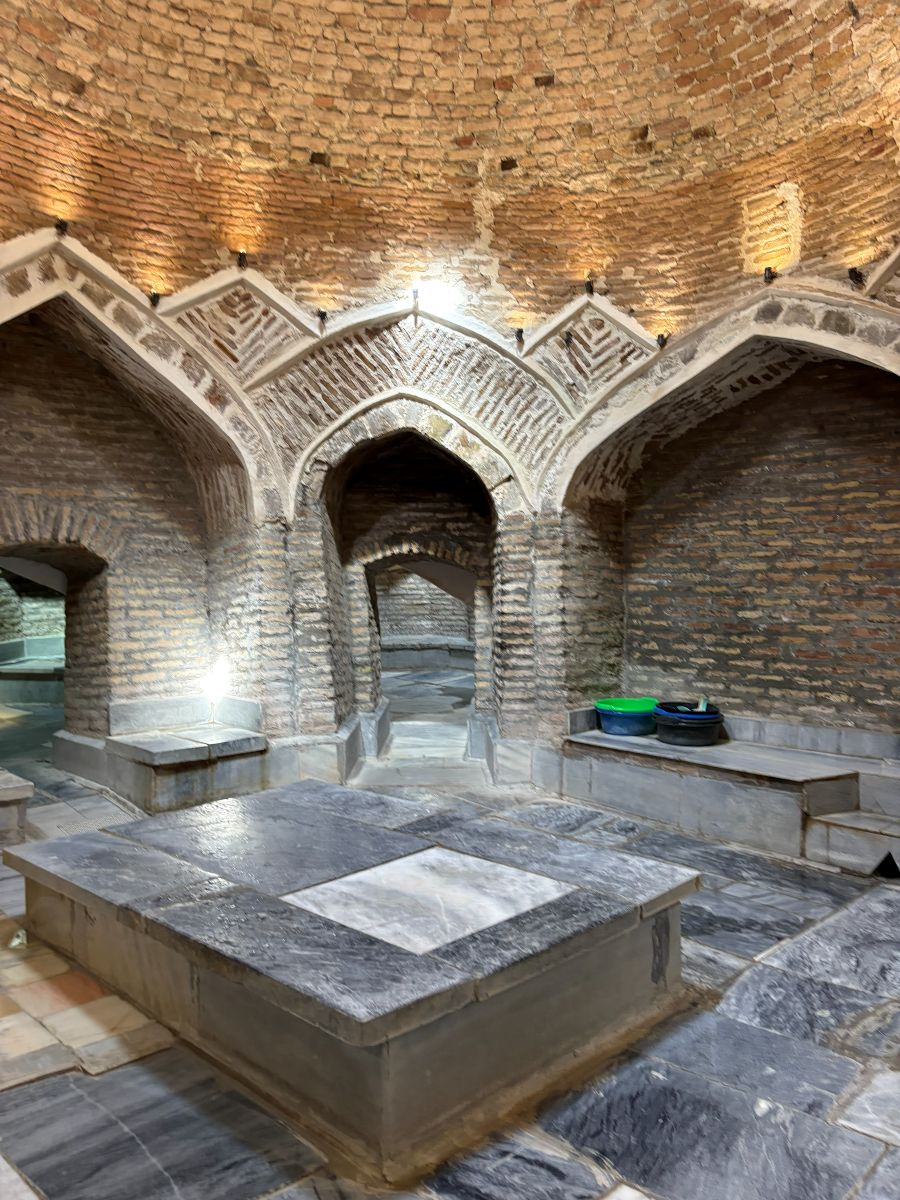
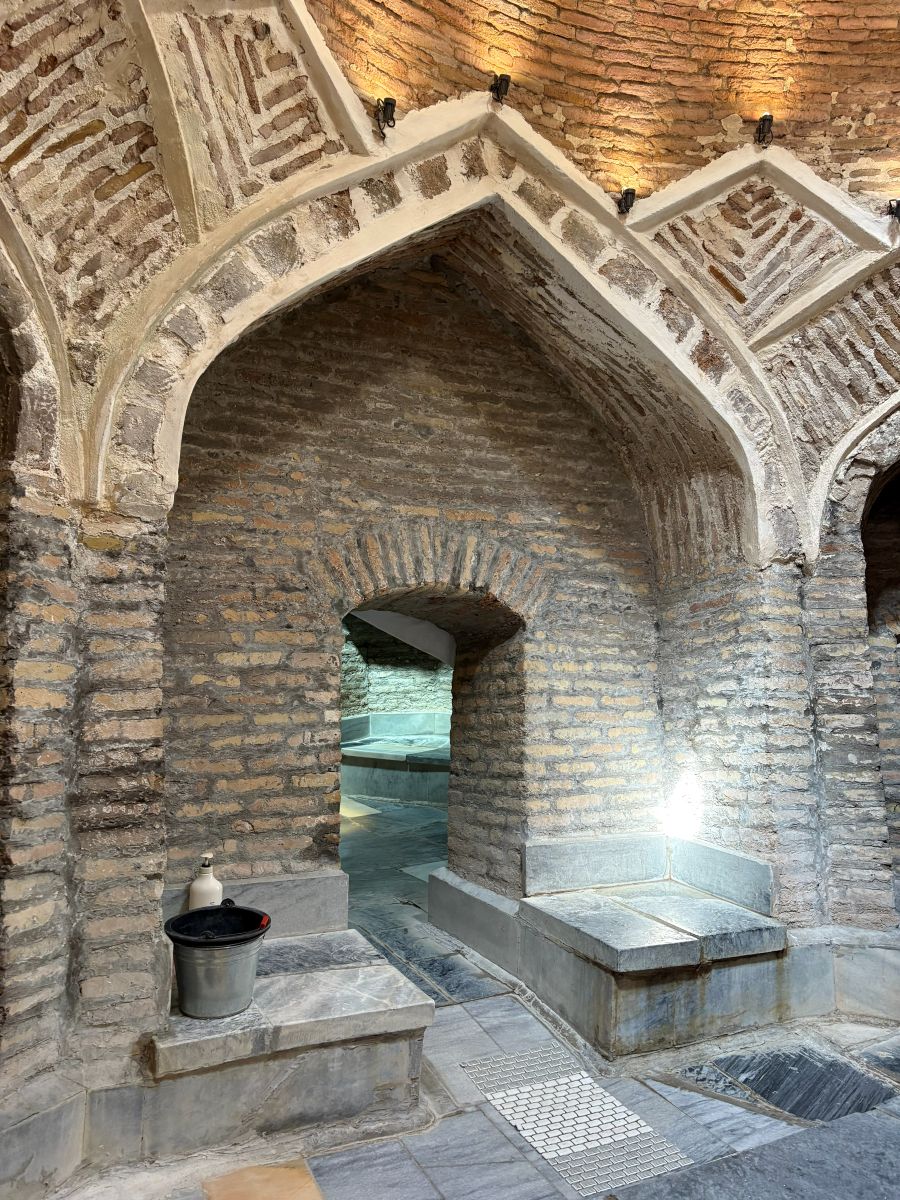
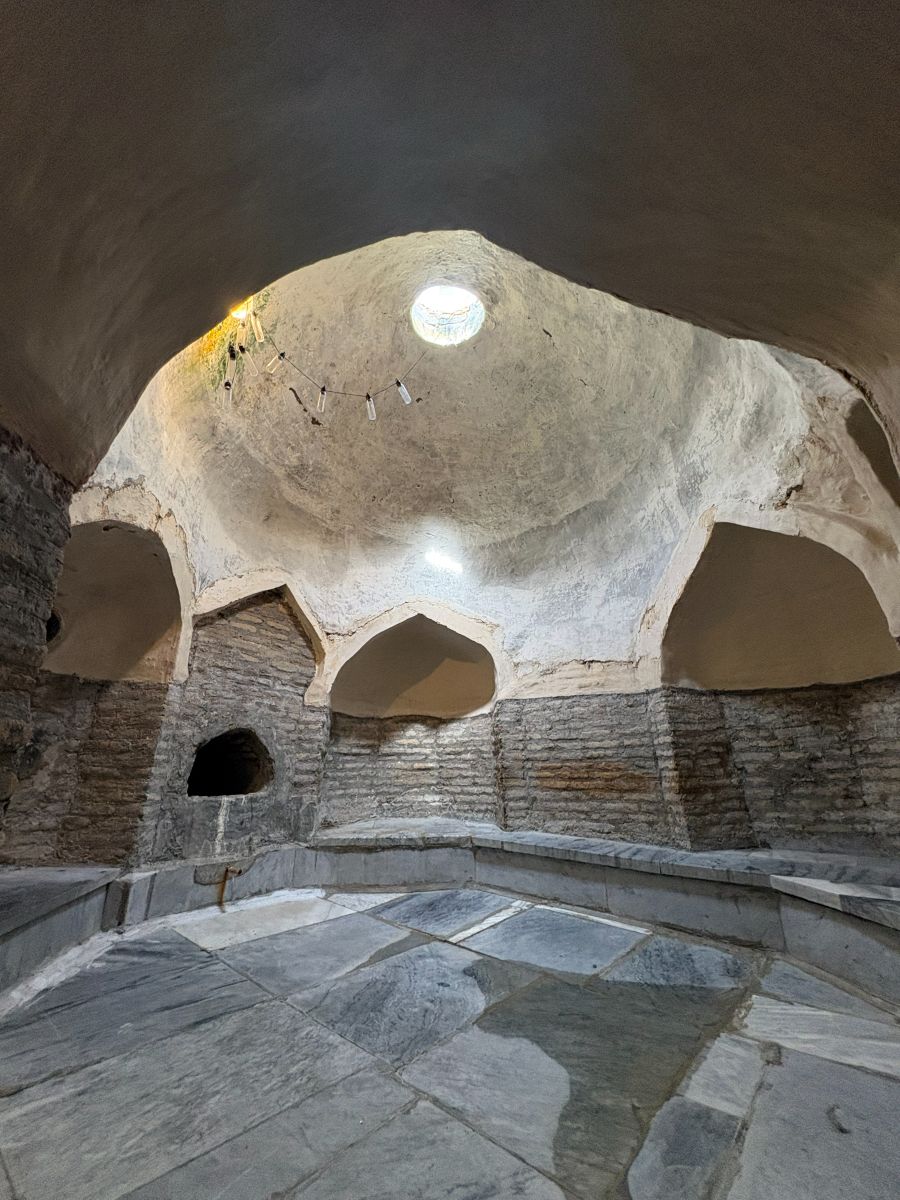
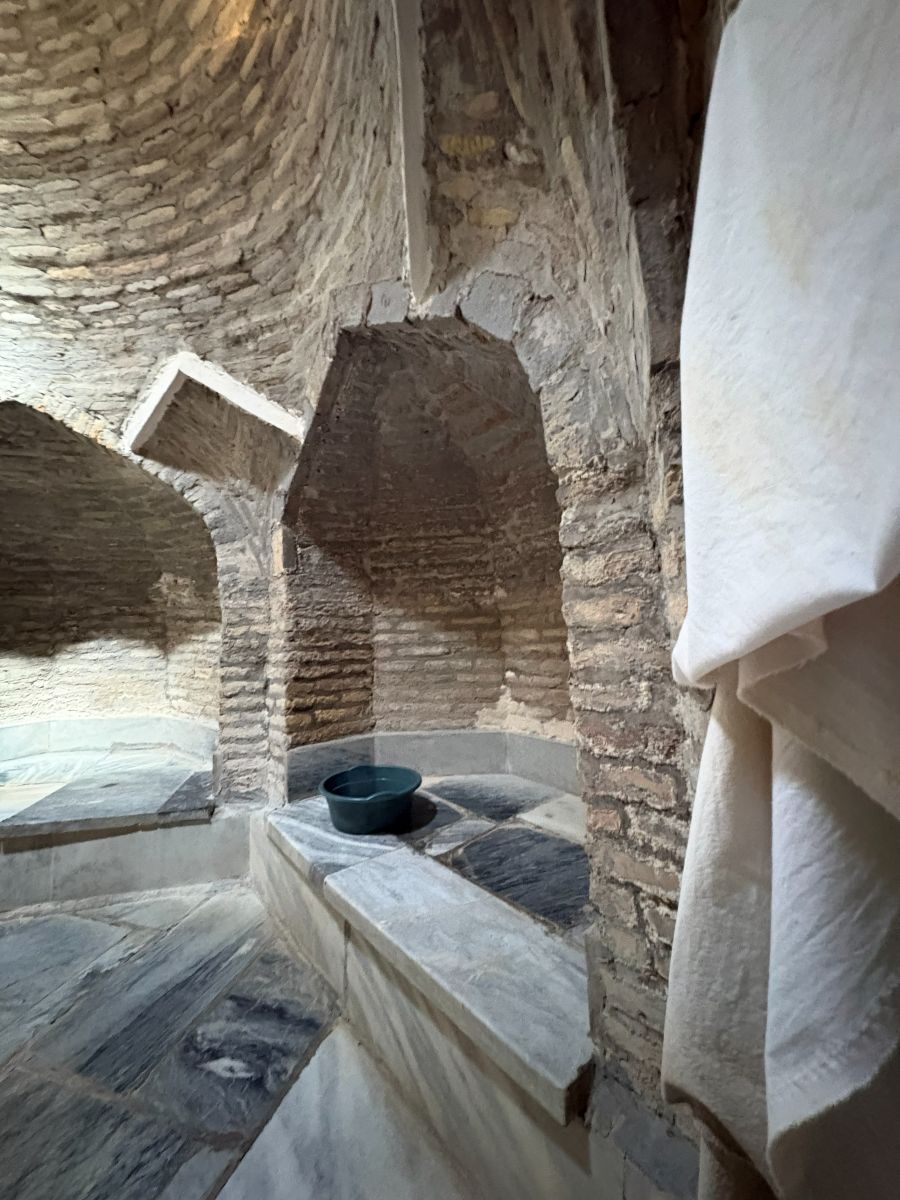
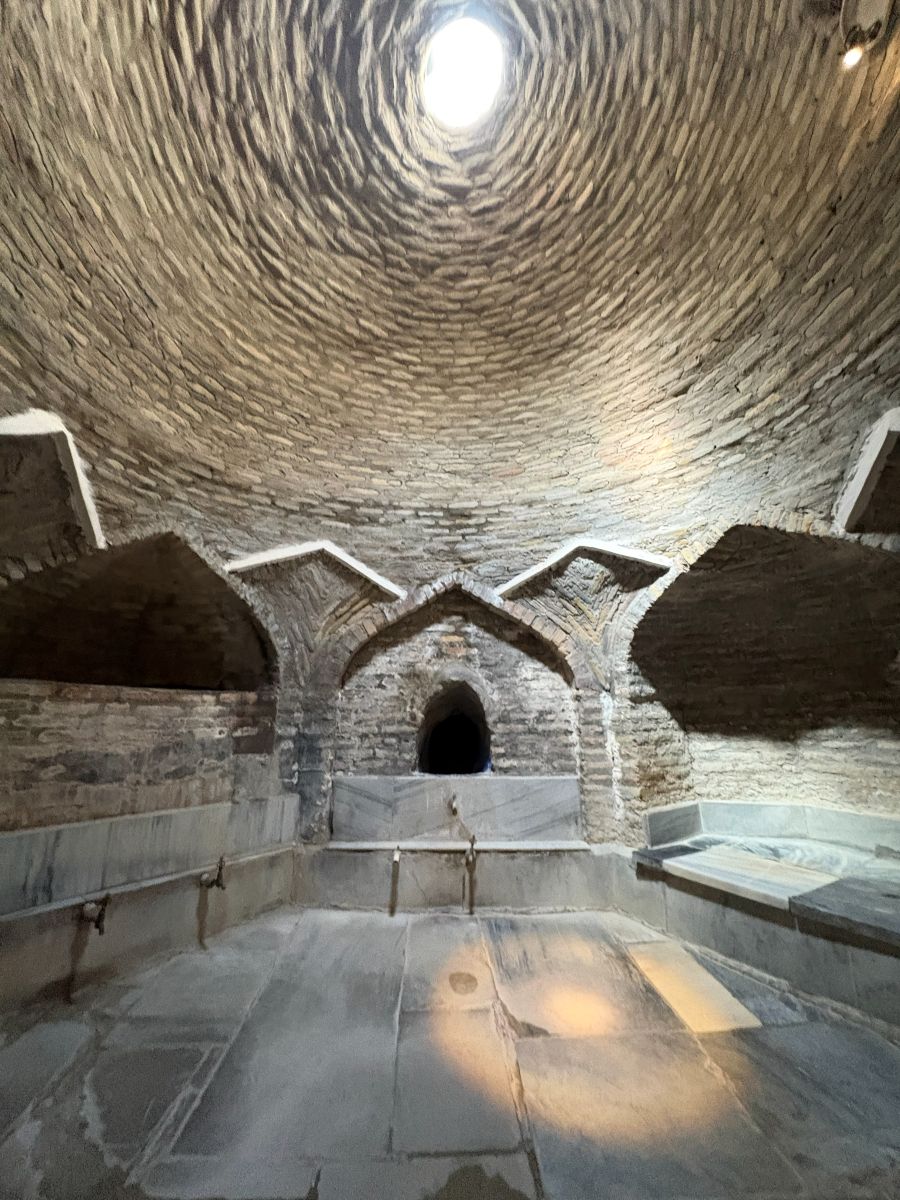
I reach what I think is the farthest dome, the fire is just behind this wall, heating the water pipes that flow back into the domes behind me. I have always wanted to see one of these only ever viewing ruins of them in many countries. This is an experience I will never ever forget.
Tim Abdulla Khan Trading Dome
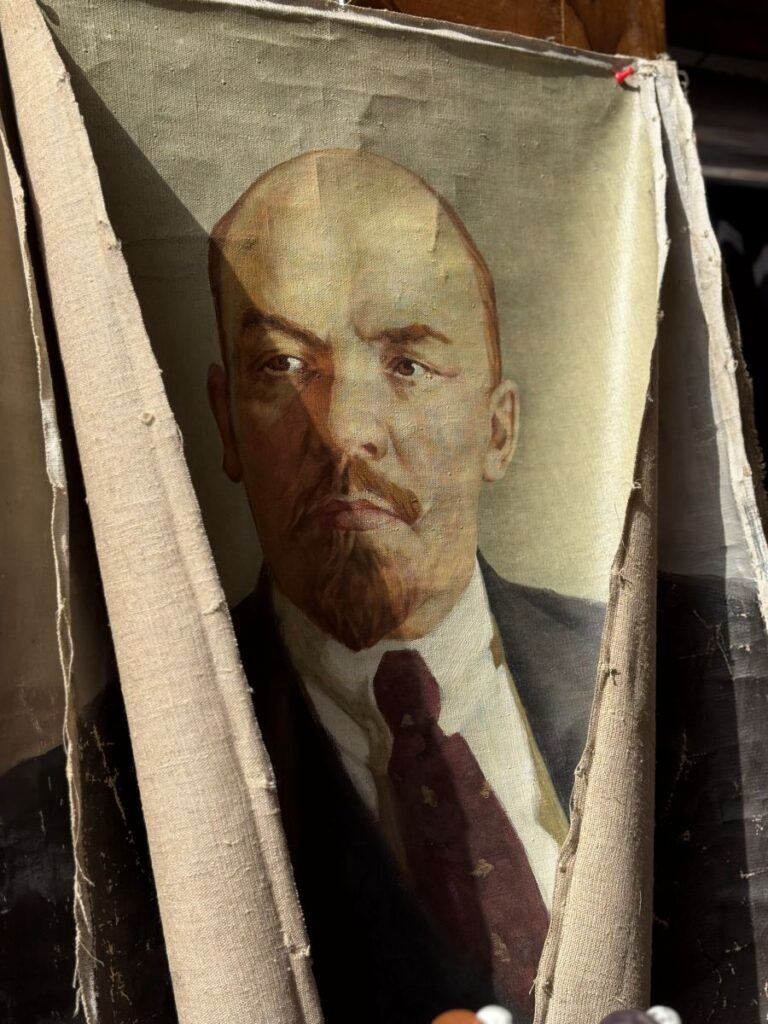
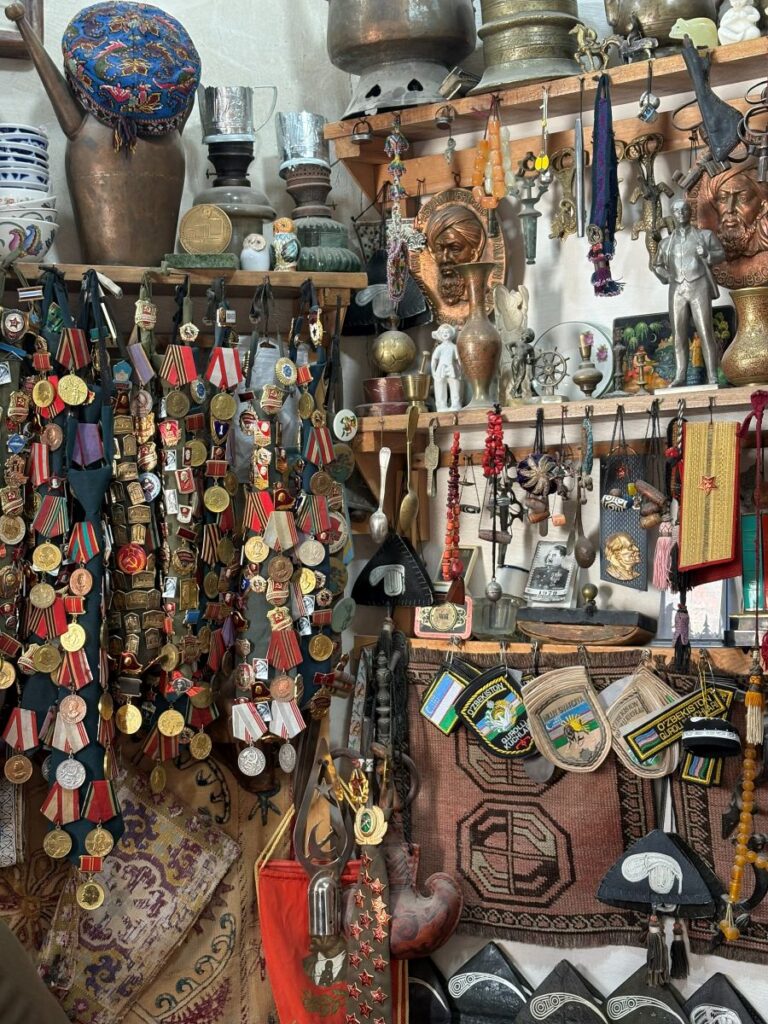
Remember Bukhara was a hub of commerce for centuries. The Silk Road brought hordes of people to and through this city. This dome today is filled to the brim with traders selling their wares. Including this young gent that has an antique stall bursting with mostly old soviet items.
Abdulaziz Khan Madrasa
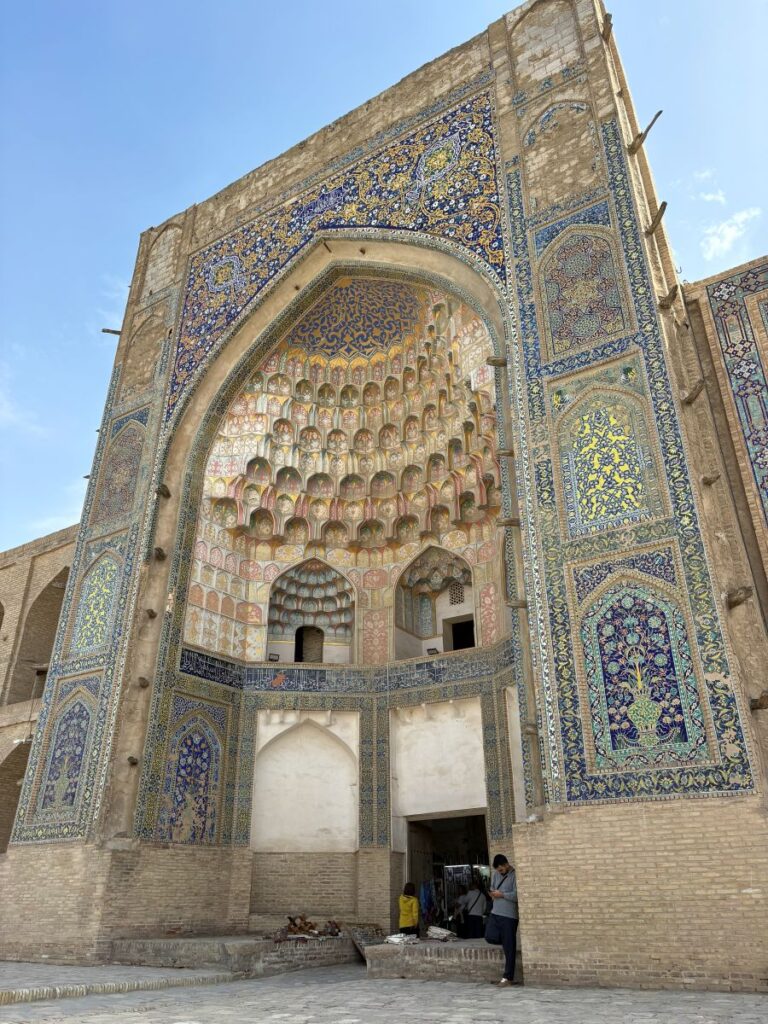
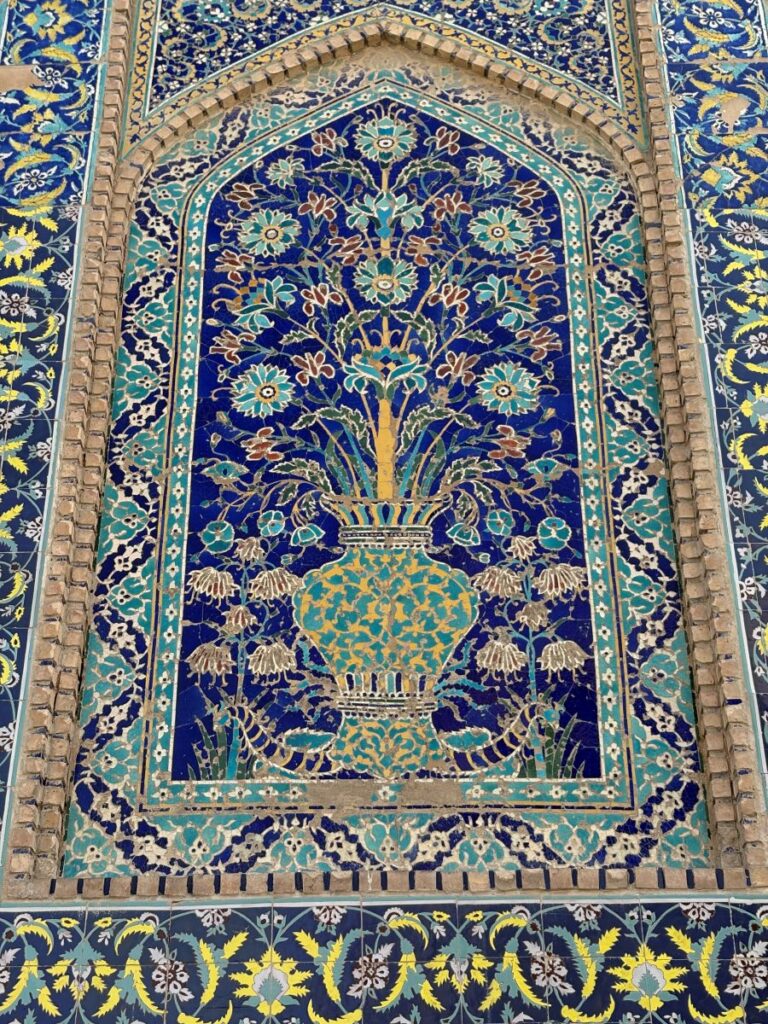
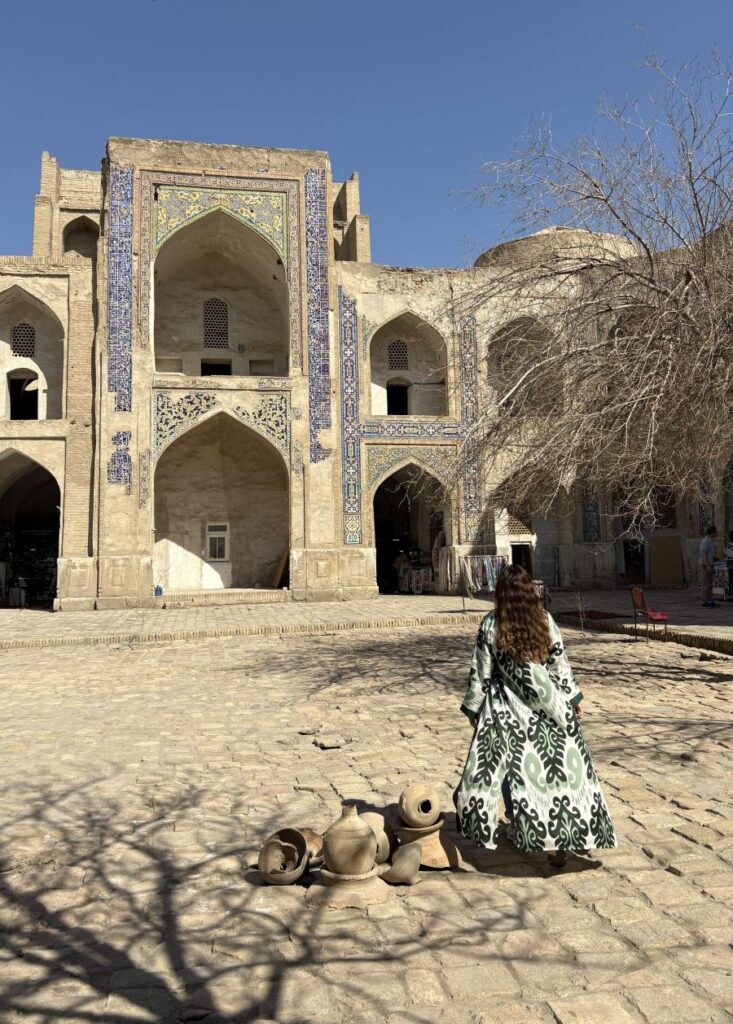
Passing the trading dome and we come across several incredible structures. One of these is the Abdulaziz Khan Madrasa. Build in 1652 by the name’s sake, he was dethroned before the school could be completed. It was the first time bright yellow tiles were used in Bukhara and the interior courtyard is where they shine. It’s also the only madrasa where I see original paint and plaster in abundance and I am transfixed by these old colours and textures.
Kalan Minaret
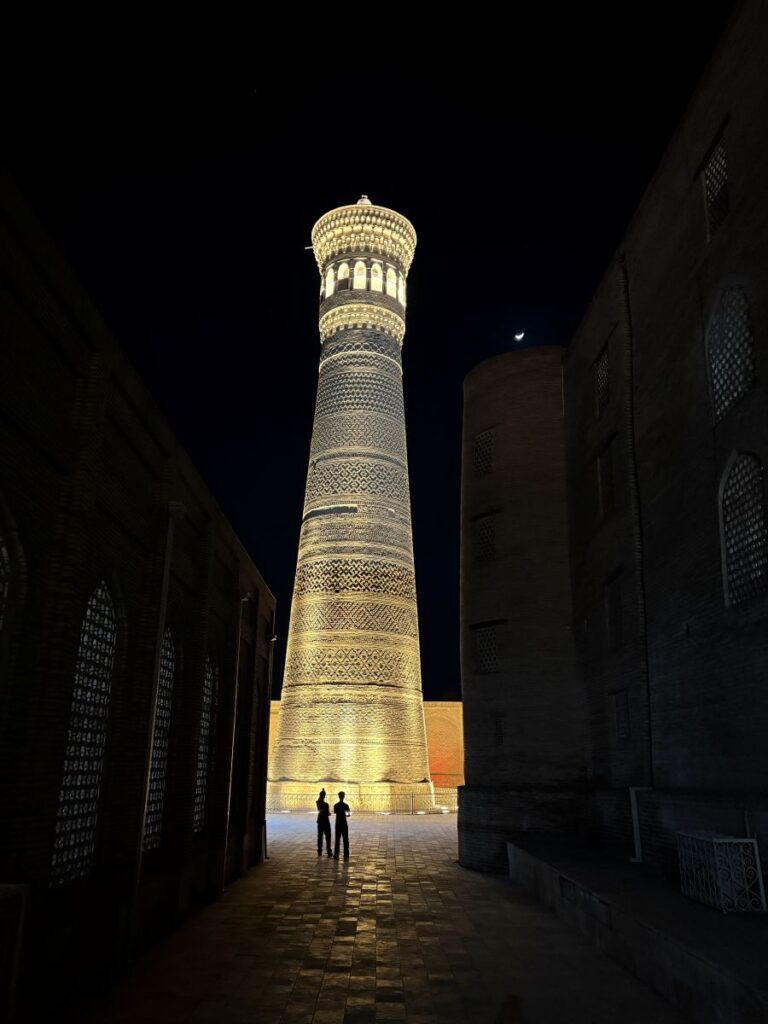
If you are still with me dear reader, we have reached the apex structure. The only thing Genghis Khan did not destroy; he admired it so much. A stunning piece of architecture it soars 48 meters into the sky and has a 30-meter circumference at the base.
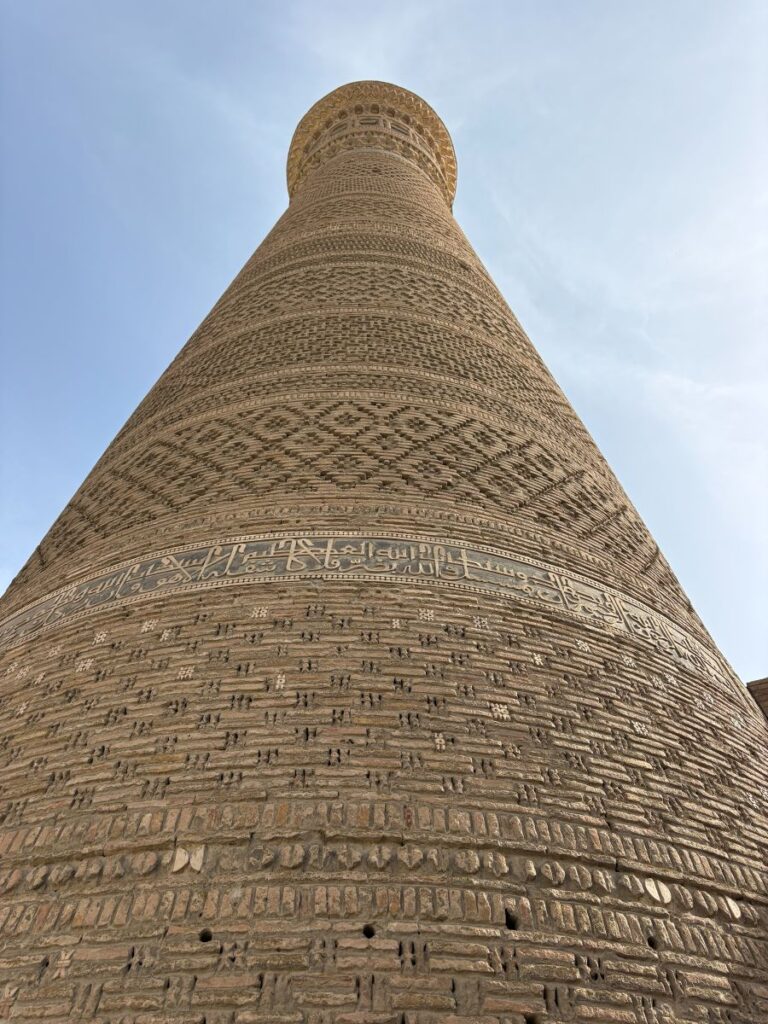
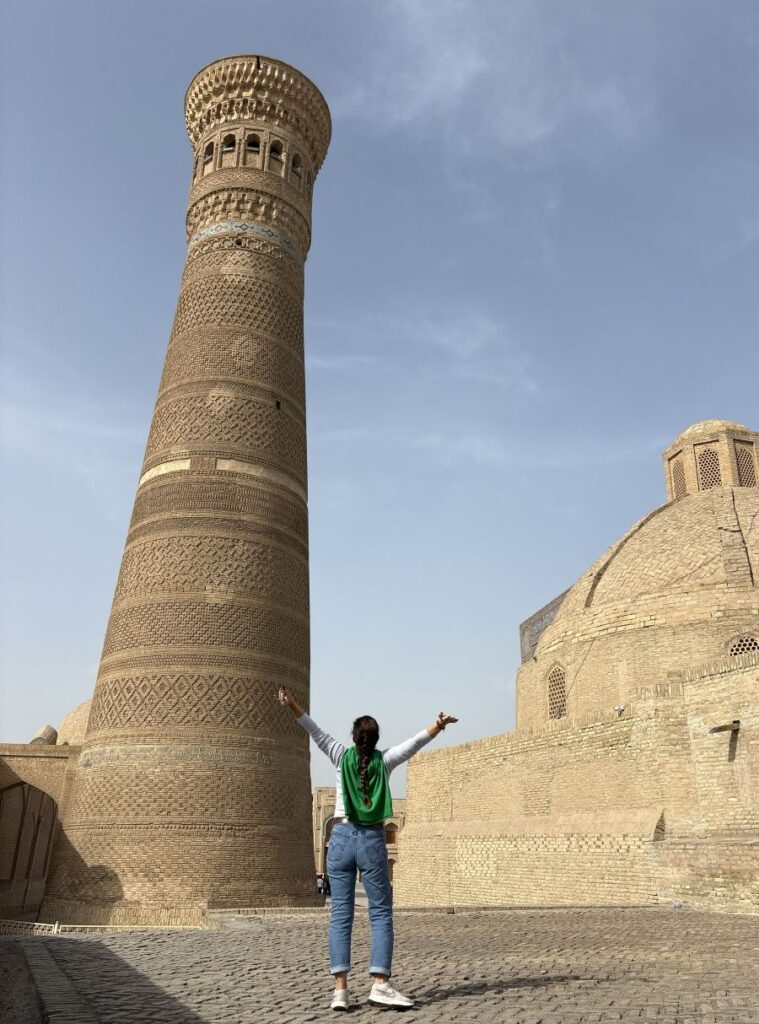
Built in 1127, it was heavily damaged in the 1920’s by soviet bombs. The tower we see today is the reconstruction from this period. During times of war, it served as a watchtower. Up until the 20th century it was sometimes referred to as the Tower of Death, as criminals were punished by being thrown from the top.
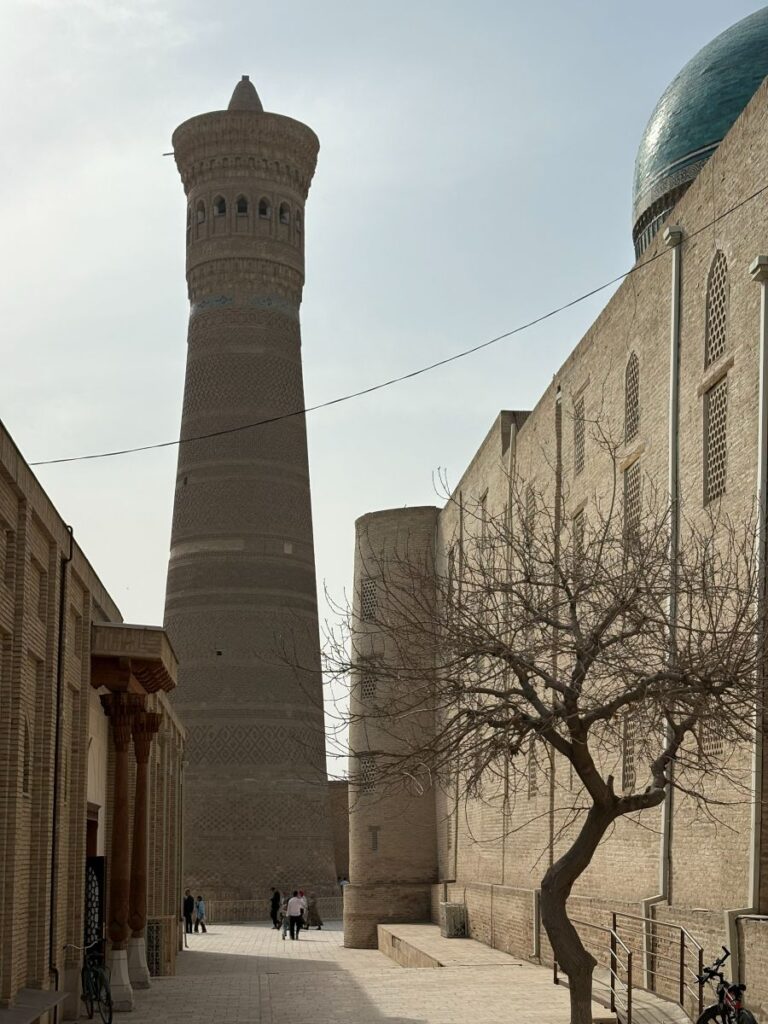
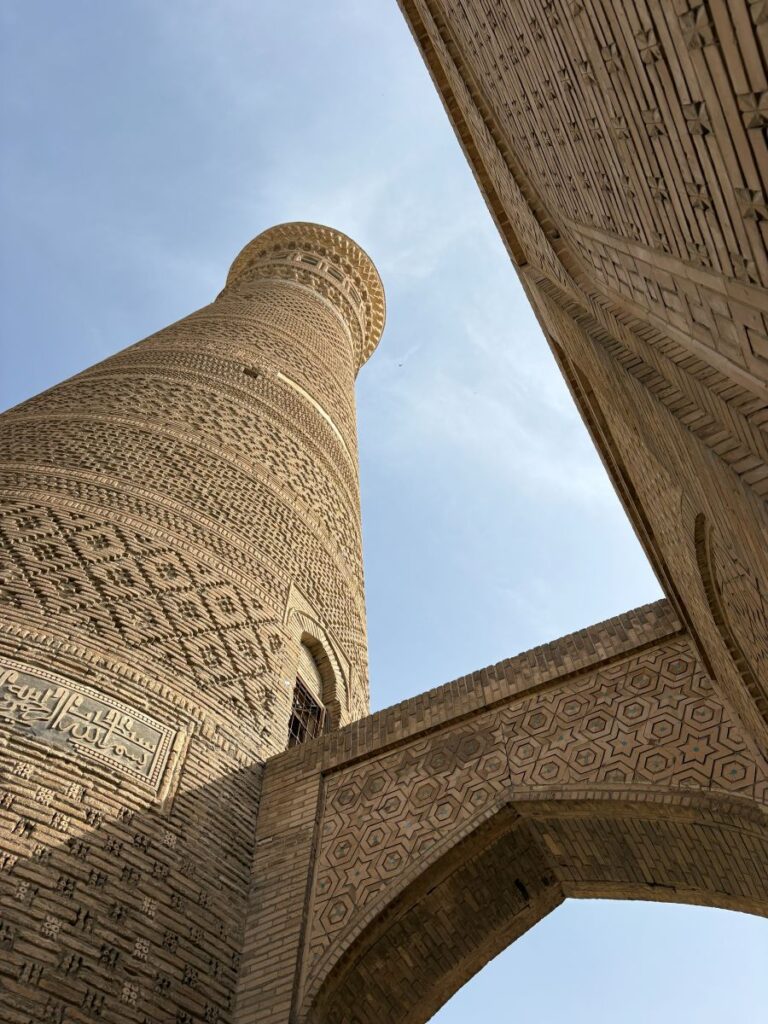
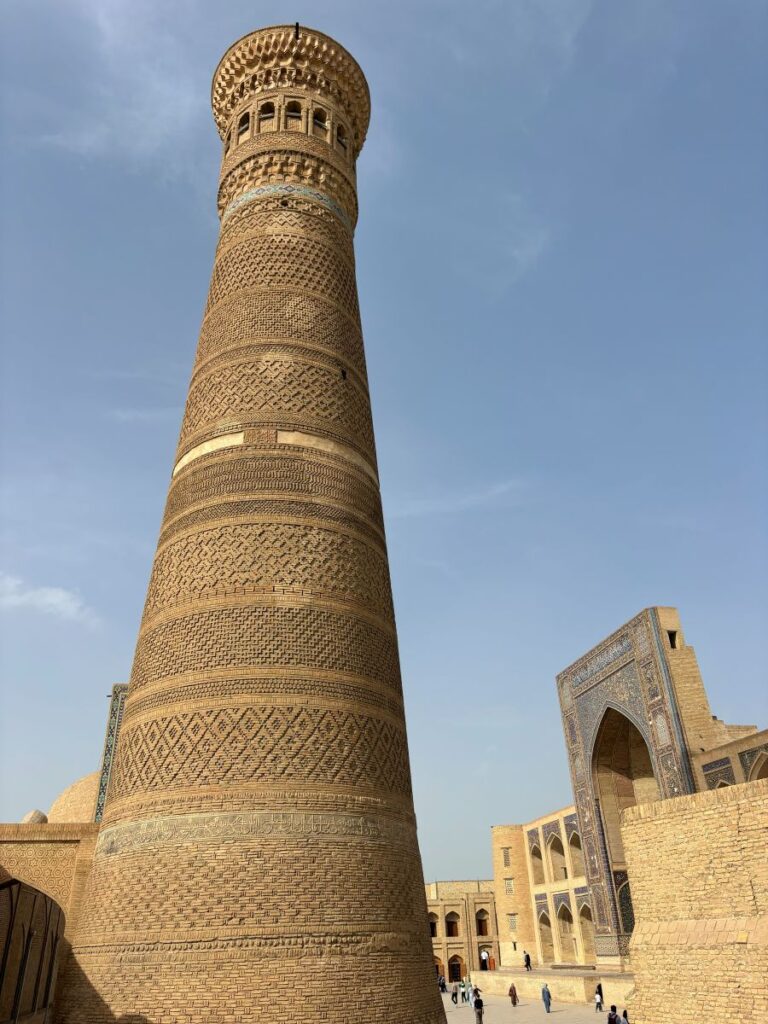
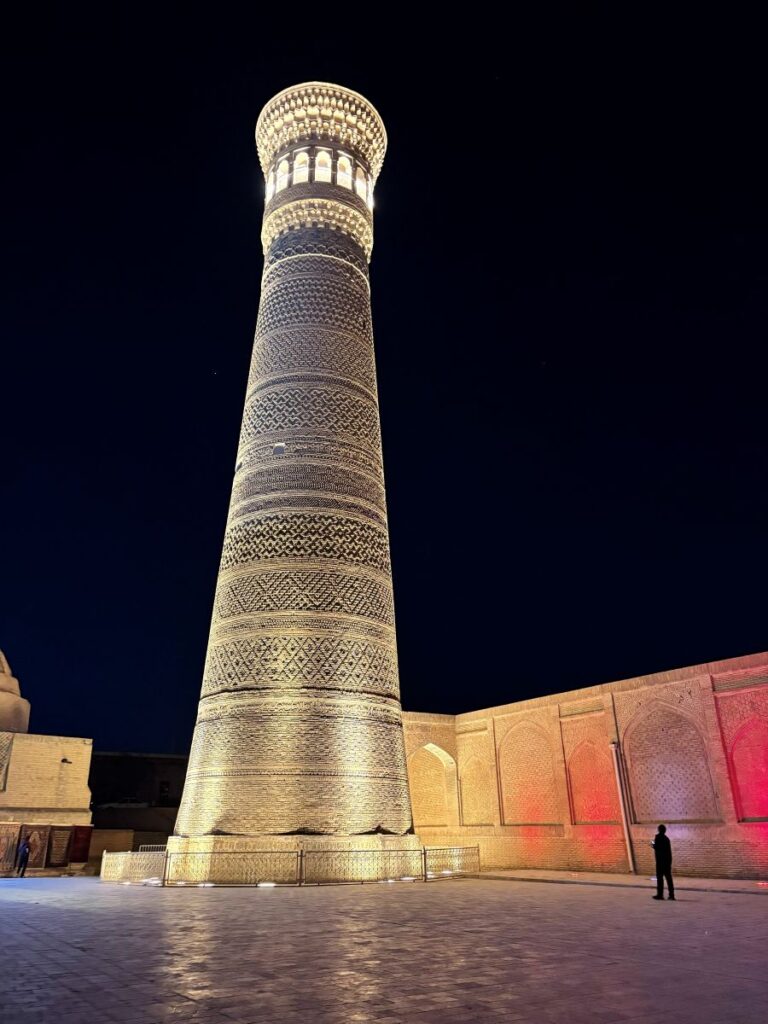
Made entirely of brick, the underground foundations depth has never been reached. At one time it was excavated down 13 meters and they had still not reached the bottom. The detail of the brick work is fantastic and even more extraordinary to see at night, when lights showcase this incredible historical minaret.
You know, I could add another ten structures easily, but alas, I must not let this post run any longer. Hopefully this provides a small taste of just how much and how amazing this clustered core of historical Bukhara holds. The first time I walked through, from one end to the other, my jaw was on the ground. One incredible structure after another. I simply have no words to convey how domineering, exquisite and unreal this place is.