If you have made it to this far-flung destination in Uzbekistan, it is for one reason. Khiva is the larger city in general, where most of the local population resides. Full of schools, banks, shops and malls, there are things to see there that definitely need their own post. But for today, we are going to focus on what lies behind the foreboding mud brick walls. Beautiful Itchan Kala Khiva the ancient city is a treasure trove of Islamic architecture.
Brief History
What began life as a small caravan stop along the Silk Road 2,500 years ago, has blossomed into a living museum. In the 13th century the region was conquered by Genghis Khan and later by the Timurid Empire. This is the time period for some of the earliest structures still visible inside the fortress. In 1598 Khiva had developed to the point that it became the capital of Khorezm. A large number of buildings were constructed during this boom spanning two hundred years. These were later destroyed by conflicts between neighbouring Bukhara and Iran.
The old city as we see it today, Itchan Kala, was mostly developed during 1780 and 1850. Incredible palaces, mausoleums, mosques and the iconic minarets were erected during this period of prosperity. In 1873 Khiva fell to the Russian Empire and in 1969 became the very first UNESCO World Heritage Site in Central Asia.
Logistics of Visiting Itchan Kala
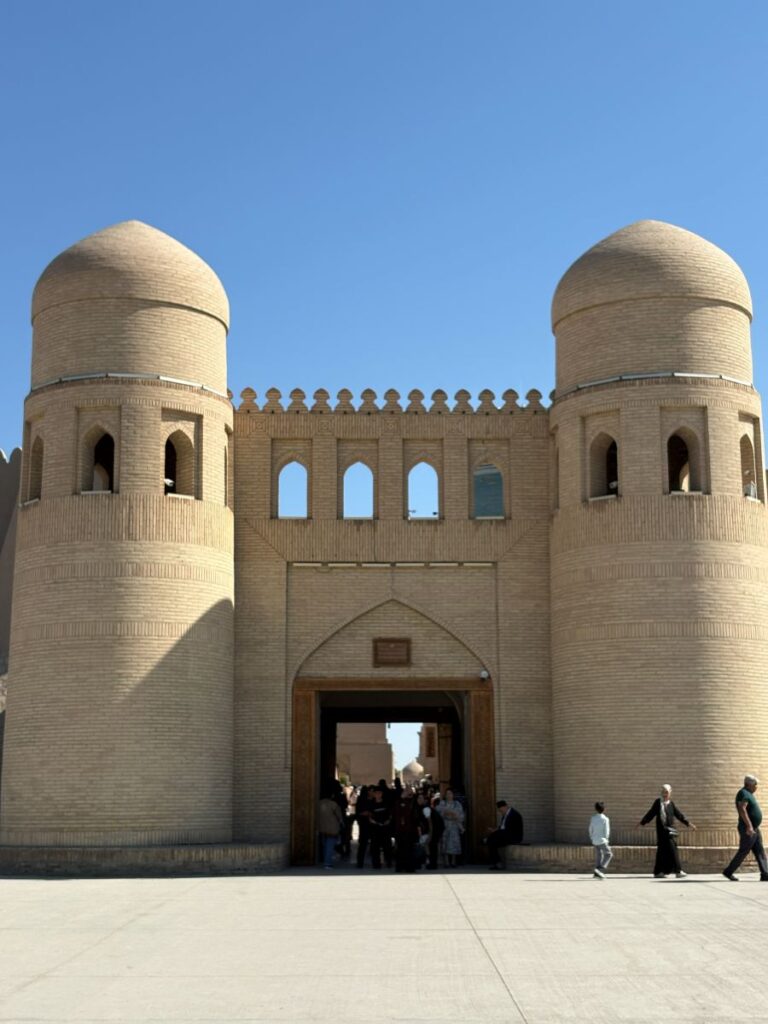
Let’s discuss this part first as its critical information for your time spent here. The walls and all that is inside is called Itchan Kala. Every visitor must purchase a ticket to enter. The main ticket booth is located outside of the West Gate (Ota Darvoza). Prices vary depending on how much you want to see. I recommend paying the full price and having the freedom to enter every building.
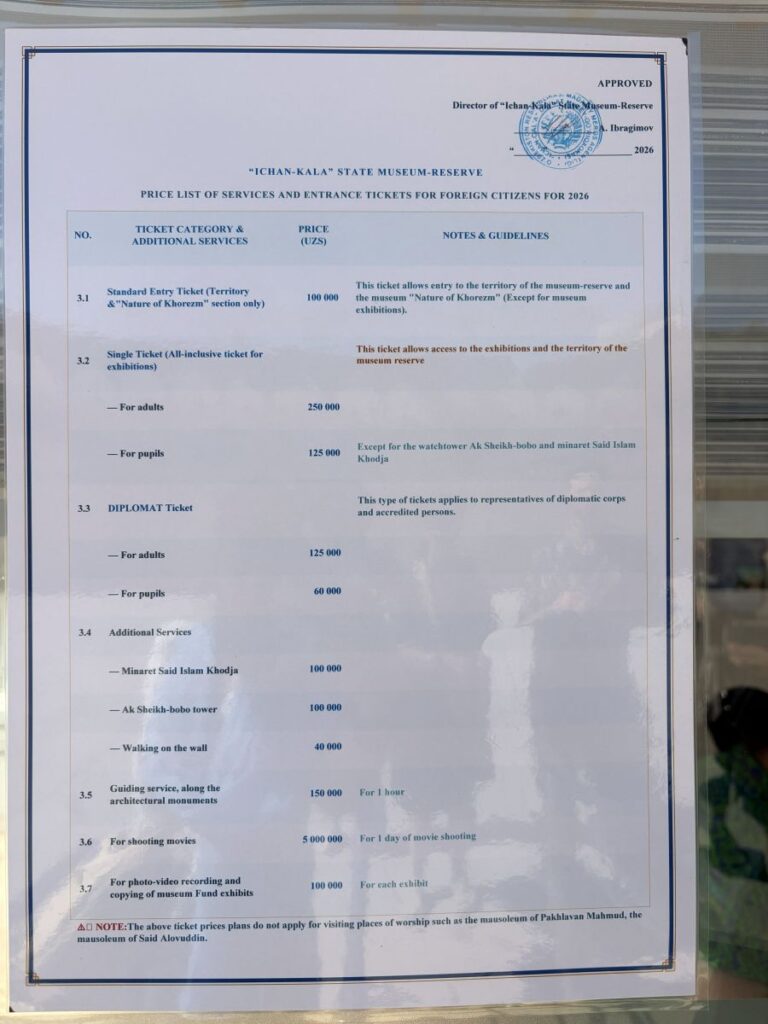
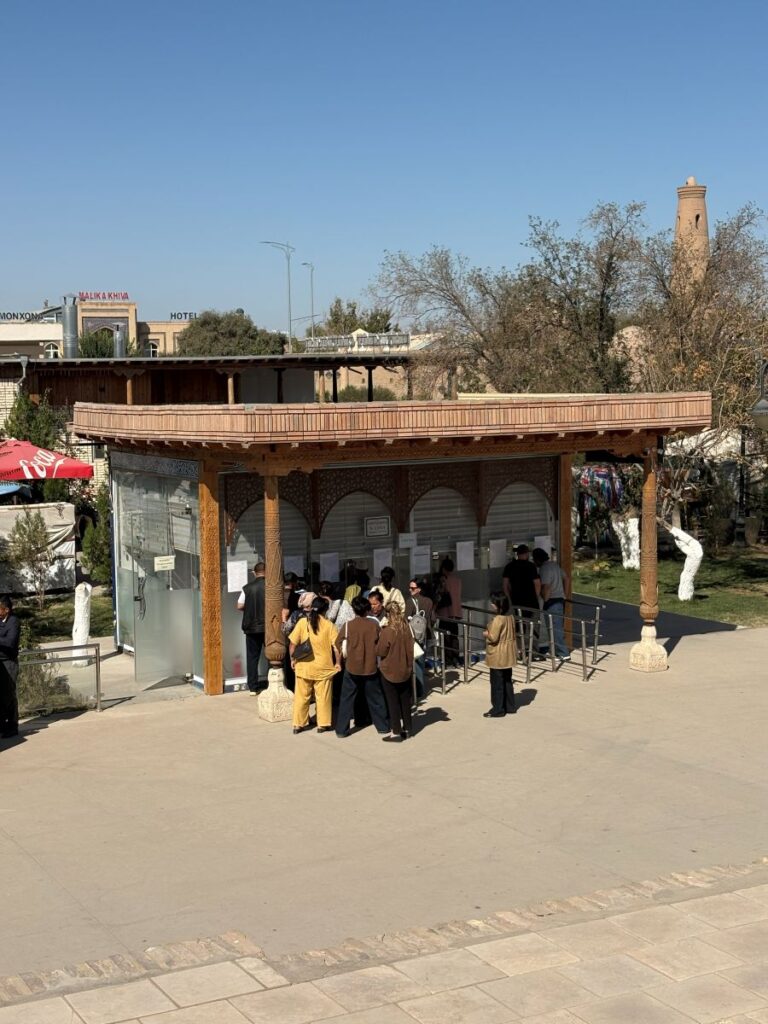
Unlike Bukhara where you are virtually free to visit and enter anything at no cost, here in Itchan Kala they are strict. Every mosque, mausoleum, minaret, the walls, literally everything has a manned turnstile or guard asking to see your ticket. If you have simply paid to enter the city itself, you will not be allowed inside the other buildings (with very limited exceptions).
A few hotels are located inside Itchan Kala. I chose to stay at one of these and therefore not have to pay the fee to enter the city every day. A cost savings if you will. I did not purchase the extra tickets to see inside each and every building. This post will mainly cover what you will see from the exterior of each structure. With the exception of two places that I was able to enter for free.
The Minarets
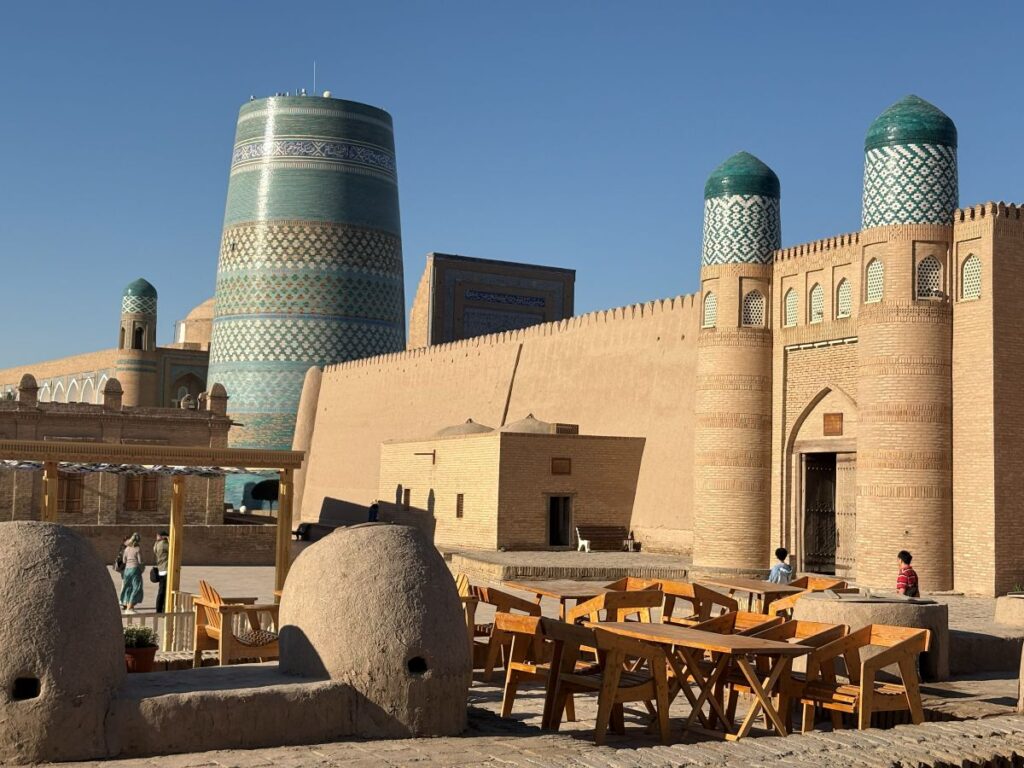
There are two and they are equally stunning. These are what you will see if you Google search Khiva. The first and most robust is called Kalta Minor that absolutely dominates and landscape. Construction began in 1852 at the bequest of Muhammad Amin Badadur Khan. It was to be the tallest minaret in the world. Unfortunately, work was halted when the Khan lost his life in battle in 1855. The diameter of the base is over 14 metres and it was possibly going to reach a height of 110 metres. Covered in turquoise, green and white tile, it is an extraordinary example of Central Asian Islamic architecture.
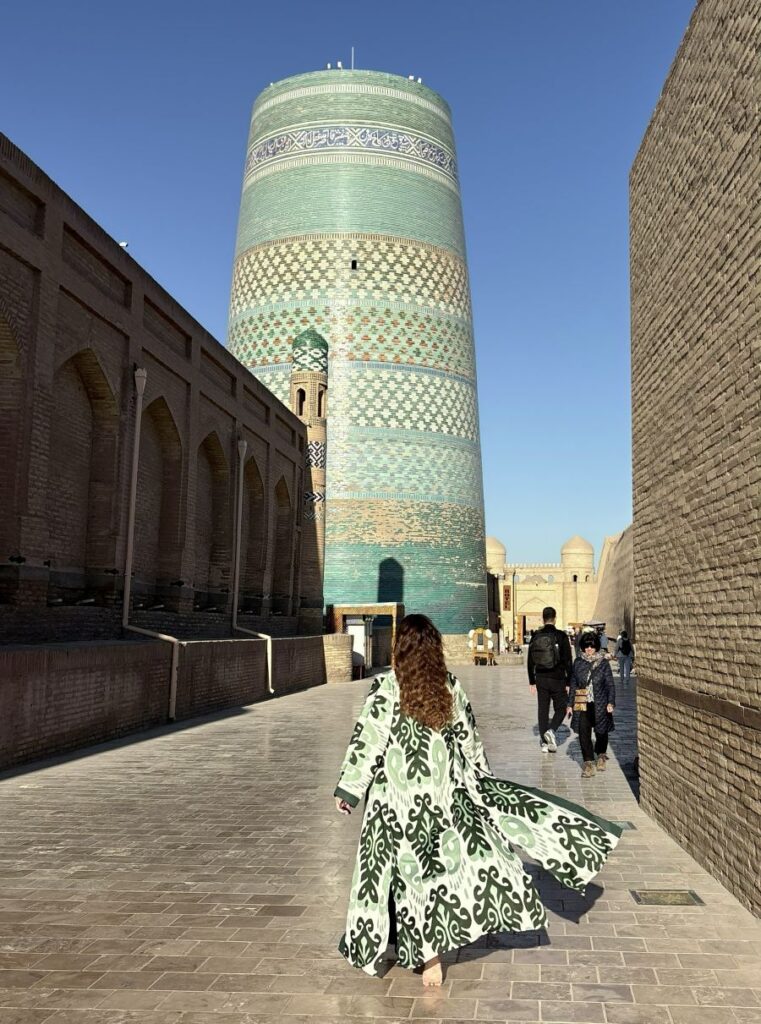
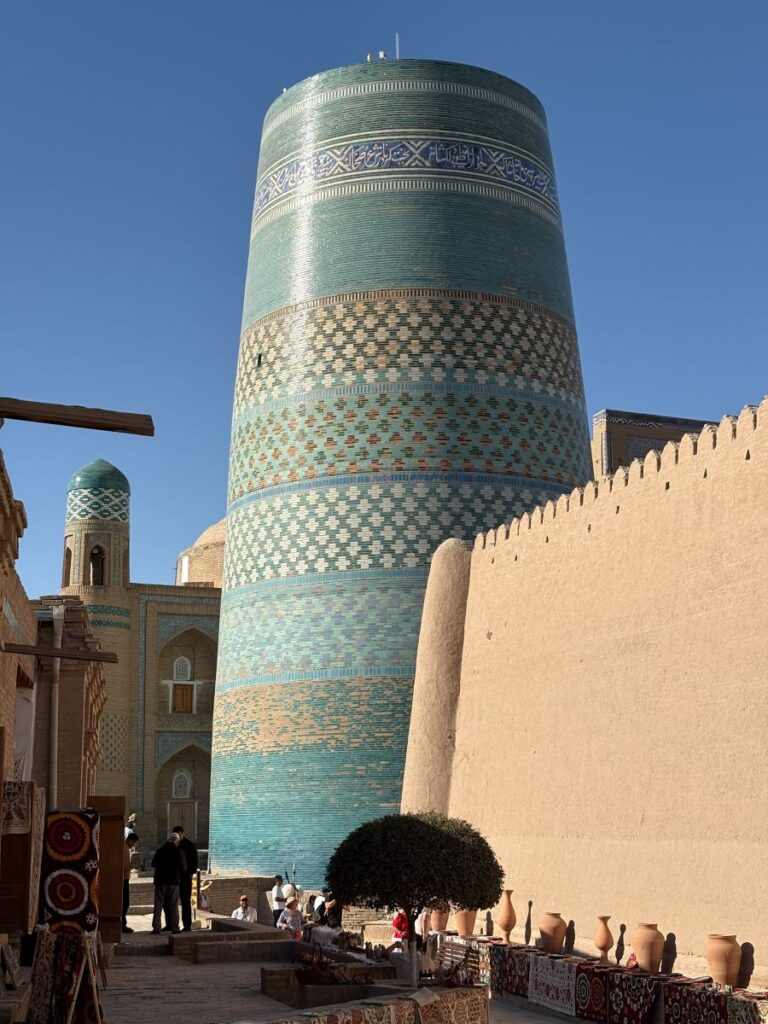
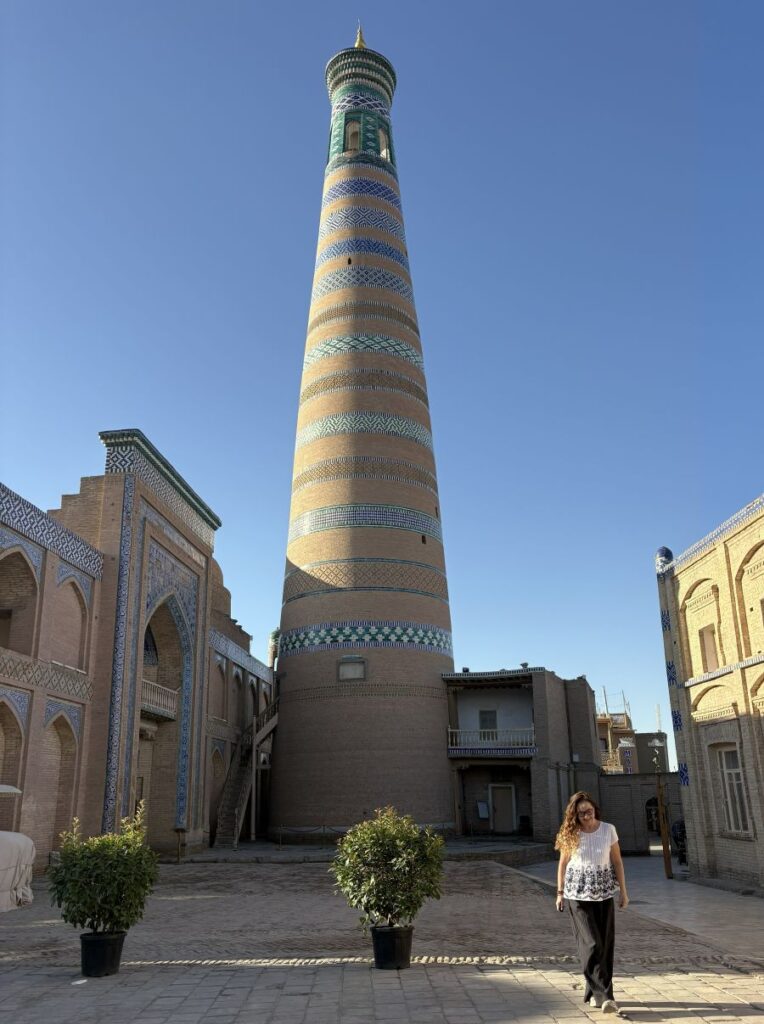
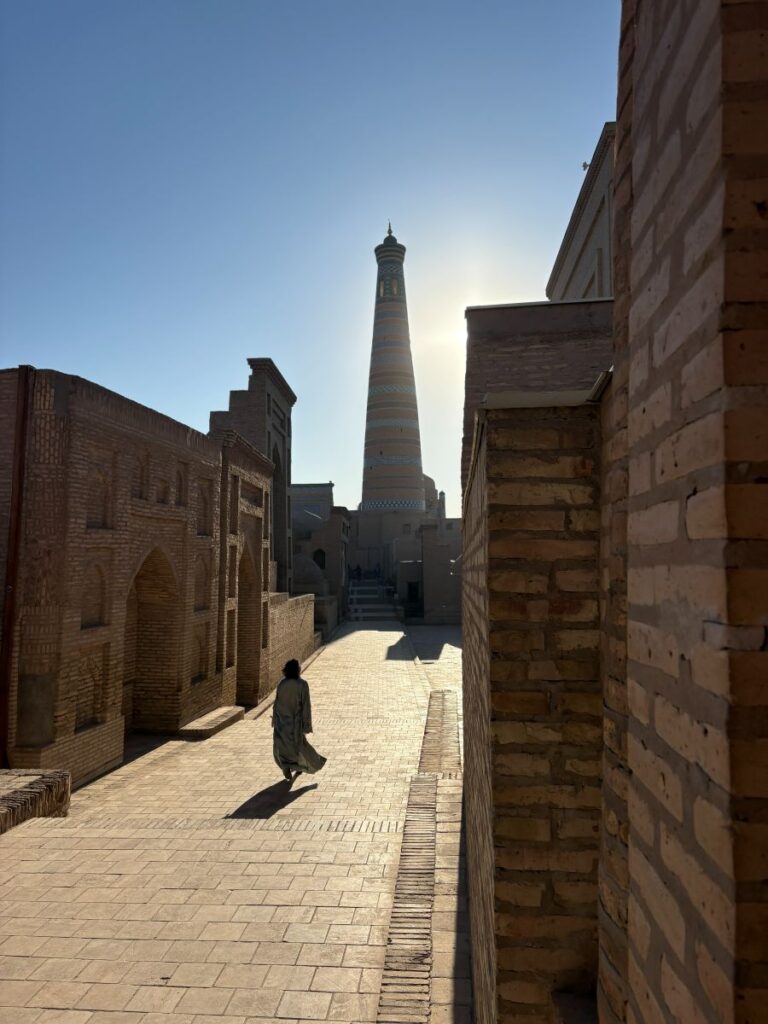
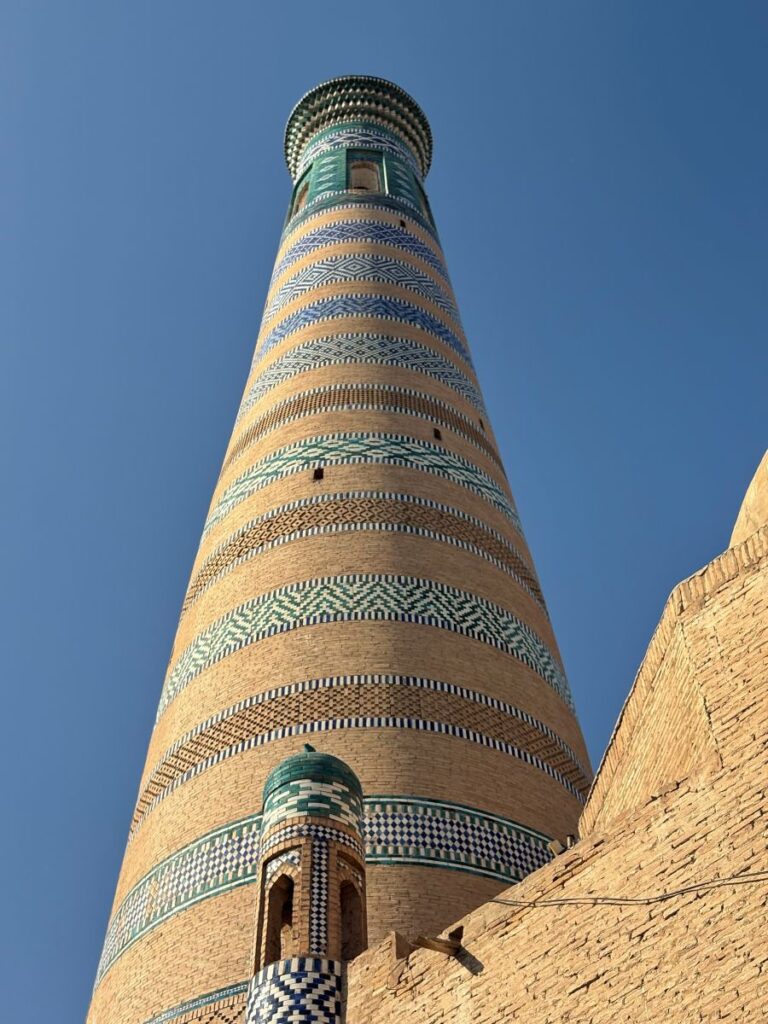
The second incredible minaret in Itchan Kala is called Islam Khodja and was constructed in 1908. It is the second tallest minaret in Central Asia and stands at a whopping 56.6 metres tall. It forms part of a complex that includes a madrassa (school) and mosque. There is a set of stairs inside that you can climb of course for a fee. The diameter at the base is 9.5 metres and standing close to look upwards, the top all but disappears.
Juma Mosque
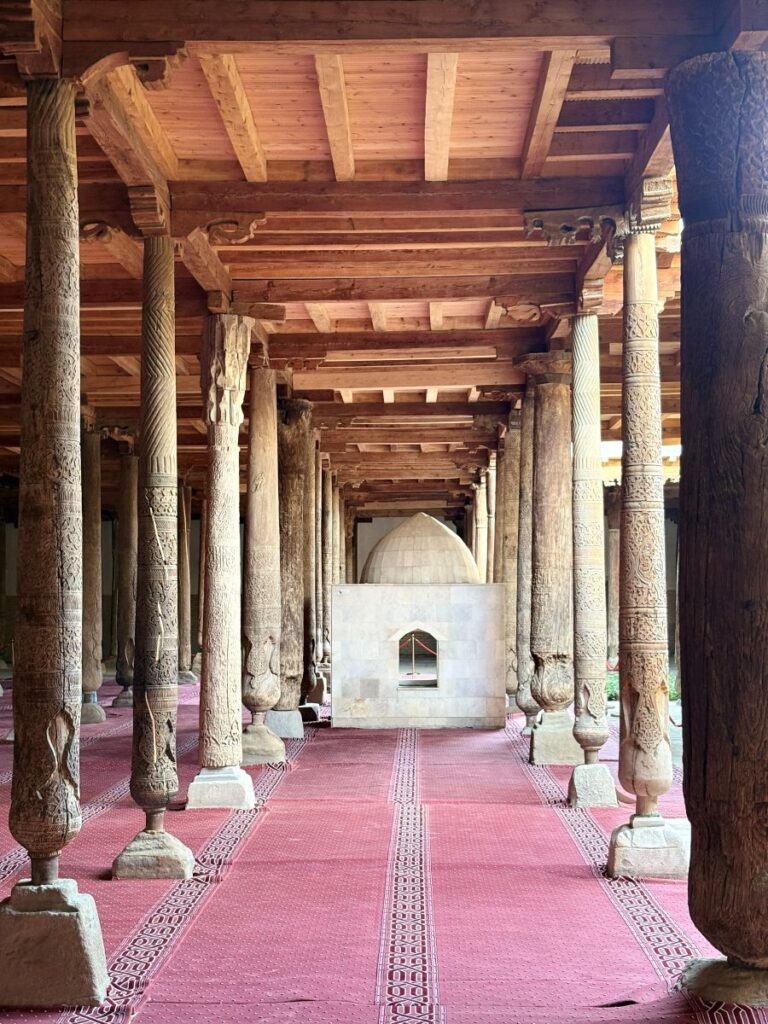
If there is anything I would pay to see inside of in Khiva, it is this. From the exterior it is the blandest and plainest single story brick building with one single non-descript door. But enter through that door, and see instantly why it is referred to as the ‘forest mosque’.
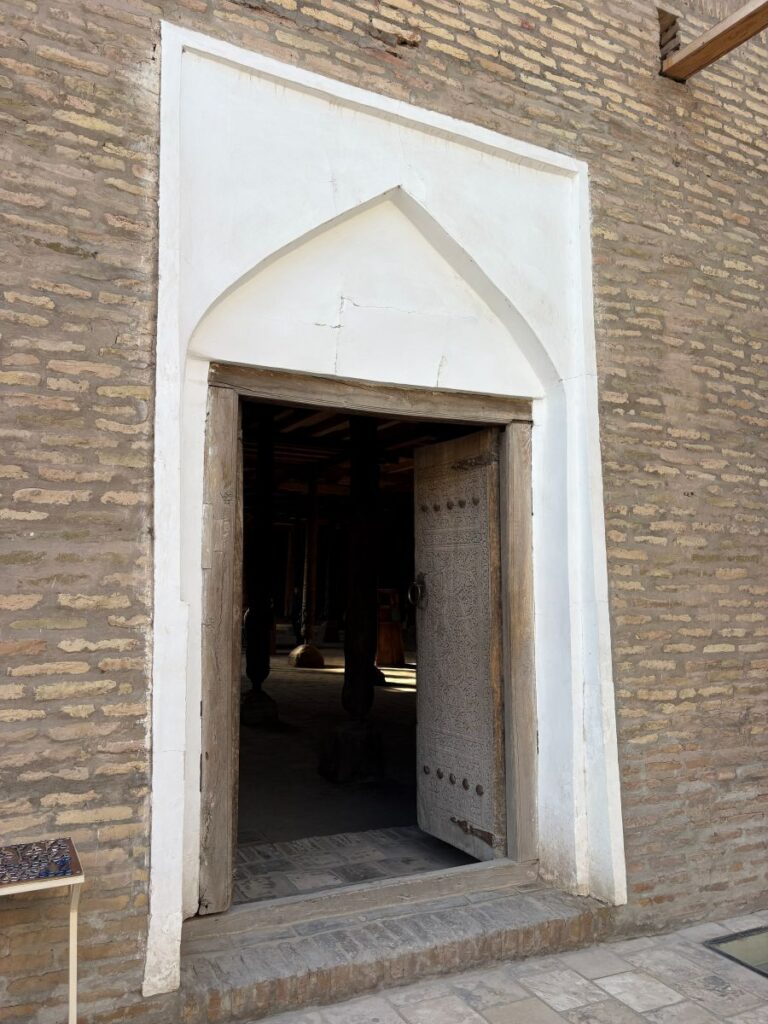
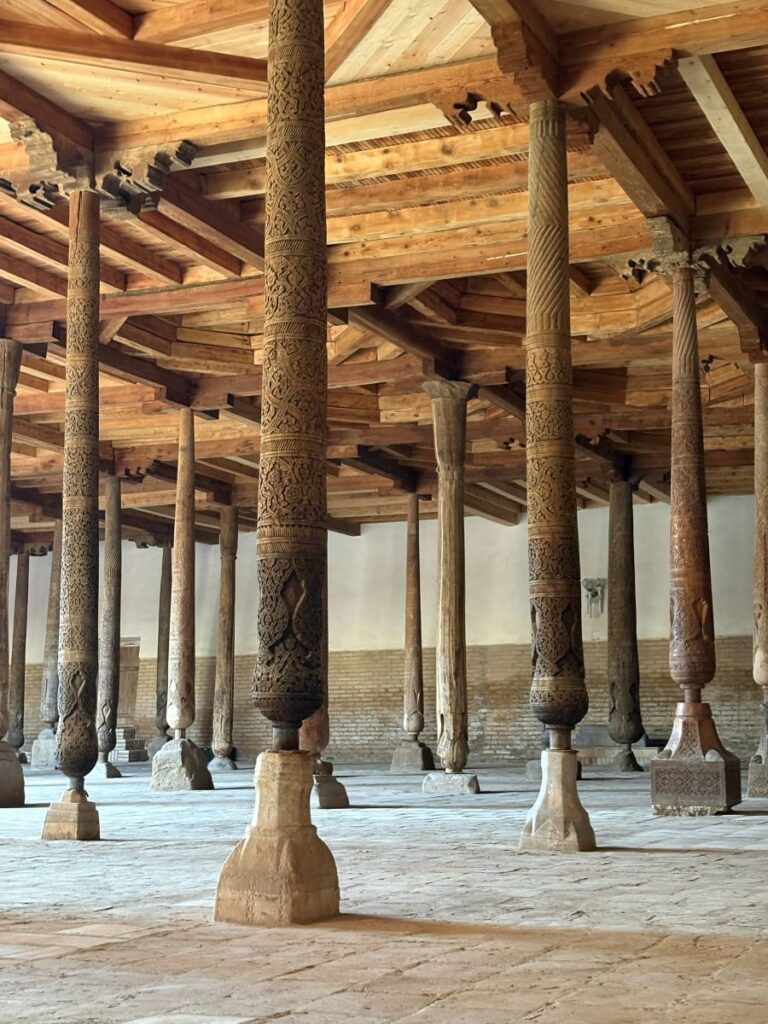
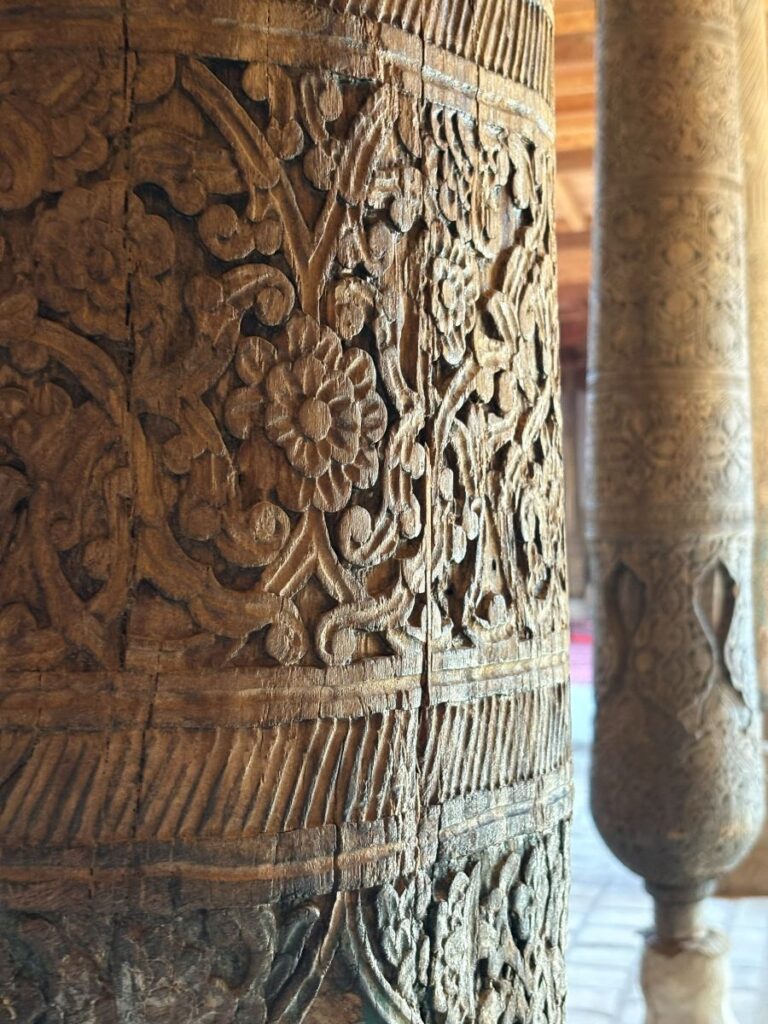
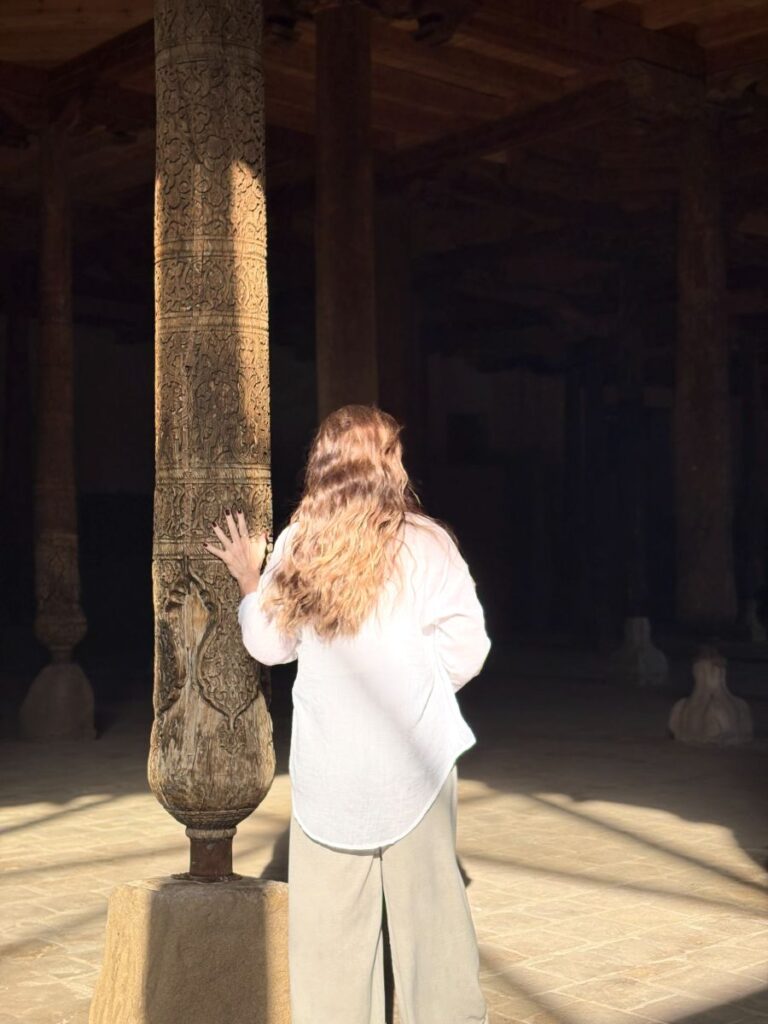
Lit only by the gentle sun-rays that reach inside through an opening in the ceiling, the vast space is a forest of over 200 old carved elm tree trunks. These pillars rest upon a stone or wooden base with a piece of camel hide in-between. The hide protects the post from termites and moisture coming up from the ground. This quiet space is its own world of peace, mystery and beauty. Inspect the carvings to see some truly skilled master’s work. Simply walk around or take a seat on the carpet, for a feeling of calm and rest.
Pakhlavan Mamud Mausoleum
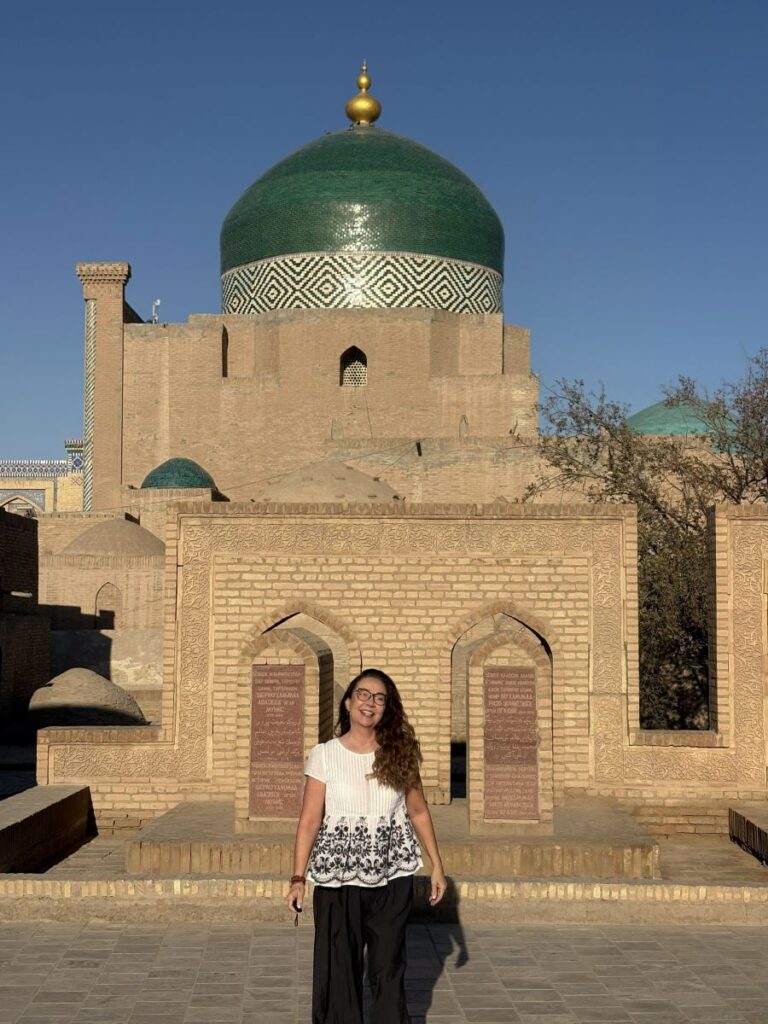
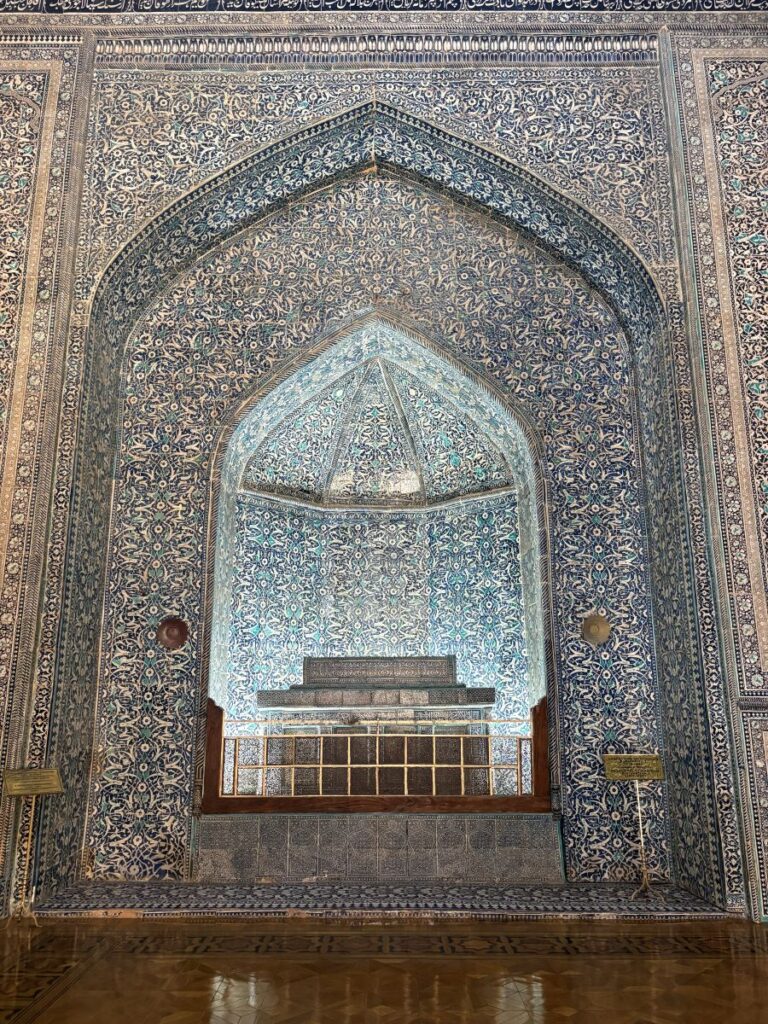
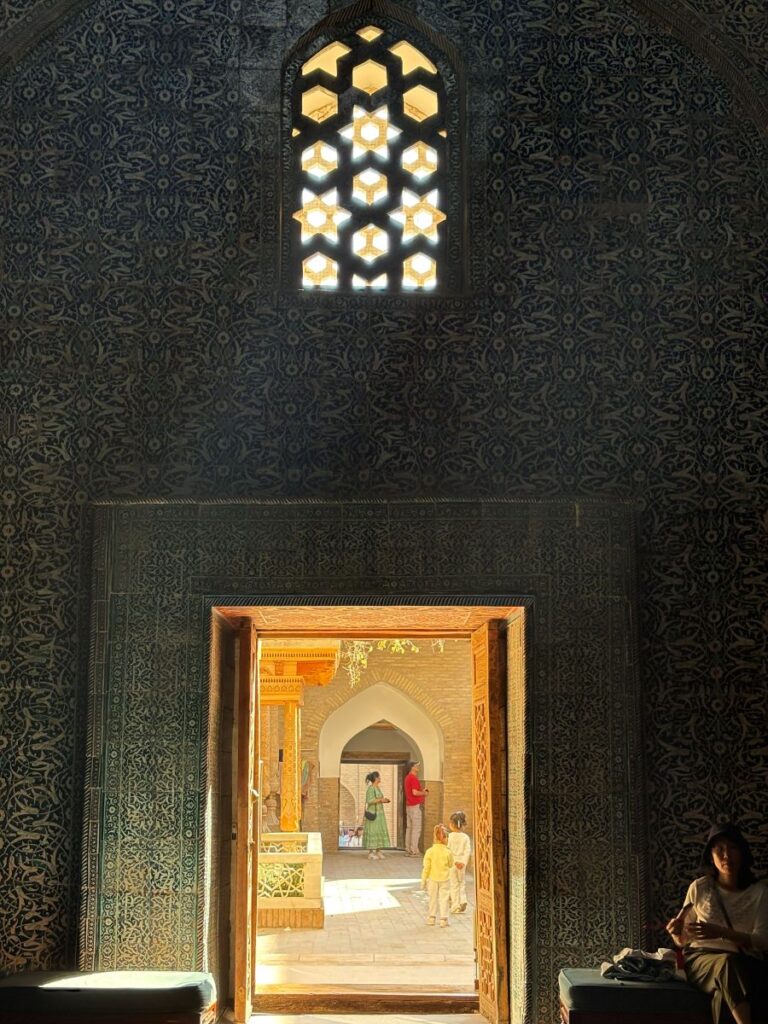
This is one of very few buildings that visitors can enter without having to show a ticket. It is a must see, a work of utter beauty. Pakhlavan Mamud was a poet, craftsman and philosopher who was buried here in his modest workshop. After his death the people began to revere him as a saint and build this mausoleum over him in 1664.
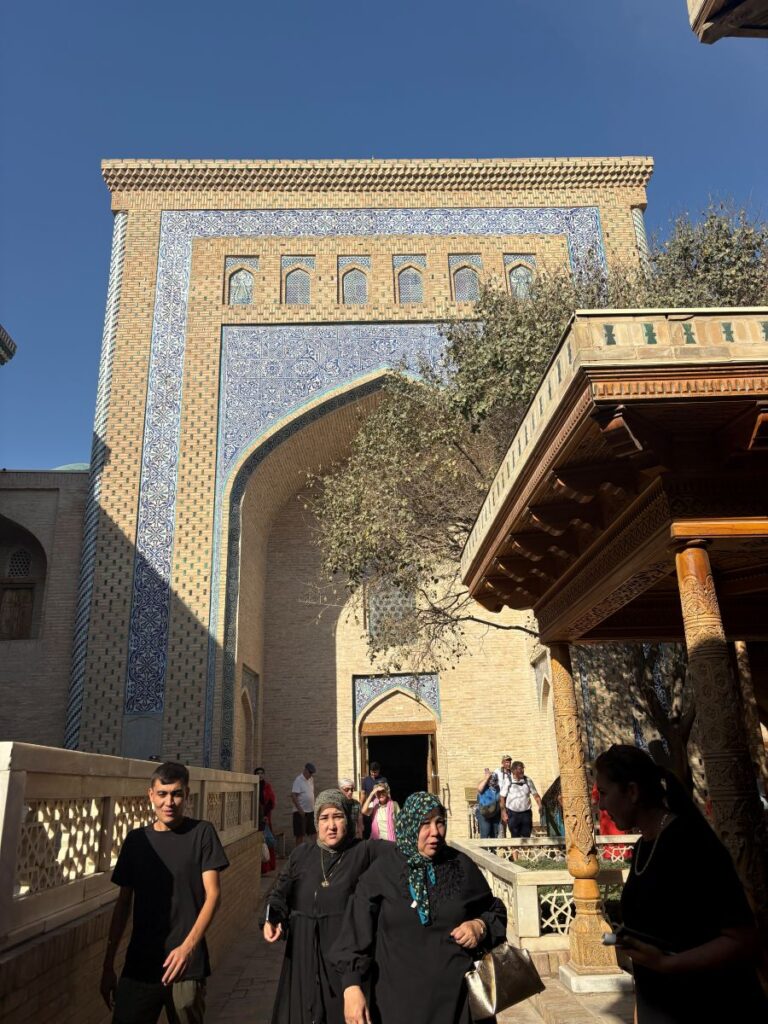
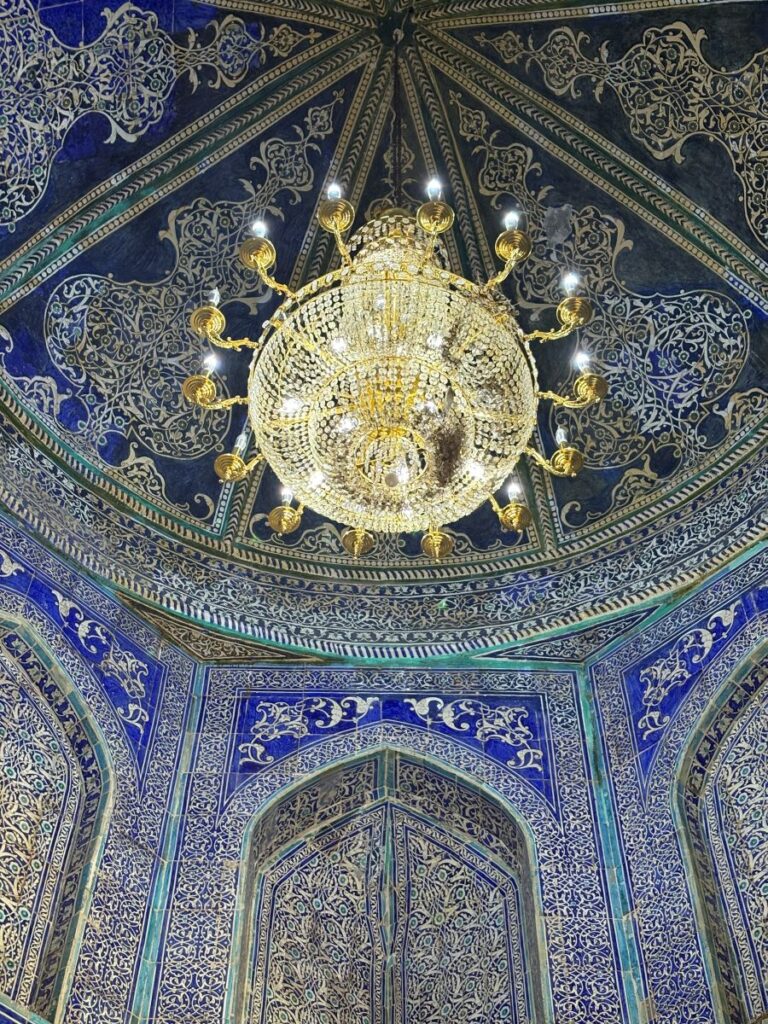
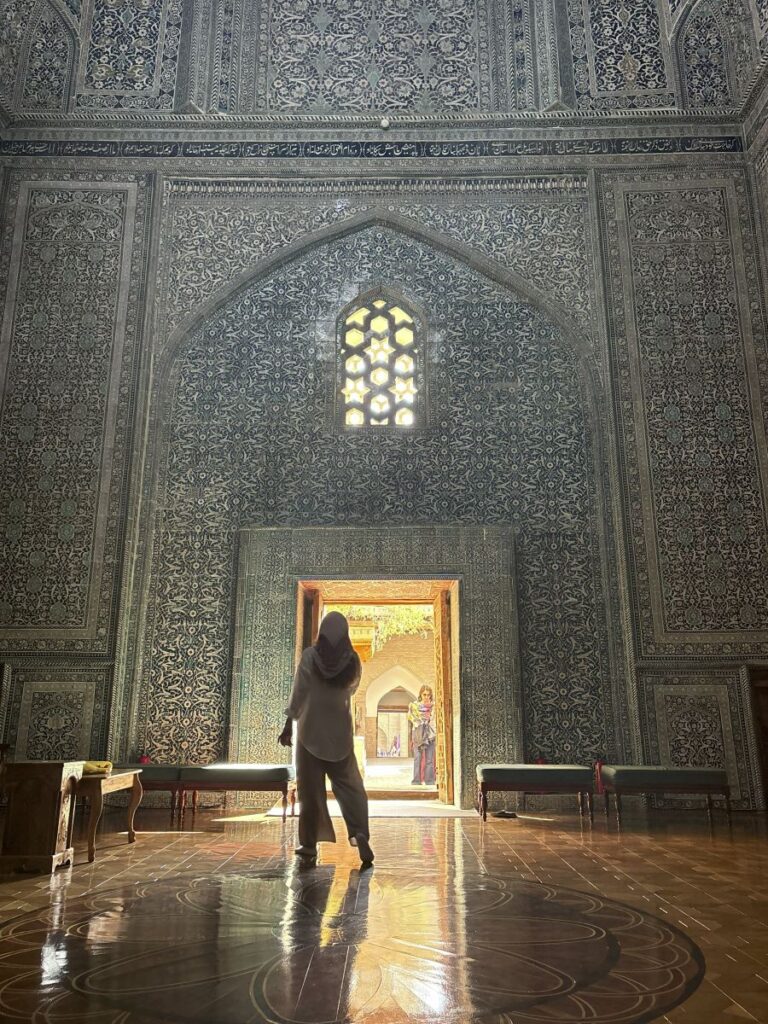
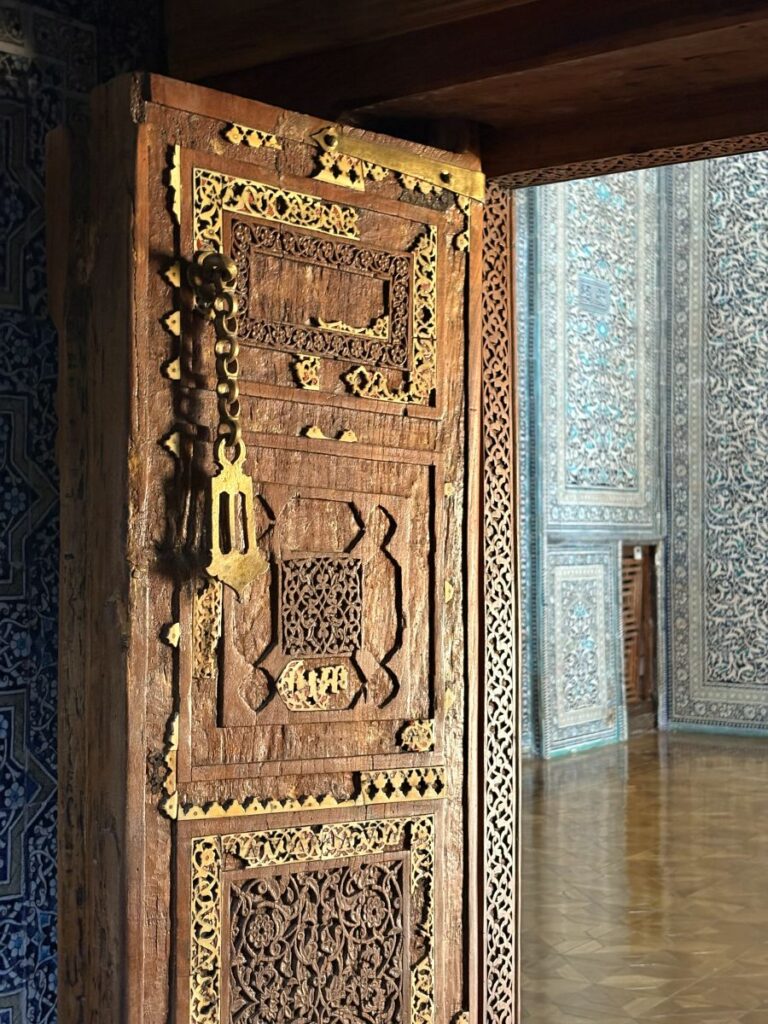
The interior consists of several rooms and you will need to remove your shoes and wear a head scarf to enter. Every square inch of the walls is completely covered in the most exquisite blue and white tile. Old carved wooden doors are embellished with iron hardware. There are several tombs that fill the various rooms, large and small. Inside the largest domed space, the light is ethereal and the atmosphere mystical. While I was inside with head tilted back admiring the dome, a man chanted an Islamic prayer. His beautiful voice resonated around the space and is a precious memory that I will never forget.
The Walls
Of course, there are many many more places of interest in Itchan Kala and I will show you what those look like in another post that focuses on the streets and handicrafts. But the most surprising aspect of Itchan Kala for me personally is the walls. The original foundations date back as early as the 5th century BC. What we see today was predominantly constructed in the 17th century. There are four gates, north, west, east and south and all are operational and guarded.
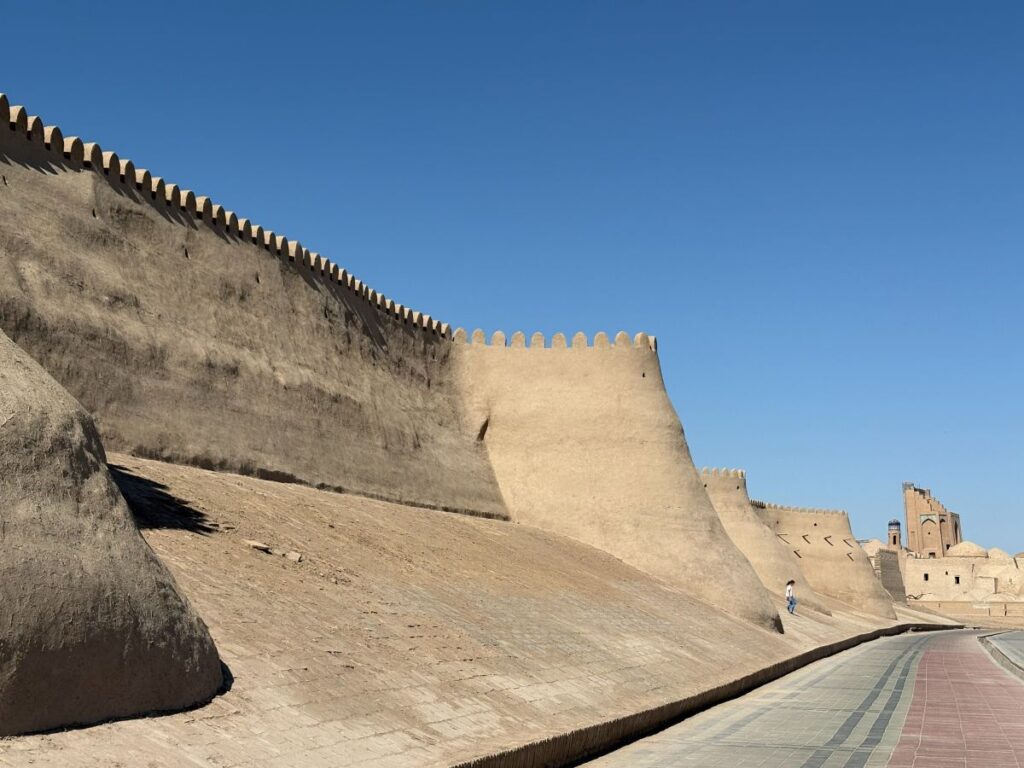
The walls are made of an adobe mud brick and covered in a mud and straw plaster. They range in height from 8-10 metres and are 5-6 metres thick. I walk these walls on both the outer and inner ring; the distance is roughly 2.2km. One feature that struck my curiosity are all the graves that appear to be almost embedded into the slopes of the walls.
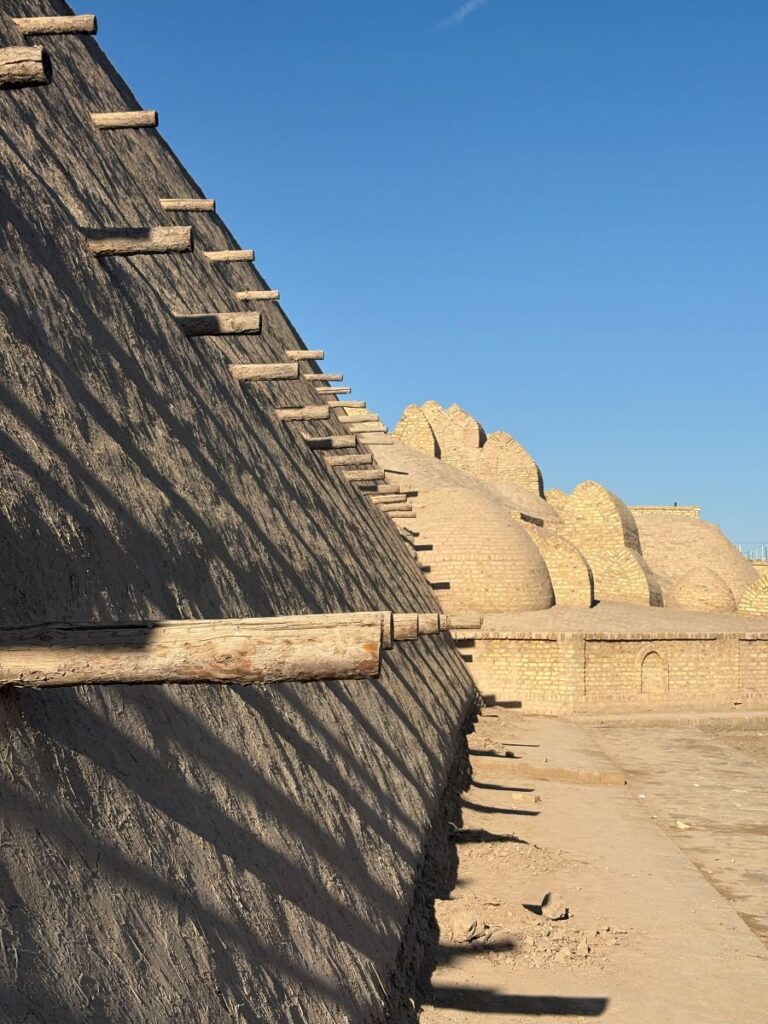
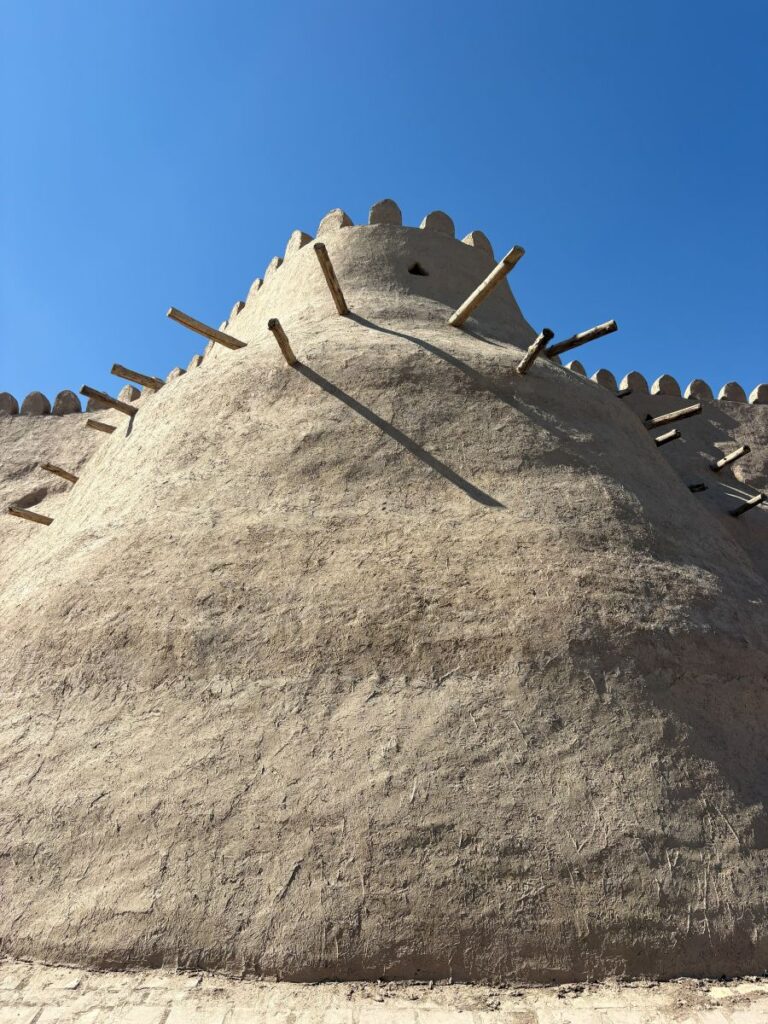
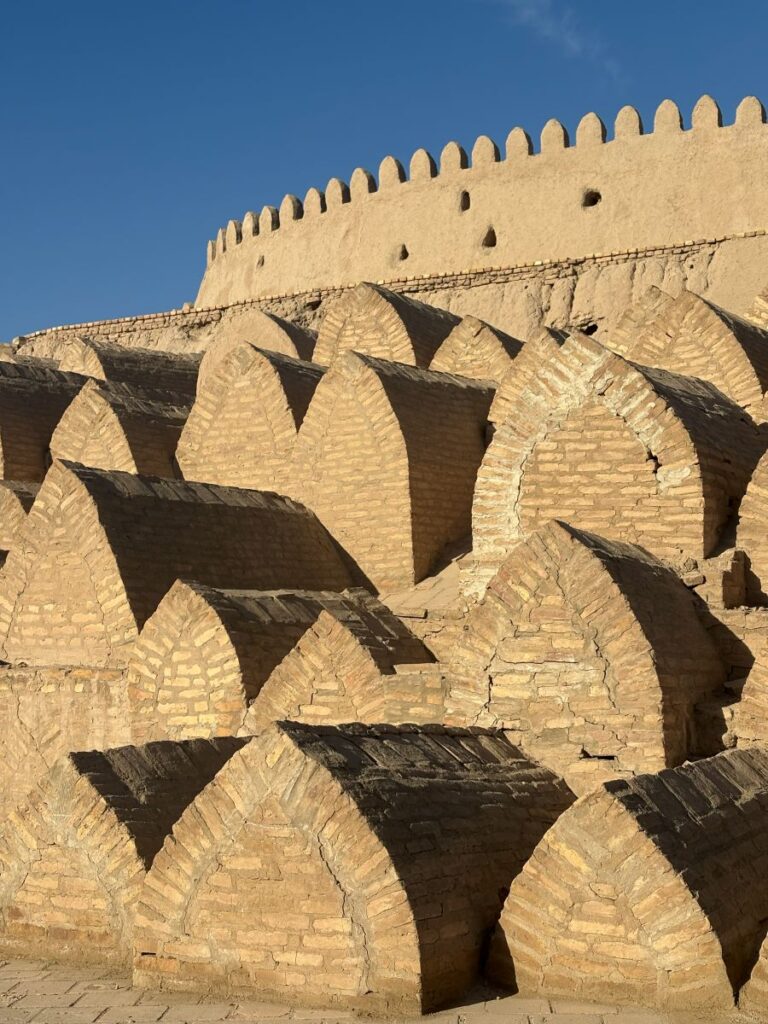
There are several reasons for this. One was to deter attack from invading tribes. Another more practical reason is the water table. In this region, the water sits only 1-2 metres below the surface. Digging is therefore difficult and resulted in the need for above ground tombs. The graves seem to be quite prevalent at two of the gates which suggests that these were perhaps the more sacred areas.
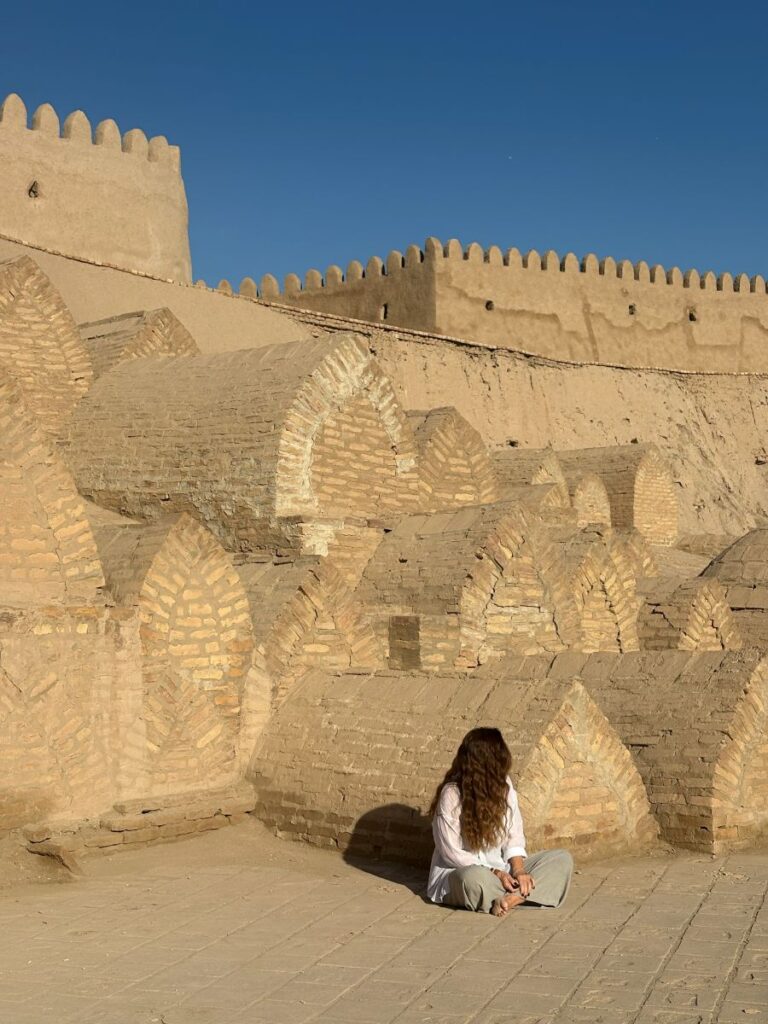
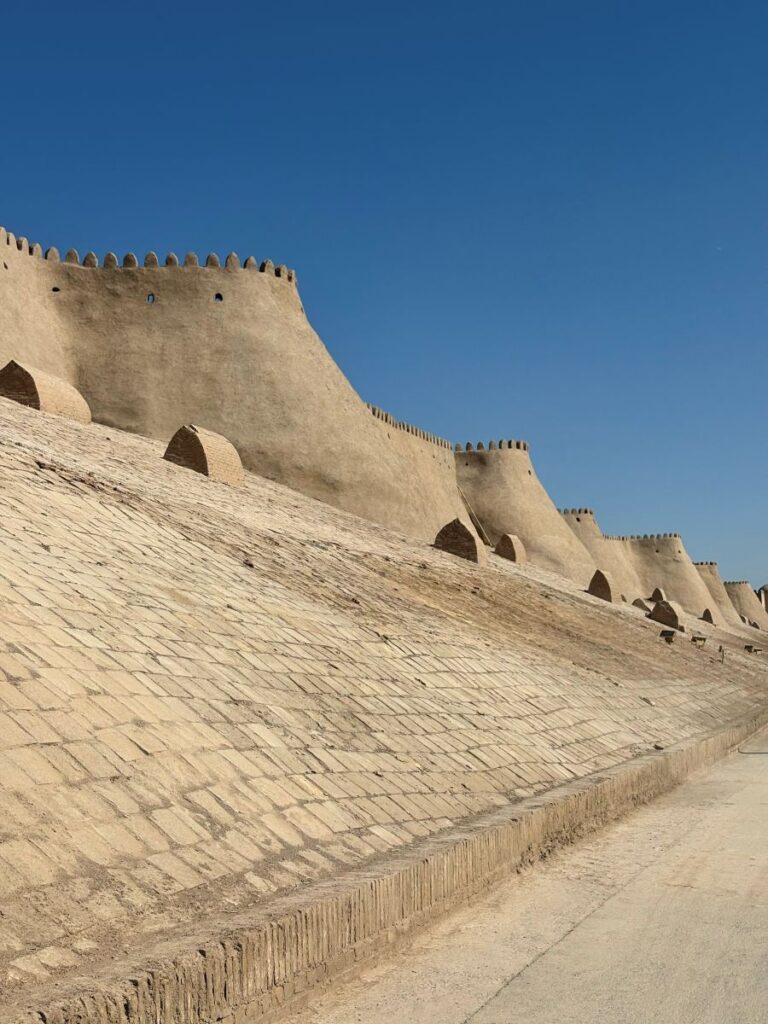
Itchan Kala is a truly magical place to see, full of historical architecture that represents the vibrant past of Uzbekistan. The space is very compact, with mausoleums, mosques, cemeteries and madrassas almost on top of each other. One full day will allow you to see everything with ease. If you are able to spare a few days however, the treasure trove of sites expands greatly. Let me show you what I mean.


