Oh how I love to explore an historical centre, that labyrinth of narrow cobblestone streets, architecture full of character and an atmosphere of times past. It’s usually an enchanting experience, and here in this Slovakian capital, that description rings true. Come get lost with me in Old Town Bratislava and let’s see what treasure we uncover.
Michael’s Gate
The logical place to start and one you can easily find on any map of the city, is Michael’s Gate. It’s the only remaining structure from Bratislava’s medieval past and one of the oldest buildings in the city. First constructed around 1300, it wasn’t until 1758 that the copper onion with St. Michael and the dragon was placed on top.
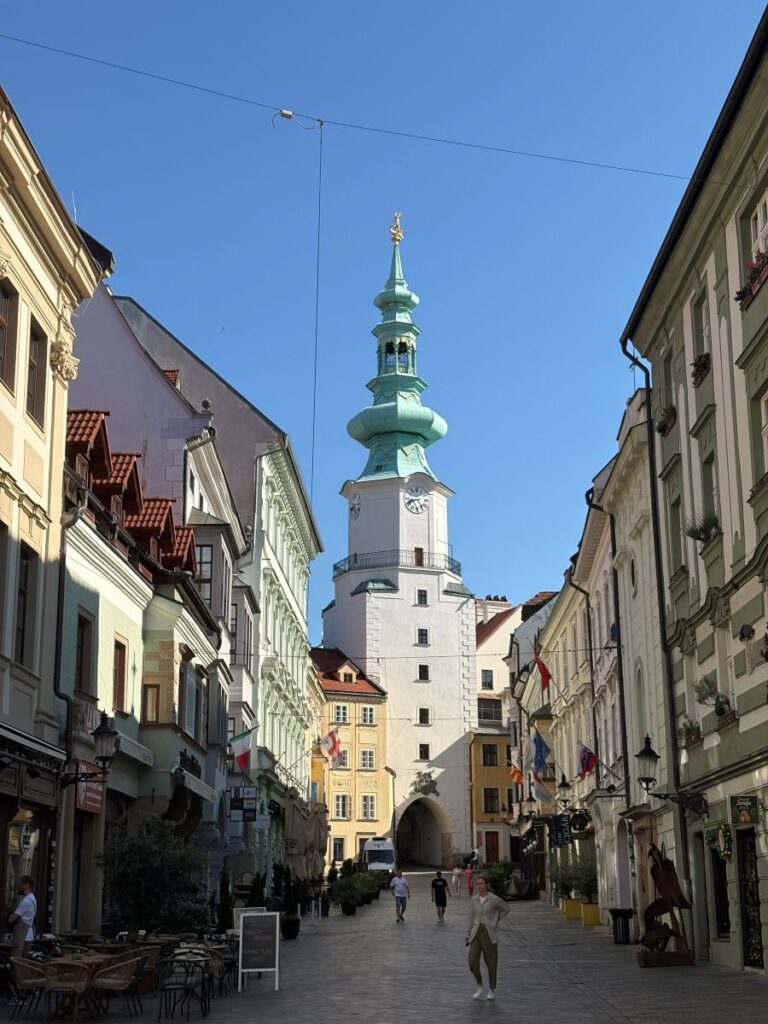
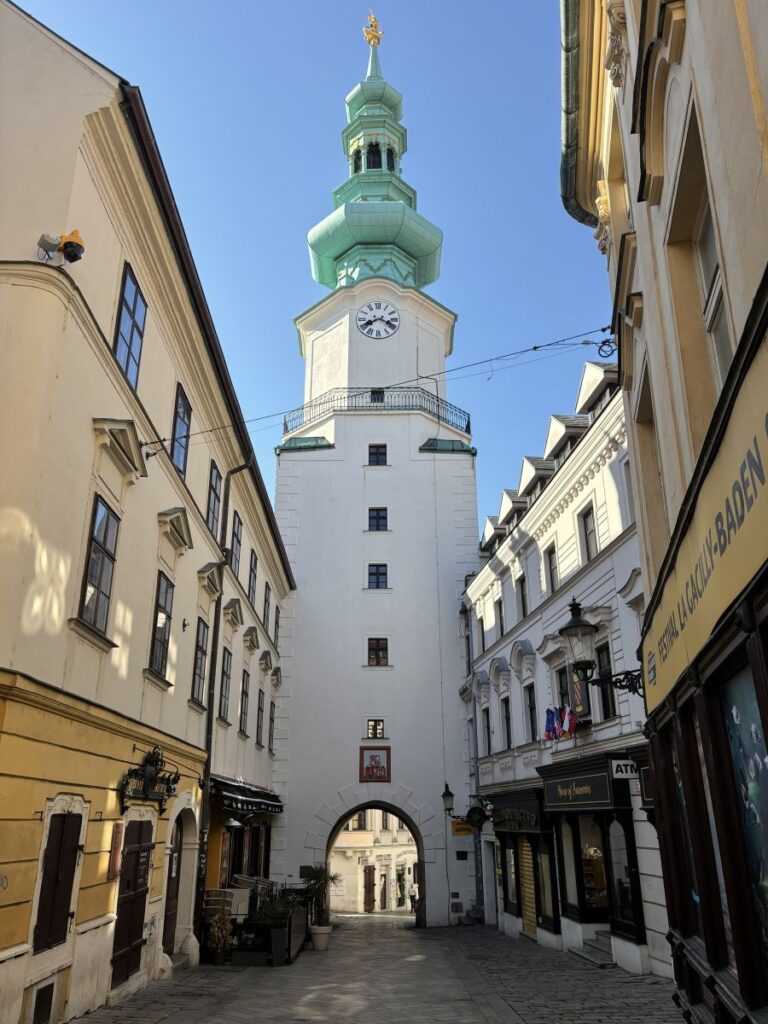
The gate has played a significant role all through history. For centuries it was the last stop of the Kings procession, when Bratislava was the capital of Hungary and called Pressburg. It is also the place where witches were burned alive at the stake and beheaded in the 17th & 18th centuries.
Town Hall
From Michaels Gate we are going to walk down this wide pedestrian only shopping street. Past the luxury brand name shops and towards the original Town Hall. Build in the 14th century, it consists of a clock tower and three stone townhouses that were joined together. This gives it a bit of a haphazard appearance from the exterior.
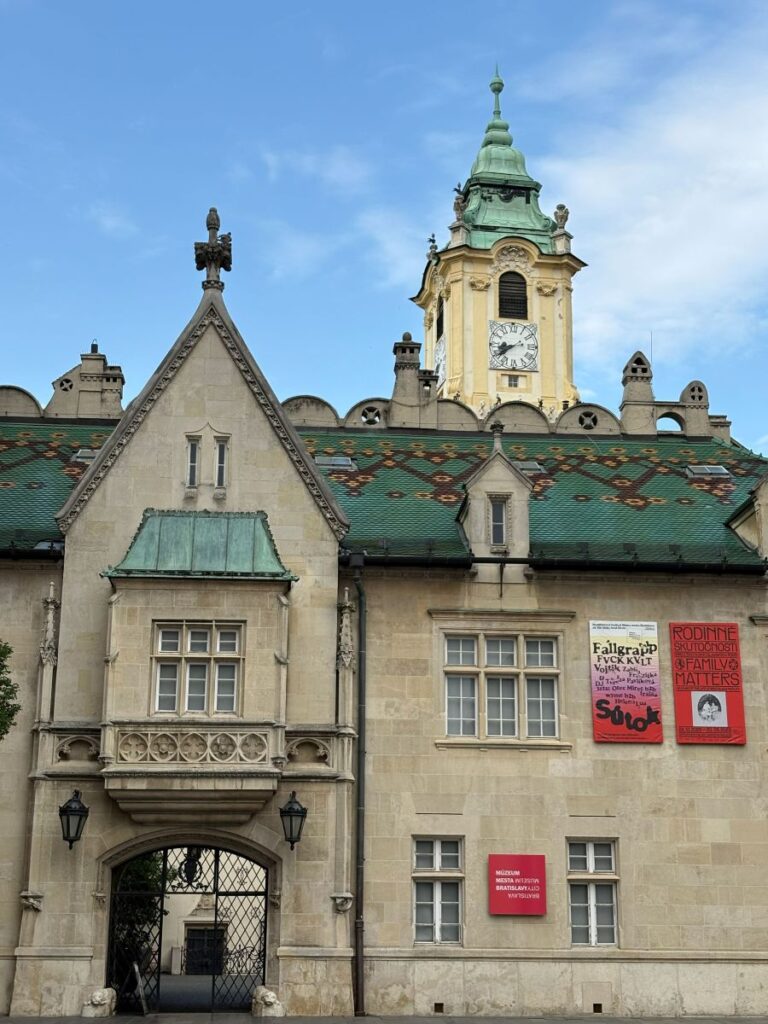
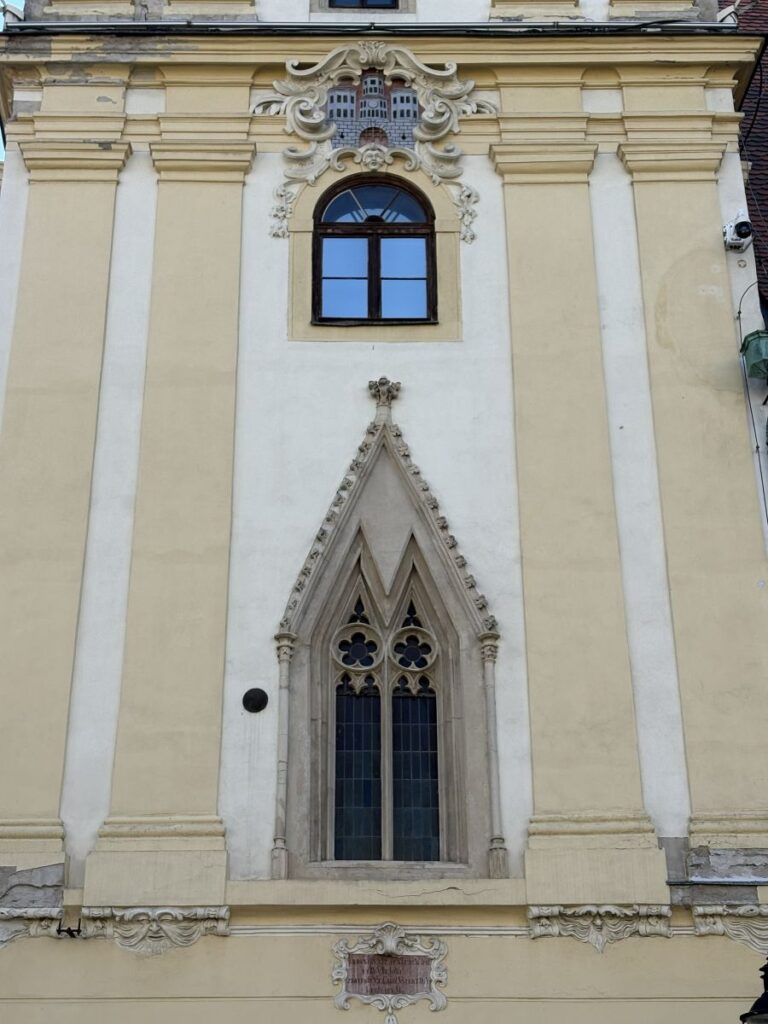
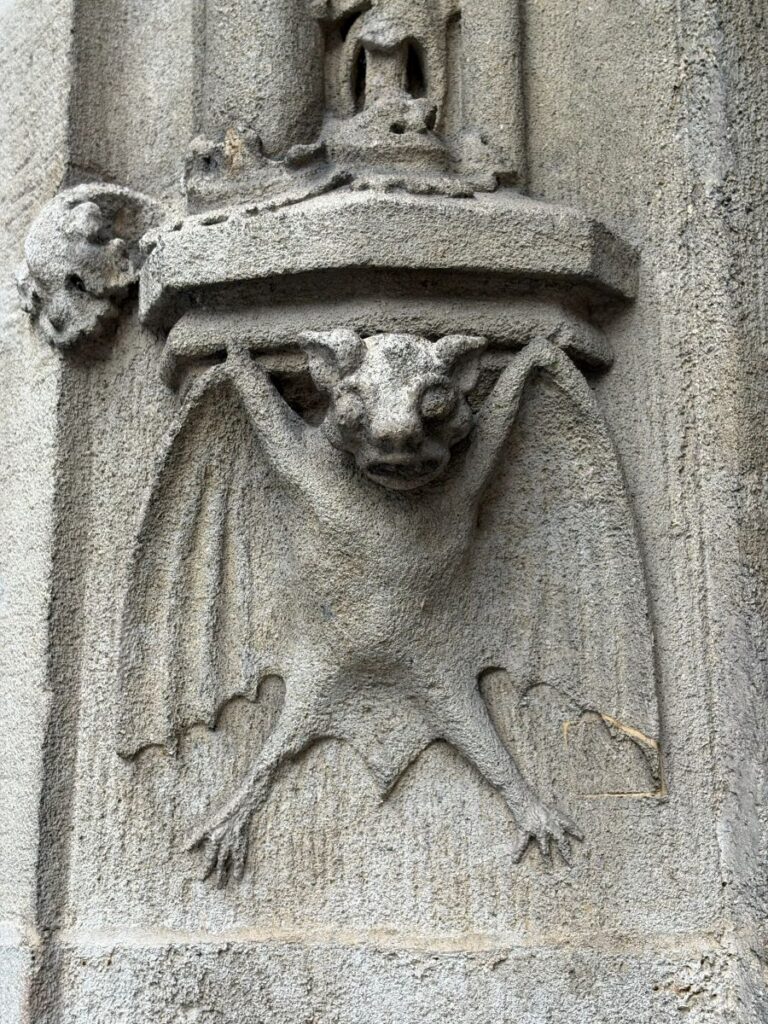
Inside is the City Museum, the oldest museum in Slovakia, but it’s the exterior that we are noticing details. Lots of carved stone animals and what is that near the window? A cannon ball! It remains lodged into the side of the clock tower, a remnant from 1809 when Napoleon re-declared war on the city.
Hlavne Namestie
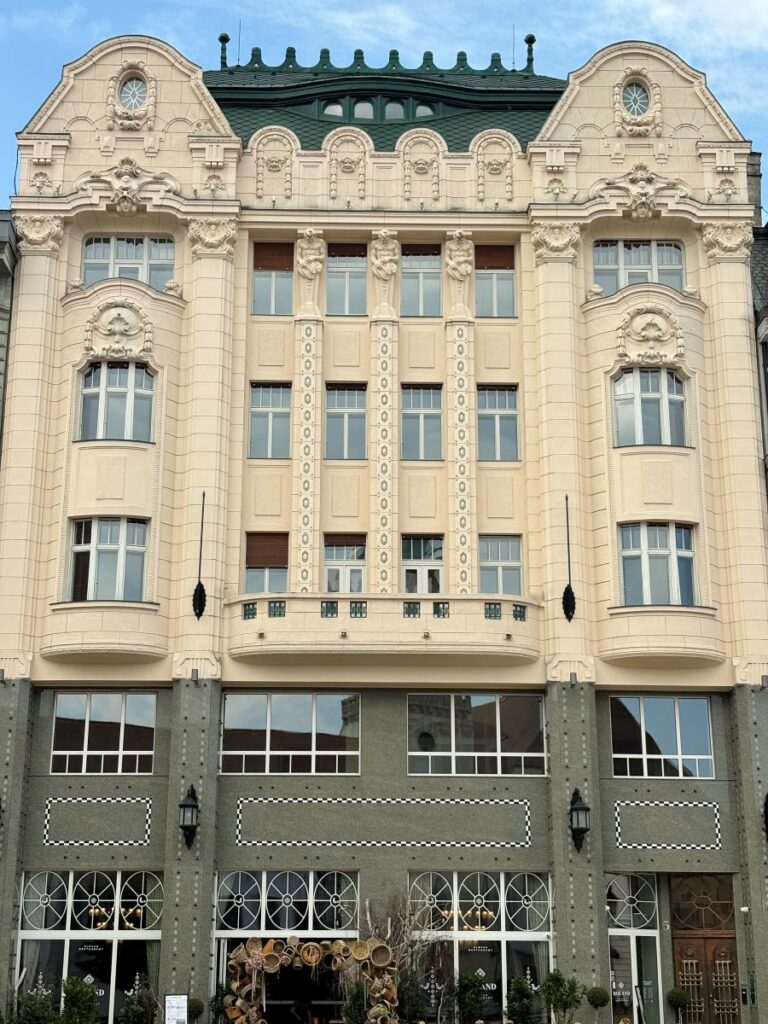
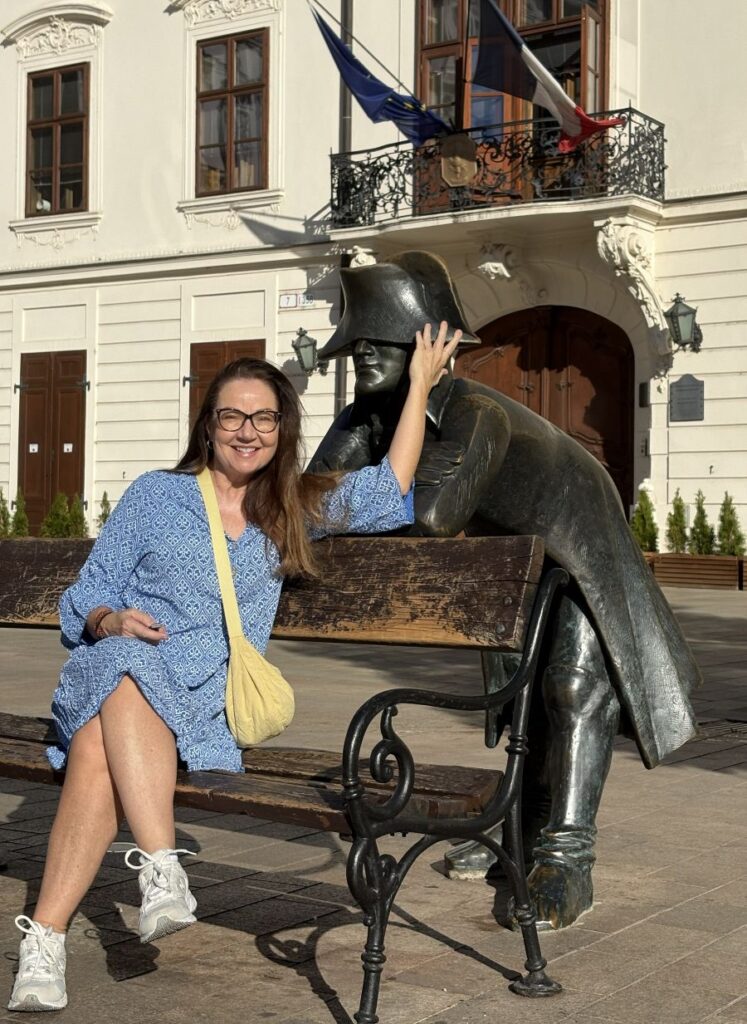
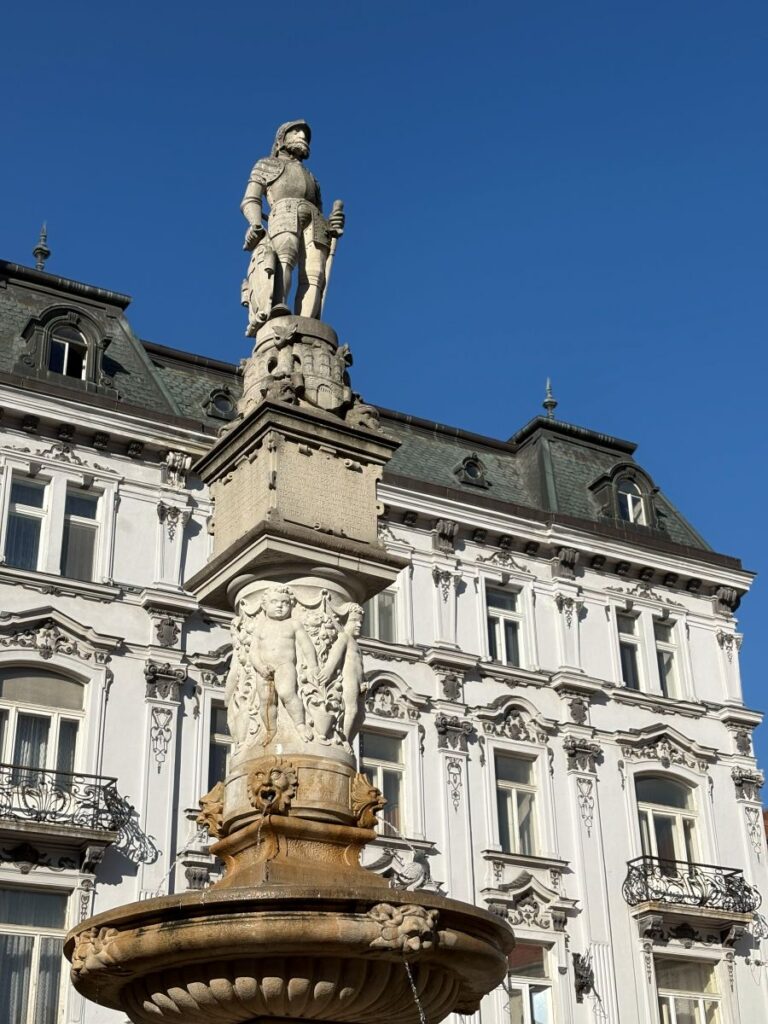
The main square in town is right here and it is marvellous! Maximilian’s fountain at the centre, there are some curious statutes around too. One such is this handsome gent. He was one of Napoleons soldiers, and the story goes, he fell in love with a local lass and decided to remain in the city after the army left. Hubert began making sparkling wine and named that after himself. As I stand in the centre of this square and twirl around, glorious architecture surrounds me. Café’s spill out into the sunshine, light glints off the windows and the atmosphere is completely relaxed and charming.
Streets
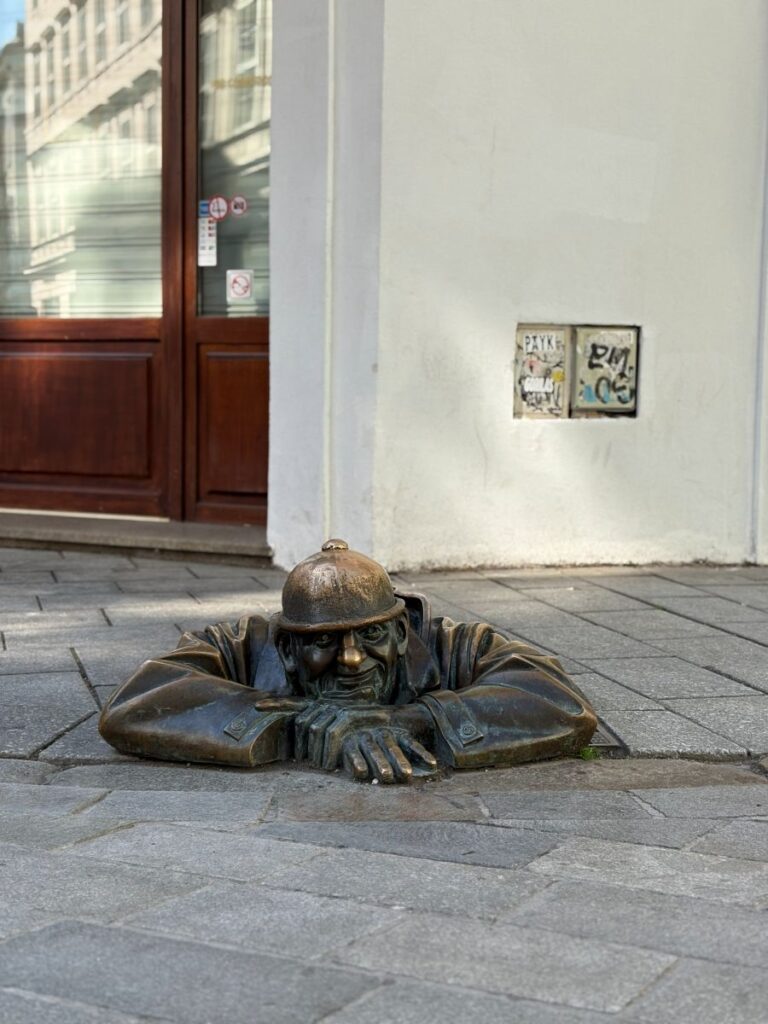
Time to wander around and see the narrow streets and where they lead. This is my favourite part of any old town exploration, for I never know what I will encounter down or around a corner. I’m surprised by the terrain, it is not flat here, but instead undulates up and down. As you are walking, don’t walk so fast that you miss Cumil, a comical character, peeking out from the sewers. He is perhaps the most photographed statue in Bratislava and one that will undoubtedly pop up on your google search.
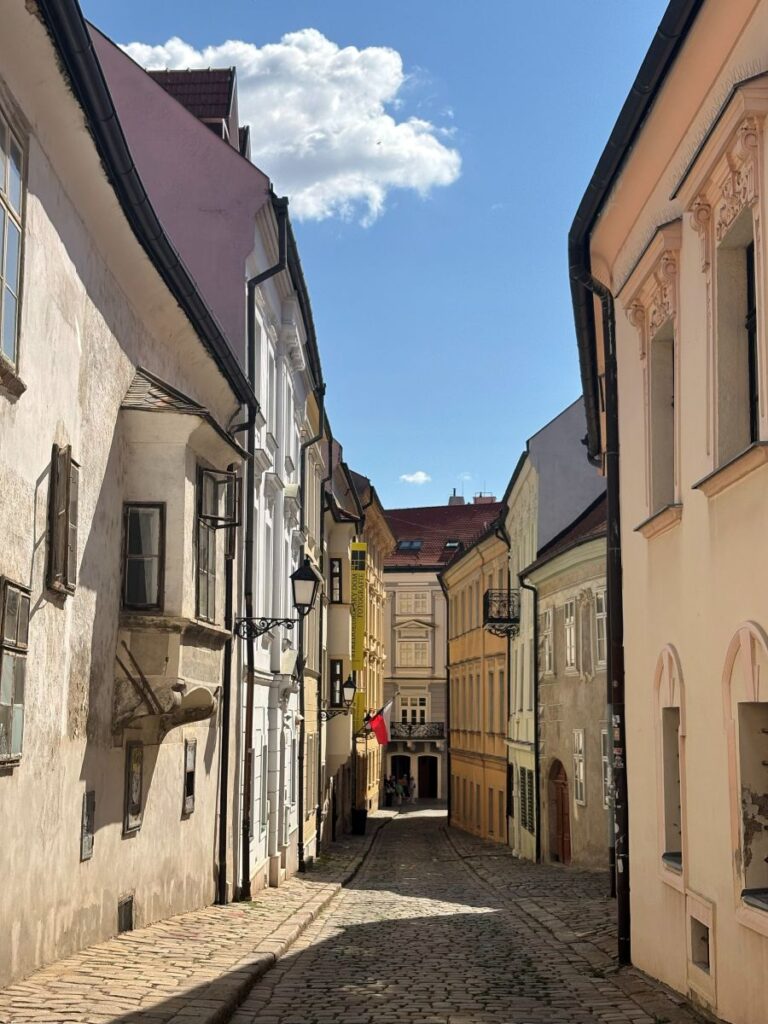
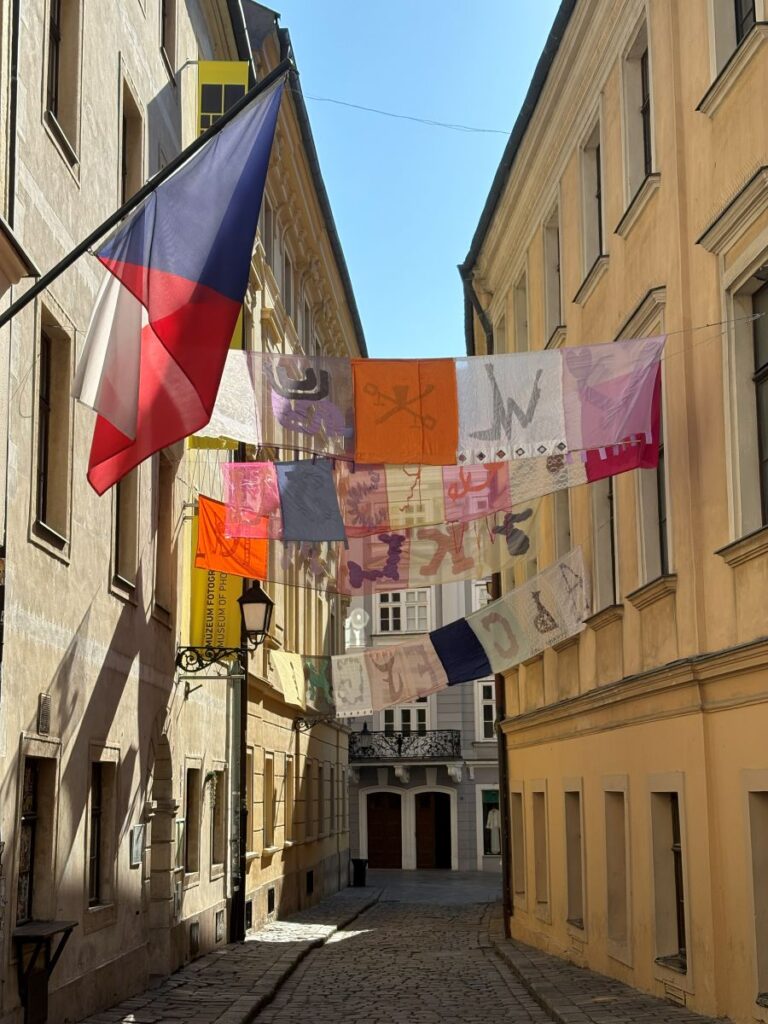
I love the gentle curve to some of these old roads, a result of the confines of the medieval fortifications and moat. Oooo a gate to a very narrow entrance with stairs, I wonder where that leads? Let’s check it out.
Walls
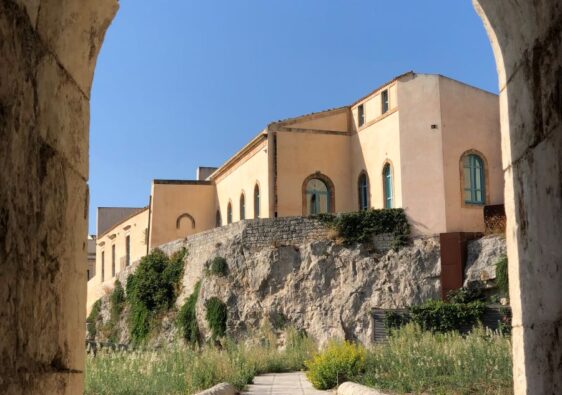
Old stone walls, how marvellous, I had no idea these were here and there is hardly anyone else in this part of the city. These fortifications date from the medieval era and surrounded the city. Originally there were two sets in fact and a 40-metre-wide moat too!
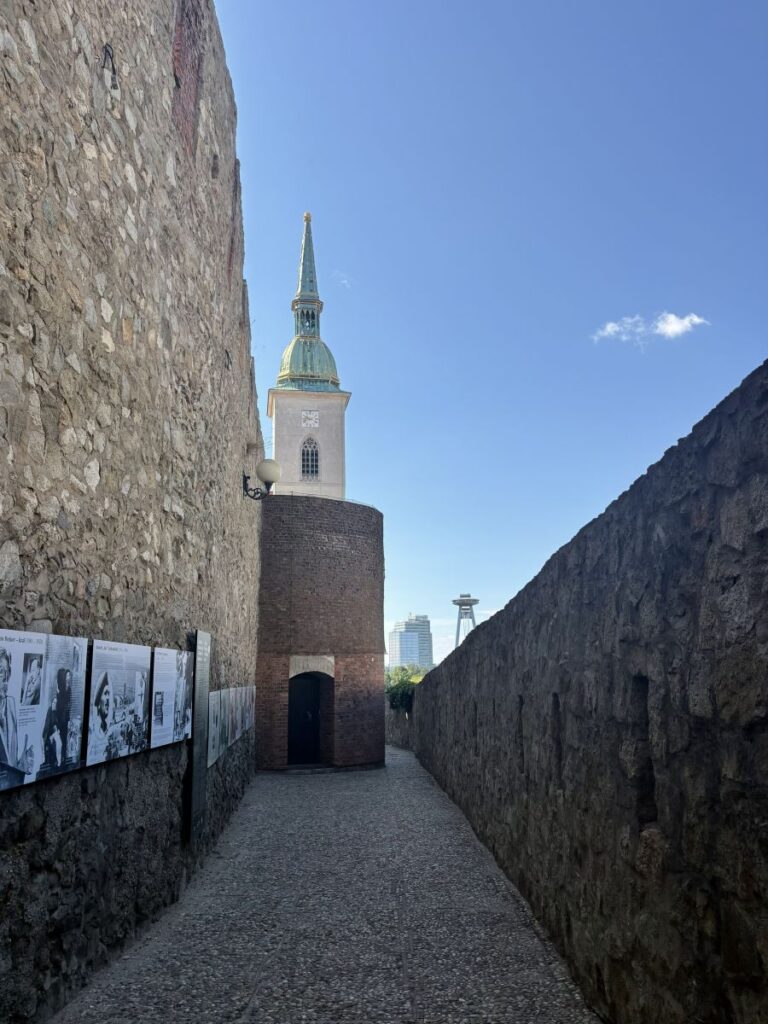
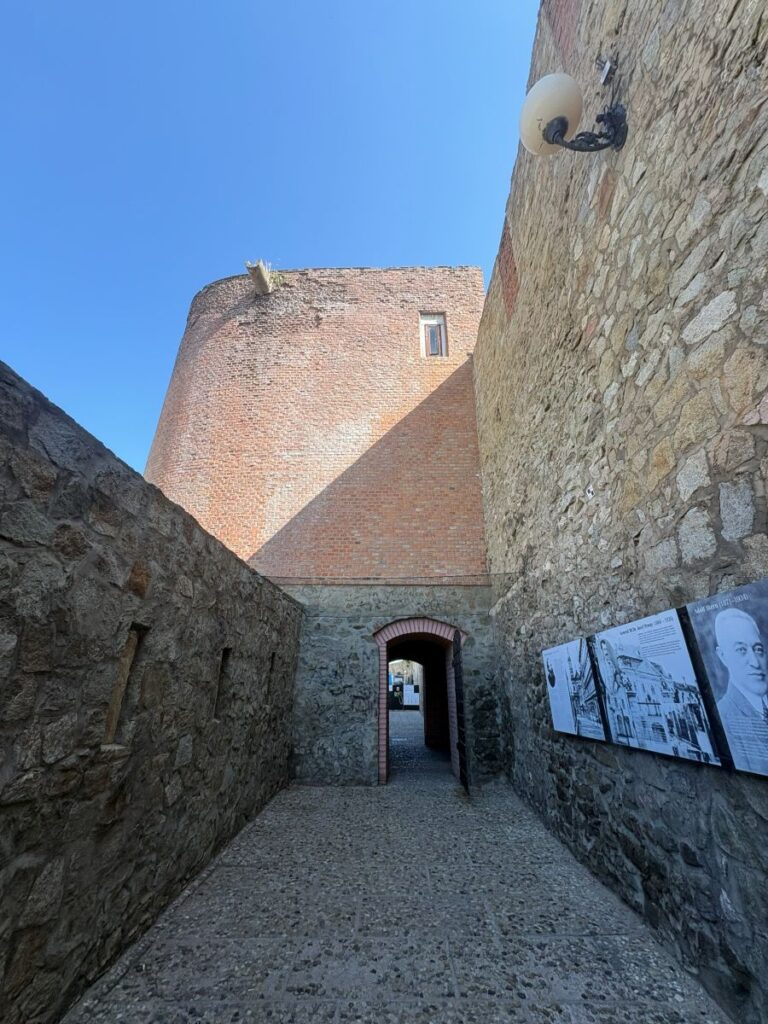
St Martin’s Cathedral
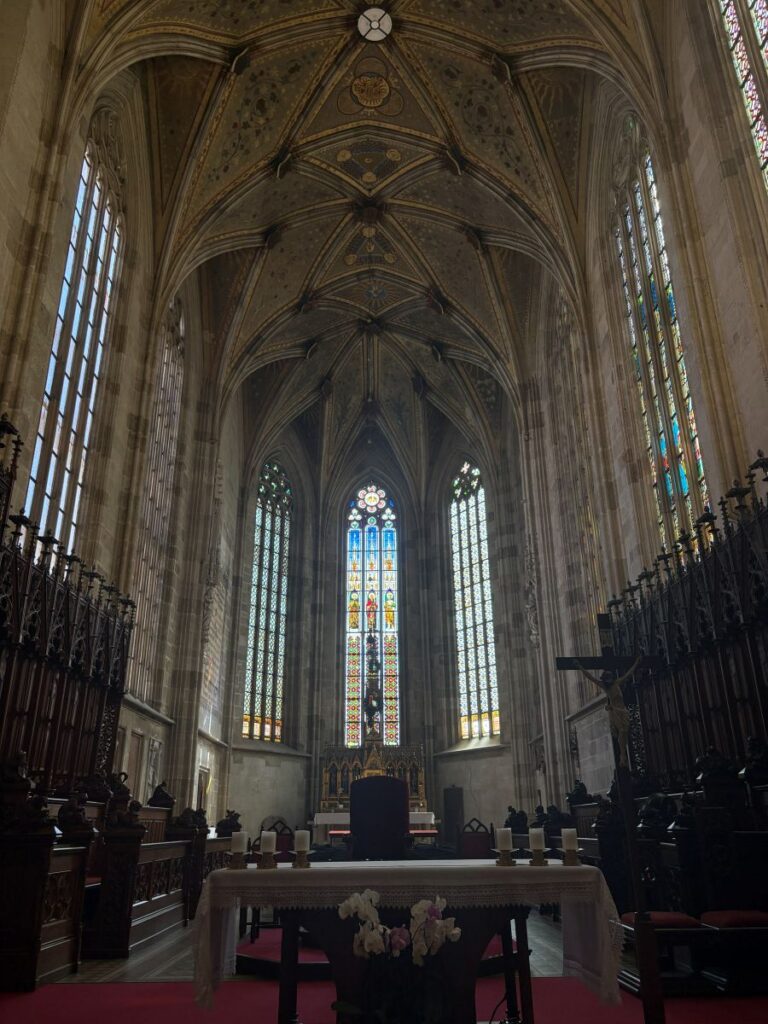
I follow the path through the centre of the soaring walls and arrive at a beautiful 13th century Gothic church. St Martin’s was used for Hungarian coronations for three centuries. The interior is rather dim and quite austere. Back outside and into the bright sunshine I have to squint as I walk around the cathedral to see what is on the other side.
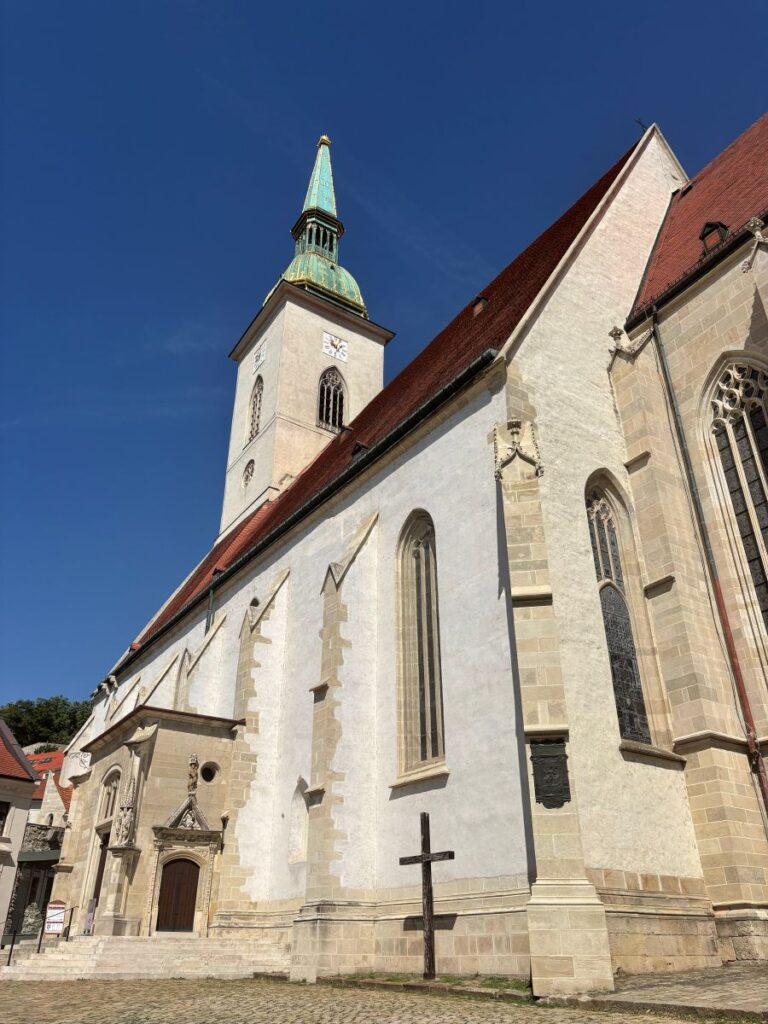
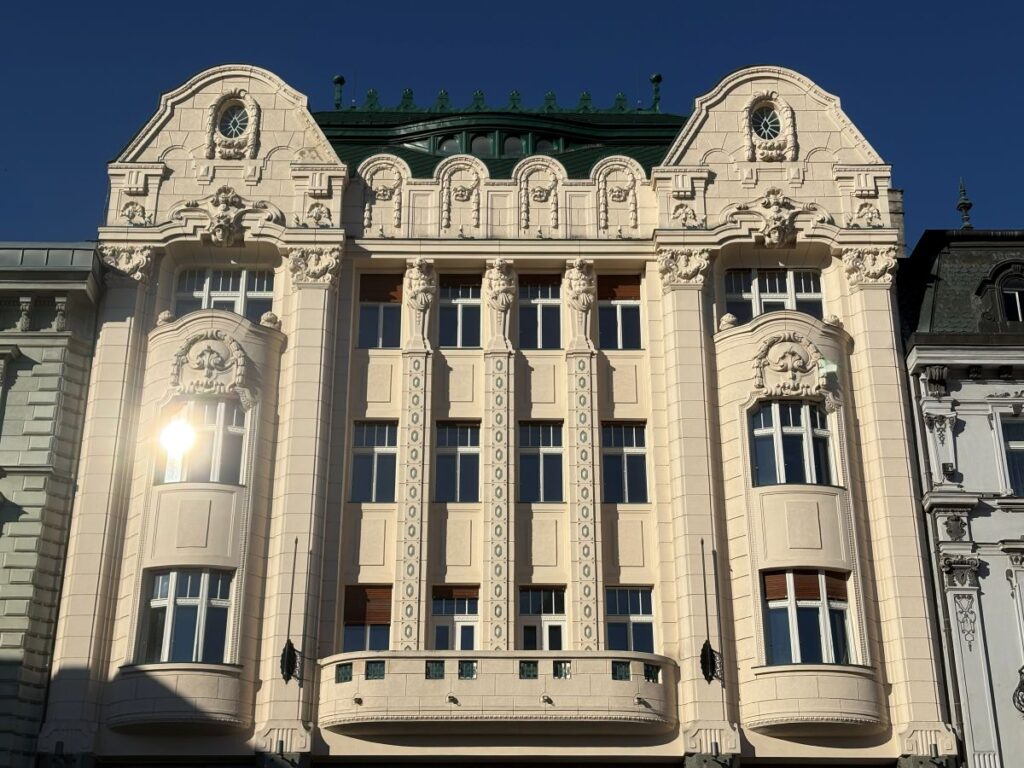
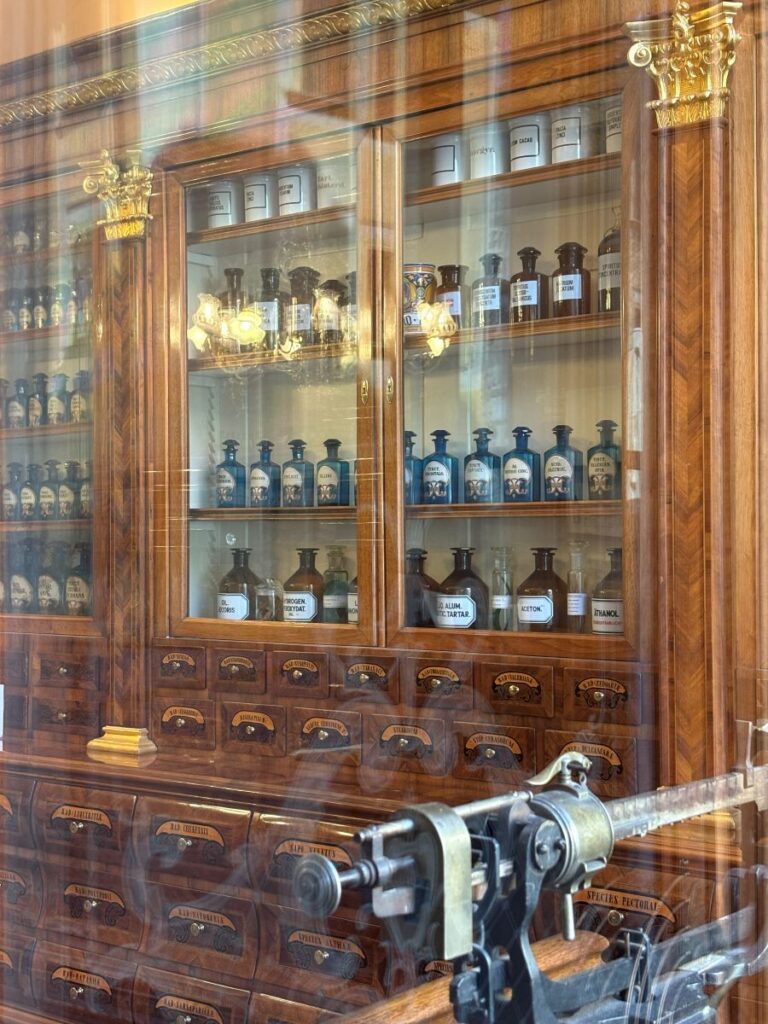
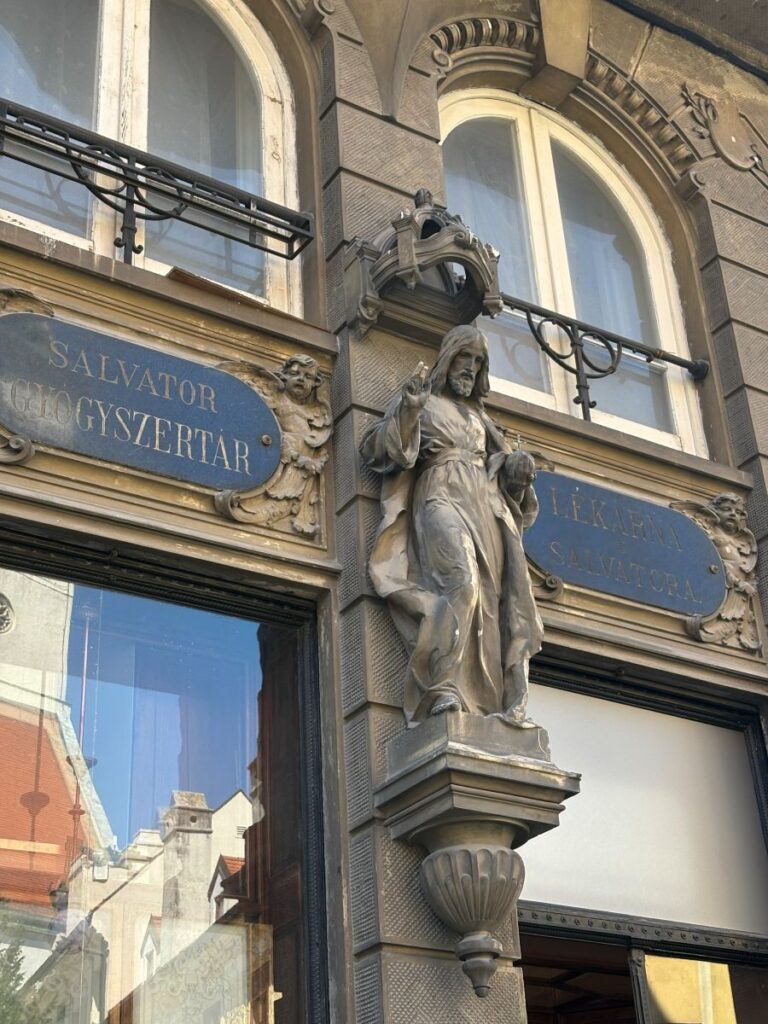
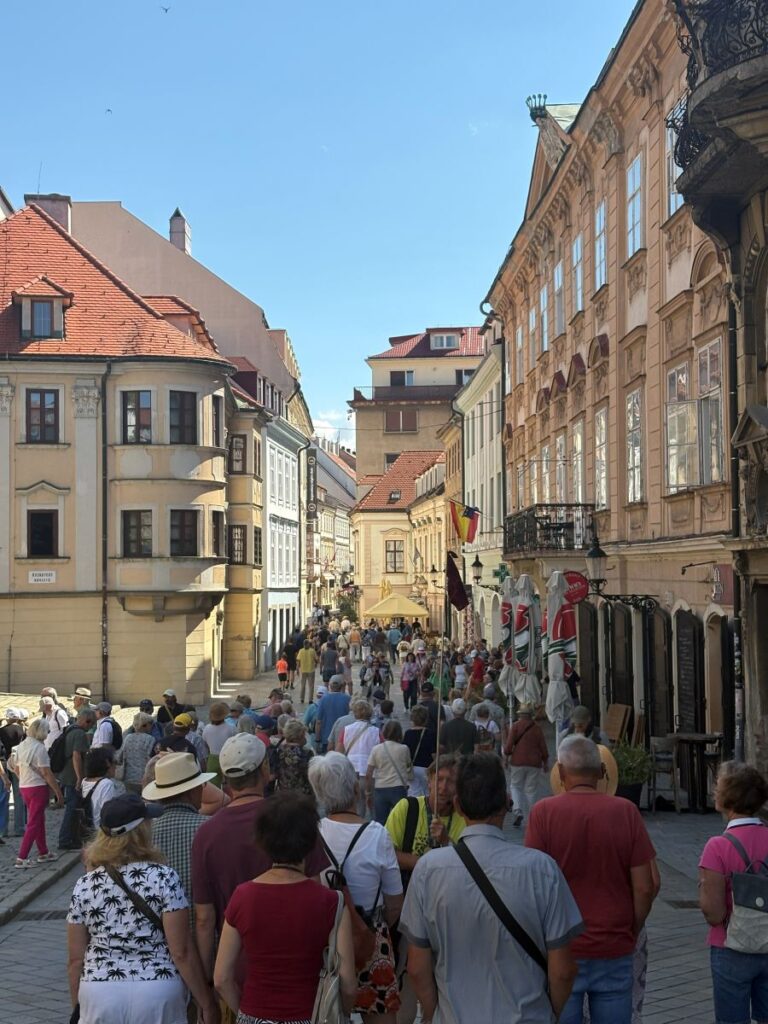
A lovely little garden, then down some steps to what looks like another main road. The crowds from the tour buses have arrived now so I won’t linger in this area much longer. I do notice an old pharmacy though and must check that out. Called Pharmacy Salvator, the building was constructed in 1907 and has a fantastic neo-renaissance façade.
This central core of Old Town Bratislava is absolutely lovely to slowly explore. There is so much pretty detail on the facades and one can easily let the mind wander to times past. Outside of this central part of the ‘onion’ is another layer that is begging to be investigated. It is larger, slightly newer and full of exquisite architecture. Its time to discover more of this intriguing Slovakian city.